Piney Point staff warned Florida officials of ‘critical’ tears in pond liner before leak
Engineers say a leak in one of Piney Point’s reservoirs threatens to destabilize the whole system, but it isn’t the first time the pond has been a cause for concern in recent months.
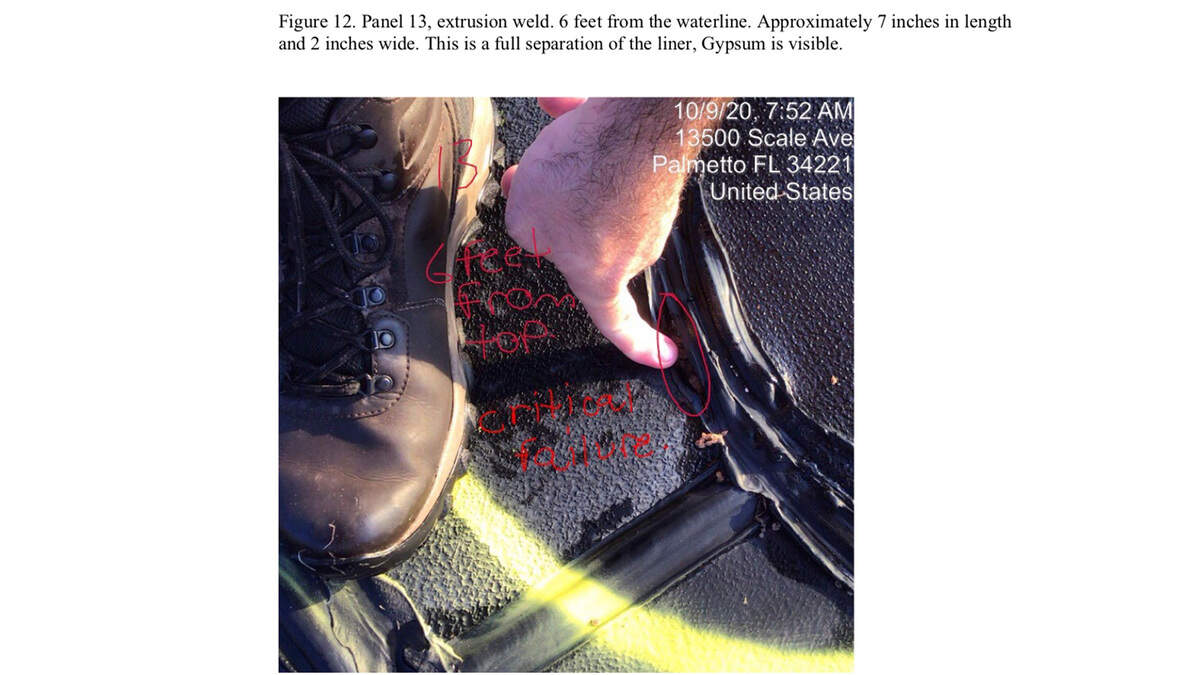
Since July, site operators have repeatedly warned the Florida Department of Environmental Protection about “critical condition” tears in the pond’s liner. Less than two months after finding the first tears, site manager Jeff Barath warned the Manatee Board of County Commissioners that his ponds were quickly running out of capacity.
According to public records reviewed by the Bradenton Herald, “critical” tears in the New Gypsum Stack South pond were reported to the department in July, October and December.
The liner failures — many of them just a few inches long — were detected as part of HRK staff’s routine inspection of the ponds. Each tear was reported above the waterline and is not the source of a leak. However, the series of reports could serve as evidence of the liner’s overall decline.
“HRK staff felt it prudent to perform the liner inspection as decreasing temperatures cause contraction and expansion within the liner, this could potentially lead to an increase in tears, cracks and overall distress to the impoundment seams,” an HRK employee wrote in a Dec. 10 email to FDEP officials.
An undetected tear in the liner was the cause of the 2011 spill at Piney Point that sent 170 million gallons of process water into Bishop Harbor.
A representative with HRK Holdings, LLC, the owner of the 676-acre Piney Point site, did not respond to requests for comment Friday afternoon.
The situation at Piney Point, a former phosphate mining plant, has become a rapidly developing emergency in the past week after site operators discovered that the New Gypsum Stack South — the largest pond on the site — is leaking.
Late Friday night, the conditions continued to deteriorate after site operators found a breach in the southeast corner of that pond’s wall, leading officials to evacuate nearly 20 homes in a 1/2-mile radius.
According to a third-party engineer hired by HRK, the leak is likely the result of a liner issue near the bottom of the pond. The 77-acre New Gypsum Stack South pond holds an estimated 480 million gallons of process water.
The leak has also led to the destabilization of the gypsum stacks, which are the highest elevation point in Manatee County. In a Thursday afternoon briefing, engineers said the complete collapse of the system is still a real possibility.
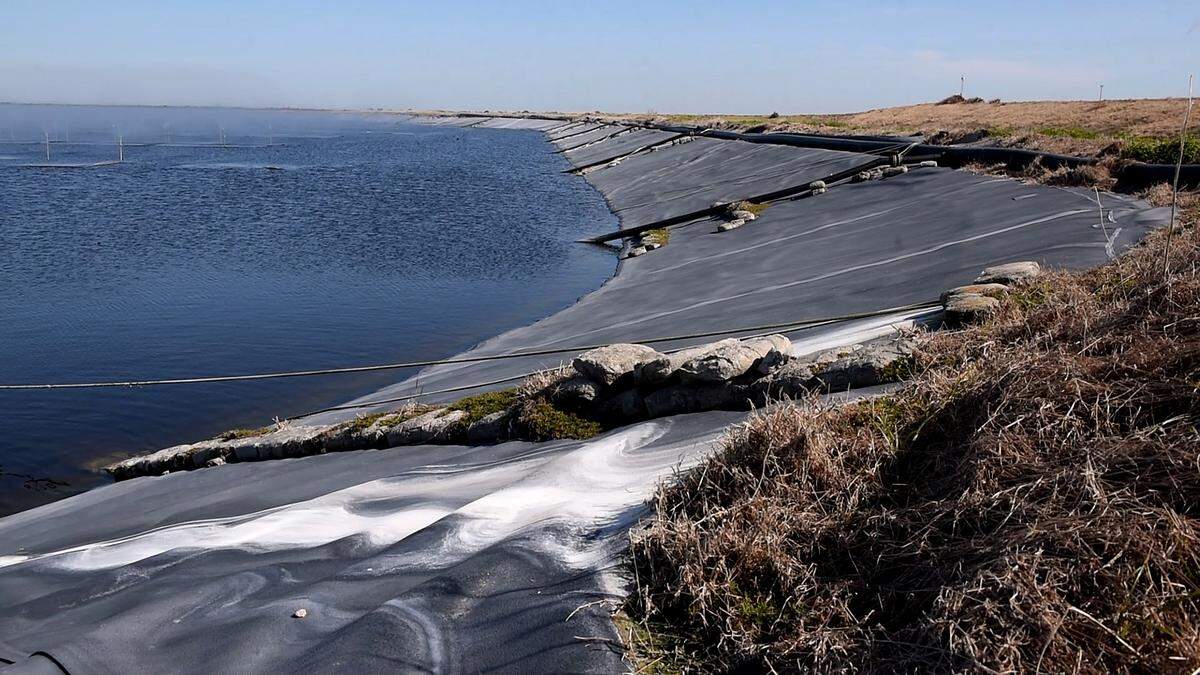
Threat of a collapse poses a significant flooding threat to the U.S. 41 highway, Port Manatee, industrial warehouses on the south side of the Piney Point site and other nearby landowners.
Gypsum stacks are a solid waste byproduct of phosphate mining. The stacks form a hill on the Piney Point site. Ponds on top of that hill are covered with industrial liners meant to prevent process water from leaking through the gypsum.
Process water is also a byproduct of phosphate mining. Because it is rich in nitrogen and phosphorous, process water typically undergoes a cleaning process before it released into local waterways, but that process is slow and expensive.
In order to repair the liner issue, site operators may need to drain the entire pond. FDEP officials gave the green light on Monday for Piney Point to begin emptying the New Gypsum Stack South pond into Tampa Bay.
As of Friday afternoon, nearly 30 million gallons of water had already been dumped into the bay, which scientists say could lead to an environmental disaster. Algae tends to feed on nutrient-rich water, which could result in a harmful algae bloom that affects public health and local tourism.
The threat comes at a time when county officials led an effort to find a resolution to Piney Point. After years of setting the issue aside, the Manatee County Commission voted earlier this year to make the gypsum stacks a top priority. They also asked the Florida Legislature to provide up to $6 million in a cost-sharing measure to fund a $12 million “emergency water treatment” program.
While phosphate mining no longer takes place on the site, Barath told commissioners in September that his spray evaporation technique for cleaning and releasing the process water has been canceled out by rainfall, which continues to add millions of gallons of water in the site’s ponds.
Whether the Florida Legislature will fund the project remains unknown, but in a briefing with U.S. Rep. Vern Buchanan, R-Longboat Key, FDEP Secretary Noah Valenstein said he would be in favor of using a deepwater injection well to get rid of the water on site.
A deepwater injection well would store the process water below the Florida aquifer. The board recently decided that a deepwater injection would be their preference, too, but permitting one of those wells typically takes 18 months.
Moving forward, the board expects to receive daily updates on the status of the Piney Point leak. On Tuesday, FDEP officials also plan to provide a briefing during a public meeting.


This story was originally published April 2, 2021 at 4:15 PM.