Piney Point nears capacity along Tampa Bay. Will Manatee County pay for the solution?
As Piney Point’s storage ponds inch closer and closer to maximum capacity, filling with contaminated water, local leaders are determined to resolve the environmental threat once and for all.
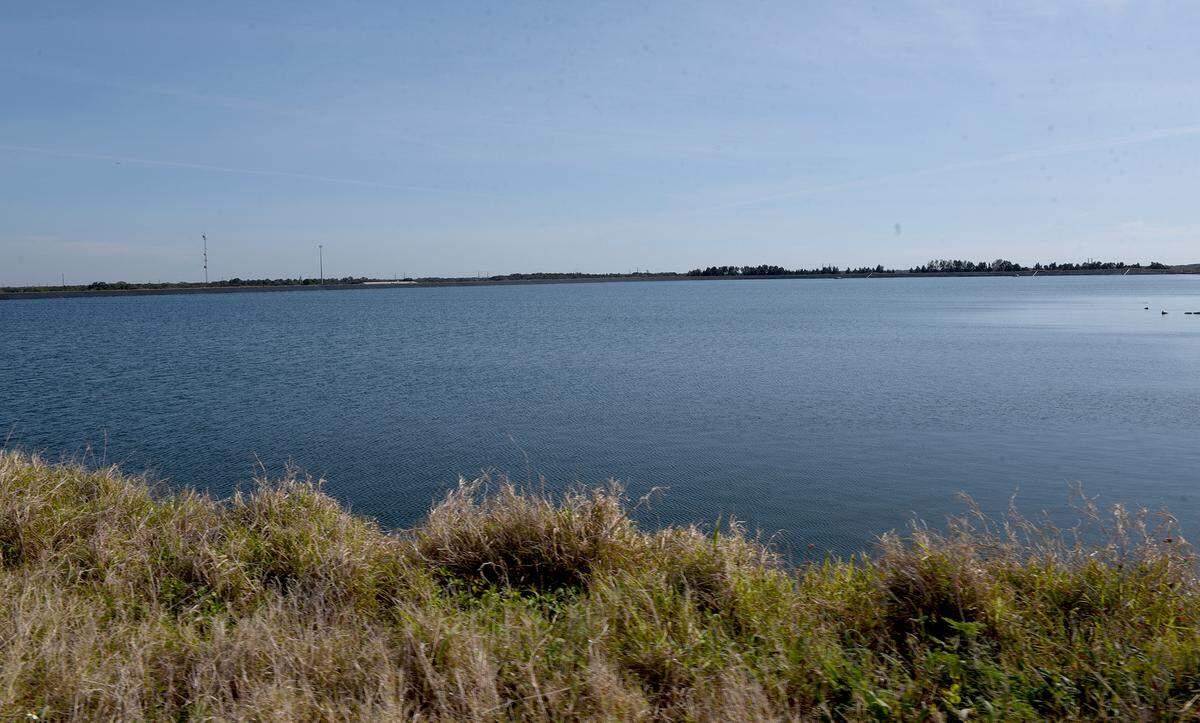
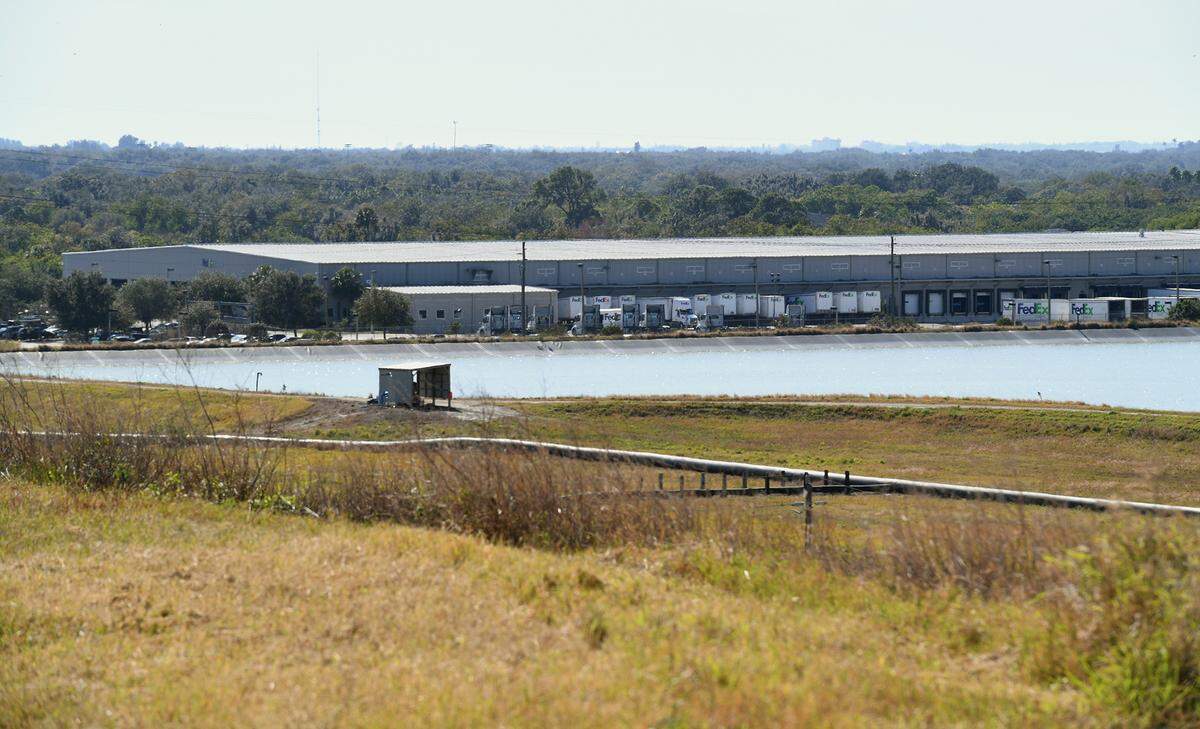
Those ponds, holding nearly 800 million gallons of process water created as a byproduct of phosphate mining, have sat on the site of U.S. 41 near Port Manatee, for decades, but an unexpected leak or a severe storm could easily result in disaster.
Process water is high in phosphorous, nitrogen and fluoride. According to the Environmental Protection Agency, a large amount of those nutrients could adversely impact local water quality if a spill reaches Tampa Bay, just 2 miles away from Piney Point.
“Too much nitrogen and phosphorous in the water causes algae to grow faster than ecosystems can handle,” the agency wrote in an article about nutrient pollution. “Significant increases in algae harm water quality, food resources and habitats, and decrease the oxygen that fish and other aquatic life need to survive.”
The Manatee Board of County Commissioners is moving forward with a sense of urgency in 2021. Led by Commissioner Vanessa Baugh, the board unanimously declared Piney Point its top legislative priority this year, urging their state delegation to find funds to pay for what is likely to be a costly solution.
An underground injection control well or a dedicated water treatment center have been pitched as potential remedies, but both come with hefty price tags. Either option could cost as much as $15 million.
‘If a catastrophe happens, it’s going to be Manatee County’s problem’
Citing a potential spill that could devastate surrounding counties, Baugh says the board should prioritize getting rid of the process water as soon as possible.
“This has been going on since before I even became a commissioner. In the past, it was that this wasn’t a Manatee County problem but something that HRK and FDEP should take care of,” said Baugh. “If a catastrophe happens, it’s going to be Manatee County’s problem. For us to have our heads in the sand, that’s a major issue that we need to protect Manatee County from.”
While county officials are taking the initiative, the environmental responsibility falls to the Florida Department of Environmental Protection and HRK Holdings, the company that acquired the 676-acre property in 2003.
The state has been involved with Piney Point for nearly 20 years. The old phosphate mining plant was the first in Florida to shut down after the owners declared bankruptcy in 2001. FDEP joined the closure effort to help create a guide for other plants that may close in the future.
Since then, the state has continuously monitored Piney Point, but there’s no clear plan for getting rid of the contaminated process water. In a recent presentation to the county commission, Jeff Barath, HRK’s site manager at Piney Point, warned the county that time is running out.
The ponds are about 19 inches away from reaching their designed maximum capacity. While there’s additional space in the ponds during normal conditions, once the water reaches that level, there’s no guarantee that it won’t spill out during a tropical storm or hurricane.

“Every day it worries me,” said Commissioner Carol Whitmore. “All it takes is one bad storm event.”
Piney Point has spilled before
There have been emergencies and accidents at Piney Point before. The most recent spill occurred in 2011 when 170 million gallons spilled into Bishop Harbor.
Before heading to Tallahassee to begin the 2021 Legislative Session, Manatee’s legislative delegation — state Rep. Will Robinson, R-Bradenton, state Rep. Tommy Gregory, R-Sarasota and state Sen. Jim Boyd, R-Bradenton — unanimously agreed to make Piney Point their No. 1 concern, as well.
Despite budgetary constraints in the face of COVID-19, Manatee’s state lawmakers said they hoped to bring home money that would pay for the safe disposal of the process water. Local officials said they realize the challenge and are willing to tap into their own pocketbooks.
“The state is trying to regroup from COVID-19, so that probably is going to be a factor. If any money goes anywhere in Manatee County, it needs to go toward Piney Point. That’s what we’re looking for,” said Baugh.
“Obviously, we are going to be a central partner in this situation,” she added, hinting at her willingness to help cover the cost of the solution with county funds. “There’s no other way. We need to get this done.”
Robinson sent a letter to FDEP Secretary Noah Valenstein Friday seeking collaboration with the department to find and fund a solution. He said he would prefer a resolution that gets rid of the water through a treatment process instead of storing the water underground with a well.
“My personal strong preference is (to) remove all the contaminated water from the entire site and to close the stacks, rather than utilize a deep well injection, which in my view just punts the issue to a future generation,” he wrote. “I believe that there are effective technologies in place to clean the entire site in a scientific, timely and cost-effective manner.”
Help has been requested at the federal level, too. In October, Rep. Vern Buchanan, R-Longboat Key, wrote a letter asking the Environmental Protection Agency to provide oversight “to ensure the safe management and disposal of the contaminated water and prevent another environmental disaster.”
Possible solutions
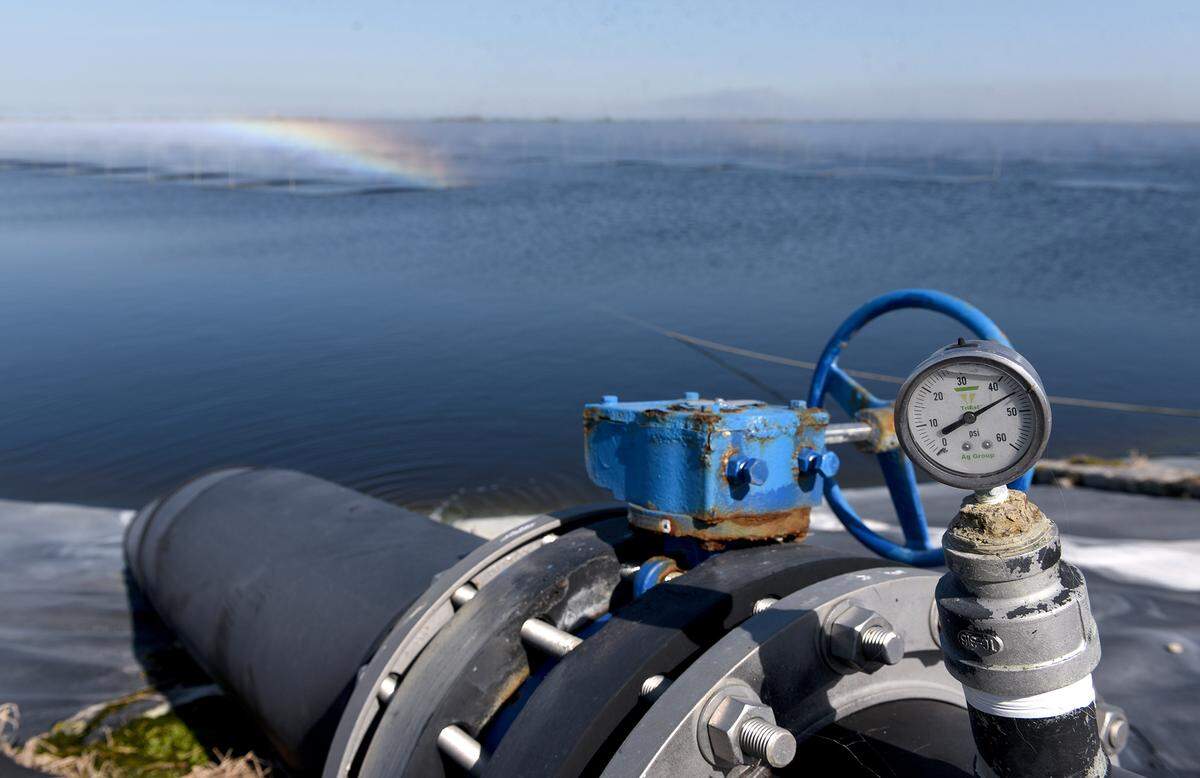
Manatee County has already partnered with HRK to begin pumping 50,000 gallons a day of the contaminated water through the county’s wastewater system. That system is expected to work in conjunction with a spray evaporation technique that gets rid of 250,000 gallons per day.
But both of those systems working together only delay the inevitable. Every inch of rain that falls on Piney Point’s massive ponds generates 1.36 million new gallons of contaminated water. If the county wants to solve the problem, a better method is necessary.
An underground injection control well would allow the water to be treated and then pumped about a mile below ground. Residents have voiced opposition to that proposal, citing concerns about the potential of upwelling and a contaminated aquifer. A dedicated treatment center is another option that would call for treatment before the water is discharged into local waterways.
The county’s year-end goal is to determine which method allows for the safest and quickest disposal of the water.
“We’ve got some momentum. What needs to happen now is we need to take some real solutions and see what the cost factor might be,” Baugh said. “We need to try to tackle the cost and make sure we can get this done.”
The Manatee County Commission is set to host a workshop to discuss Piney Point options on Feb. 2.
This story was originally published January 23, 2021 at 5:00 AM.