Piney Point plans emergency release. Environmentalists fear impact on water quality
As site operators at Piney Point begin a controlled release of up to 480 million gallons of contaminated water, environmentalists say they’re bracing for the significant impacts it may have on Tampa Bay.
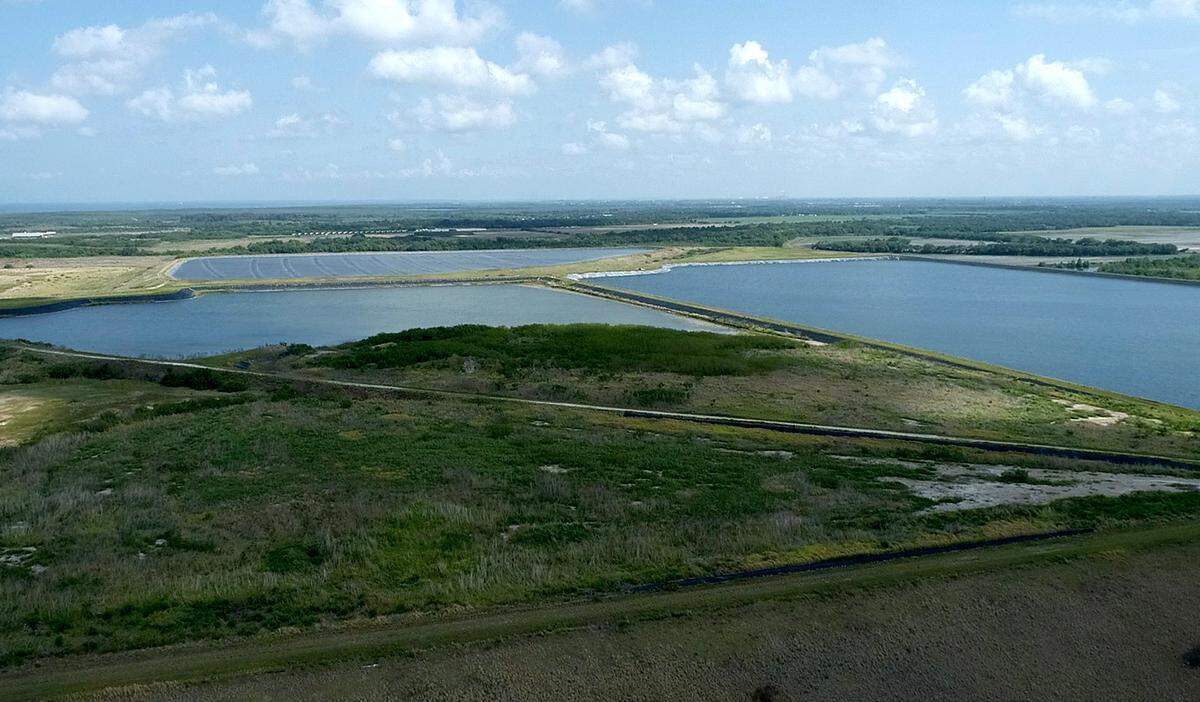
The Florida Department of Environmental Protection authorized the release after a leak was discovered in the largest process water reservoir at Piney Point, a former phosphate plant. State officials say the release is meant to prevent an environmental disaster, but water quality advocates say it could have lasting effects on local water quality.
“In past incidents like this, it has had an impact on the wildlife, so we definitely have concerns. There’s uncertainty about how much water will be released, but there would definitely be an impact if they release all of it into Lower Tampa Bay,” said Ed Sherwood, executive director of the Tampa Bay Estuary Program, which focuses on restoring and protecting the bay.
“That’s the one thing we’ve been focusing on: the nutrients and the impact of excess nitrogen into bay waters,” added Justin Bloom, founder of Suncoast Waterkeeper, a local water quality advocacy group. “We’ve been focusing efforts for many years now to try to reduce that. This water has high levels of ammonia and that’s going to have very high levels of nitrogen that will certainly have impacts.”
Starting Tuesday afternoon, Piney Point was expected to begin emptying a 77-acre reservoir containing process water, a chemical byproduct of phosphate processing that is high in nitrogen and phosphorous.
“To maintain the structural integrity of the water management system at the site, controlled discharges of this water are anticipated to begin today,” FDEP said in a statement posted on Twitter on Tuesday morning.
Researchers say the nutrients in the discharged water could feed and contribute to algae blooms.
“One of the objectives we have is to reduce nutrients flowing into the water no matter the source,” Sherwood said. “We definitely don’t want to backslide on that.”
In order to avoid negative impacts at Bishop Harbor, one of Florida’s protected waterways, FDEP authorized Piney Point to release the contaminated water into a channel at Port Manatee. According to experts, that decision should lessen the impact of the release.
“It’s a more flushed region of the bay with more open waters. We still have concerns about that fueling a phytoplankton bloom in the bay,” said Sherwood.
Phytoplankton is a naturally-occurring organism that can form harmful algae blooms when it feeds on high levels of nitrogen in the water, according to the National Oceanic and Atmospheric Administration. Algae blooms can lead to fish kills that affect the entire ecosystem.
“There are a lot of very complicated dynamics related to algae blooms. We’re certainly concerned about this fueling them — whether it’s red tide or a more localized bloom. We’re absolutely concerned about that,” Bloom said. “The environmental community has known this for a long time. Algae is naturally-occurring, but they are fueled by this sort of nitrogen.”
Glenn Compton, chairman of the ManaSota-88 environmental group, also fears the prospect of harmful algae blooms caused by the emergency discharge.
“Tampa Bay and this whole area always has a concern with red tide. If we’re going to have extra nitrogen in the water, we can certainly expect to see a negative impact,” Compton said. “It will likely lead to increased algae blooms and decreased oxygen levels with a significant impact on vertebrate and invertebrate organisms in Tampa Bay.”
The emergency final order approved by FDEP notes that the controlled release of water is meant to help stabilize the leaking gypsum stack in order to prevent a “catastrophic release” that could occur if the stack collapses.
“There’s no good solution to this one,” Compton added. “Hopefully, we can avoid the complete collapse of the stack that would annihilate everything in its path.”
The chemistry of water also threatens mangroves and seagrass, said Peter Clark, founder of Tampa Bay Watch, a habitat restoration group. He expressed frustration at the release, which he said comes as a result of poor oversight and environmental management.
“We’re deeply concerned about the potential of water quality issues into Middle Tampa Bay,” Clark said. “In general, this type of process water could contain excessive levels of nutrients and is acidic in nature, which would affect the seagrass beds that we’ve worked so hard to protect.”
As part of the emergency final order, HRK Holdings, LLC, the company that owns the Piney Point property, will be required to update FDEP on the status of the release every 24 hours. The Manatee Board of County Commissioners said Tuesday morning that it hopes to receive the latest information from HRK and FDEP officials at its meeting Thursday.
This story was originally published March 30, 2021 at 4:26 PM.