Will a deep well put an end to Piney Point? State officials say funds are available
Could a deep well be Piney Point’s grave?
Florida officials say they’re ready to use emergency funds to resolve the longstanding issue of contaminated water at the former phosphate plant whose breached pond threatens to flood nearby homes with contaminated water.
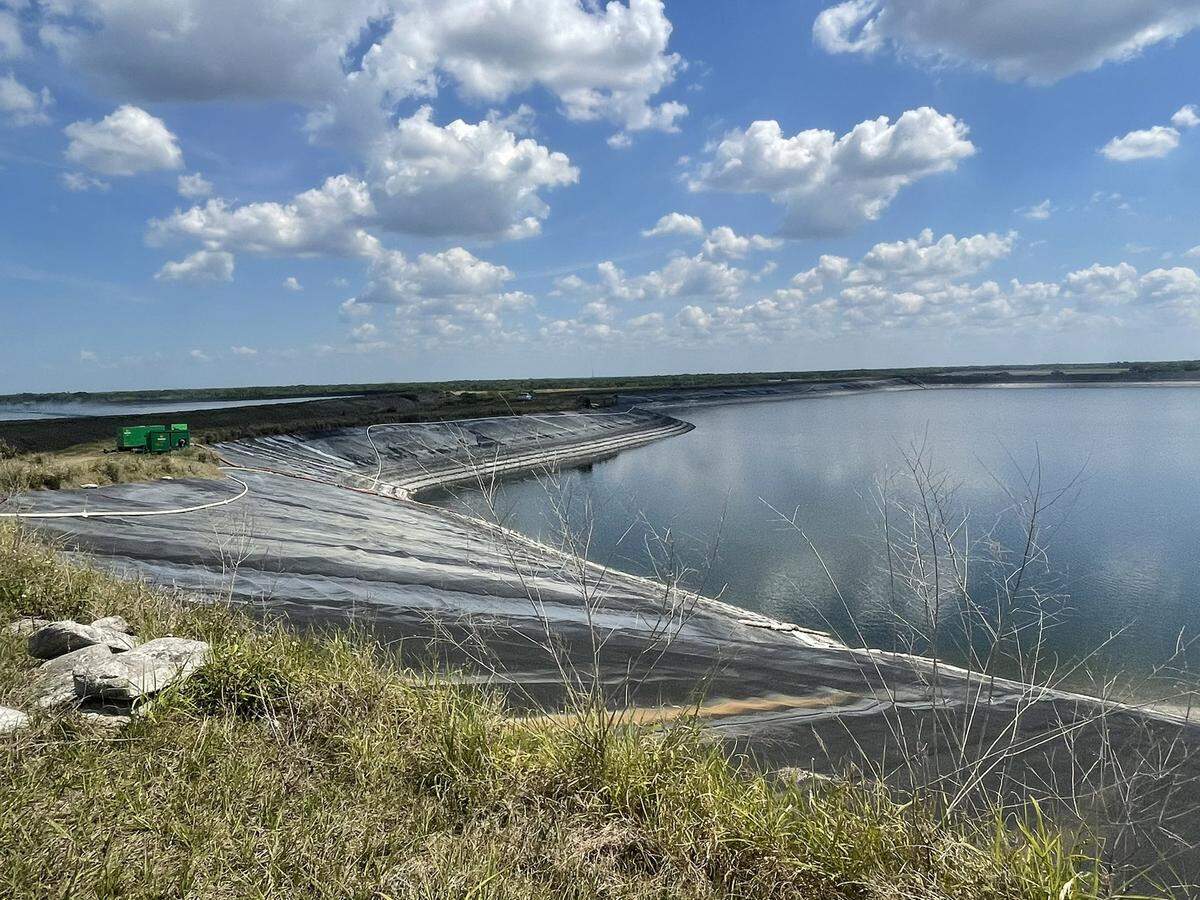
Following the discovery of a leak — and then a larger breach — at one of the site’s ponds holding about 480 million gallons of water, neighbors were put on alert, fearing a huge wall of water that could gush down at any moment.
Since then, county, state and federal officials and work crews in hopes of averting an environmental catastrophe by evacuating homes and piping water from the giant pond into nearby Tampa Bay. As of Tuesday morning, less than 300 million gallons of toxic water remained in the reservoir.
On Tuesday, the Manatee Board of County Commissioners unanimously approved a resolution allowing a hydrogeological engineering firm to begin the process of permitting and designing an underground injection well. In previous discussions about potential solutions at Piney Point, Manatee County officials have considered the idea of a deep well. After pre-treatment of the water, a deep well would send it about 3,500 feet below ground.
The county came close to building a Piney Point well when it asked for the necessary permits in 2013, but later reversed course over public concerns about how the well might cause problems in the future.
Tuesday’s resolution alleviated some of those concerns. Once construction is complete, the county would be in “total control” of the well, according to Acting County Administrator Scott Hopes. The water sent into the well would also be cleaned to a certain standard before it is sent underground.
“I think at the end of the day, this is a best-case solution to a worst-case problem,” Commissioner George Kruse said.
Commissioner Vanessa Baugh, who has tried to convince fellow board members to consider innovative water treatment technology, has said for years that a deep well would not be her preference for cleaning the Piney Point site. On Tuesday, she reiterated some of her worries about the proposal.
“A lot of citizens have been very concerned. I know the farm bureau has been concerned. Anytime you’re going down near the aquifer, that’s not a great situation, but under the circumstance that we are now in, we don’t have a choice,” she said.
Manatee Parks Director Charlie Hunsicker, in a memo to Acting Manatee Administrator Scott Hopes, said Florida had authorized the use of emergency funds. It’s not clear yet much the well would cost to build and operate.
According to Hunsicker, the county would own and operate the well on a 42-acre piece of county-owned land just south of the Piney Point site, which sits just across the U.S. 41 highway near Port Manatee.

In the months before the leak was detected, commissioners had begun to rally around closing the Piney Point site. The issue became Manatee’s No. 1 legislative priority and in a recent meeting, they voted to clarify that they would prefer a well over water treatment technology.
Despite the emergency authorization, the county is still expected to pay for half of a $12 million emergency water treatment program that is working its way through the Florida Legislature.
In an interview with the Bradenton Herald on Saturday, Noah Valenstein, secretary of the Florida Department of Environmental Protection, vowed to fix the problem. He said FDEP was committed to closing the site, which was first abandoned in 2001, for good.
“We’re going to take stock of the site once we get through this incident and figure out what’s the quickest, best way to make sure that the last chapter is written about Piney Point,” Valenstein said at the time.
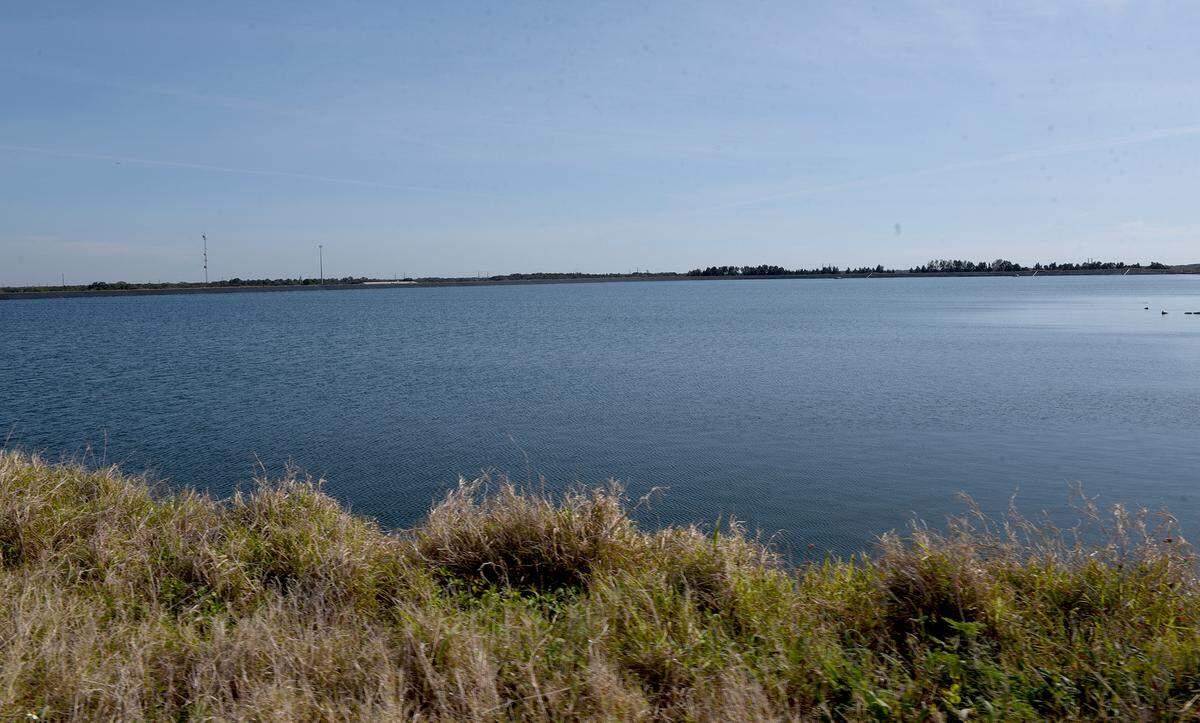
Piney Point’s giant ponds of process water have been a concern in the community for years. The stacks came under FDEP’s jurisdiction when former site owner Mulberry Corp. filed for bankruptcy in 2001. Since then, cleanup efforts have received little attention, and the amount of process water has continued to grow as rainwater filled the ponds.
The processing of phosphoric acid requires large amounts of water that are used to absorb heat from the machinery, according to the Florida Industrial and Phosphate Research Institute. After it has been used in the manufacturing process, that water is known as process water.
Because process water is high in nutrients such as nitrogen, phosphorous and ammonia, it must be treated before it is released into local waterways. However, methods to fully dispose of that water are estimated to cost more than $200 million.
Process water at Piney Point sits on top of gypsum stacks. Gypsum is a solid waste byproduct of phosphate mining. Because gypsum contains radioactive material, it must be covered and lined with a thick protective liner.
A tear in that liner is said to be the cause for a leak that site operators at Piney Point first observed on March 25. Since then, the leak spun out of control and threatened to send all 480 million gallons in that pond rushing into the surrounding area.
Over the weekend, Hopes warned that the worst-case scenario in the event of a full collapse would be a 20-foot surge of water. In an abundance of caution, Manatee officials ordered the mandatory evacuation of 316 homes in a roughly one-mile radius.
State Sen. Jim Boyd, R-Bradenton, is also in support of using state funds to resolve Piney Point. On Monday evening, he announced that he had spoken with Senate President Wilton Simpson, R-Trilby, and has his support in bringing forward a budget amendment that funds the full closure of the site.
“With at least one prior incident and now another, recent events have illuminated the need to fix this problem and put it behind us once and for all,” Boyd said in a statement.
According to a release, Simpson said some of the cleanup funds could come from Florida’s chunk of money included as part of President Joe Biden’s American Rescue Plan.
This story was originally published April 5, 2021 at 7:26 PM.