Florida issues permit for Piney Point injection well. When will the site be closed?
Construction is set to begin on the injection well that will pump the contaminated water at Piney Point underground in order to eventually close the troubled facility.
The Florida Department of Environmental Protection on Thursday approved the state permit, clearing the path for a roughly 12-month construction period to begin. Manatee County officials hope to have the well up and running by the end of the year.
“This project is one critical element of the necessary water disposal that will enable the ultimate closure of the Piney Point facility once and for all, eliminating the threat from this site to the environment and the community permanently,” FDEP said in a statement.
Piney Point, a former phosphate processing plant, posed a significant threat to the environment earlier this year when site operators discovered that one of the hazardous ponds had begun to leak. State leaders were eventually forced to dump 215 million gallons of contaminated water into Tampa Bay to avoid a larger disaster.
Thursday’s permit approval is the latest progress in an ongoing race against the clock at Piney Point. A patch to seal the leak remains in place, but rainfall continues to add new water to the ponds. Setting up the well as quickly as possible will be key in avoiding another crisis.
State and local officials have said that building an underground injection well, also known as a deep well, is the safest and quickest option to dispose of the hazardous material at Piney Point. Once complete, the well can begin pumping the contaminated water about 3,000 feet below ground and into the Lower Floridian Aquifer.
Six similar wells already exist in Manatee, including four that are run by the county’s Utilities Department for wastewater treatment.
“This is a proven technology. It’s been a tried-and-true method to safely dispose of effluent for over three decades,” said Mike Gore, the county’s Utilities director.
What happened at Piney Point?
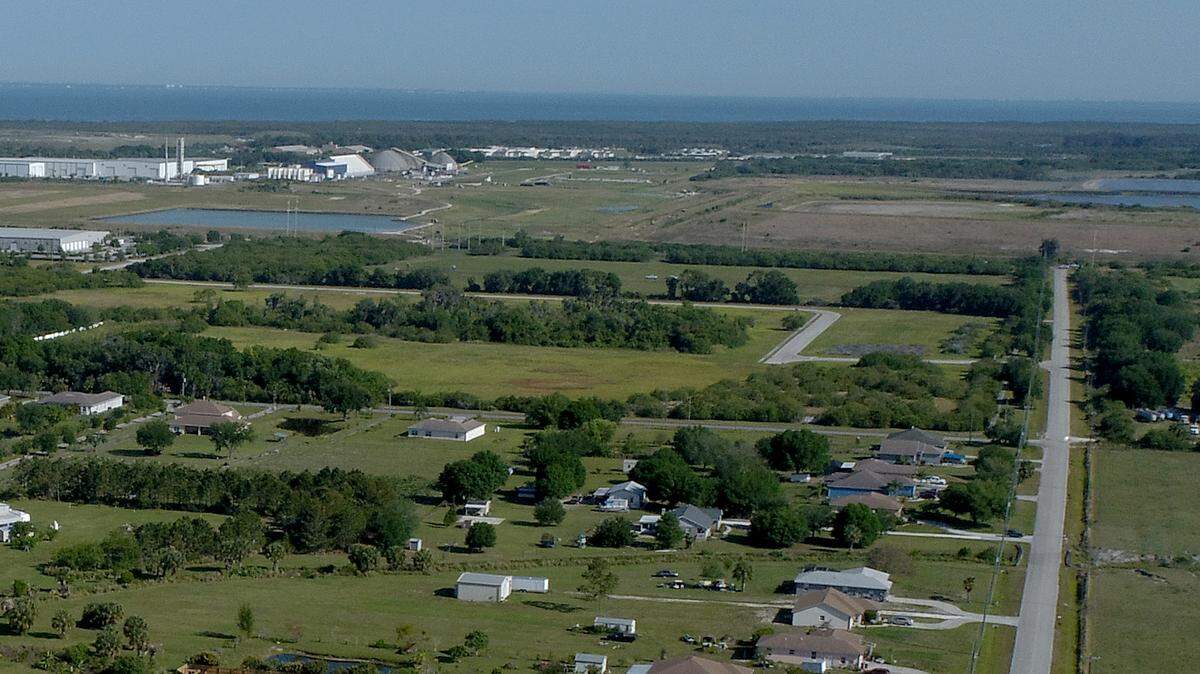
Before it was abandoned in 2001, Piney Point operated as a phosphate plant for several decades. The facility, which sits on the east side of the U.S. 41 highway near Manatee County’s northern border, took in phosphate rock to extract phosphorus, a key ingredient in fertilizer.
Piney Point’s factory operations left tons of hazardous byproducts on the site. The site used massive amounts of water to break down the phosphate rock, leaving behind ponds of what is known as process water. Process water is high in certain nutrients, such as nitrogen and ammonia, that need to be removed before it can be released into local waterways.
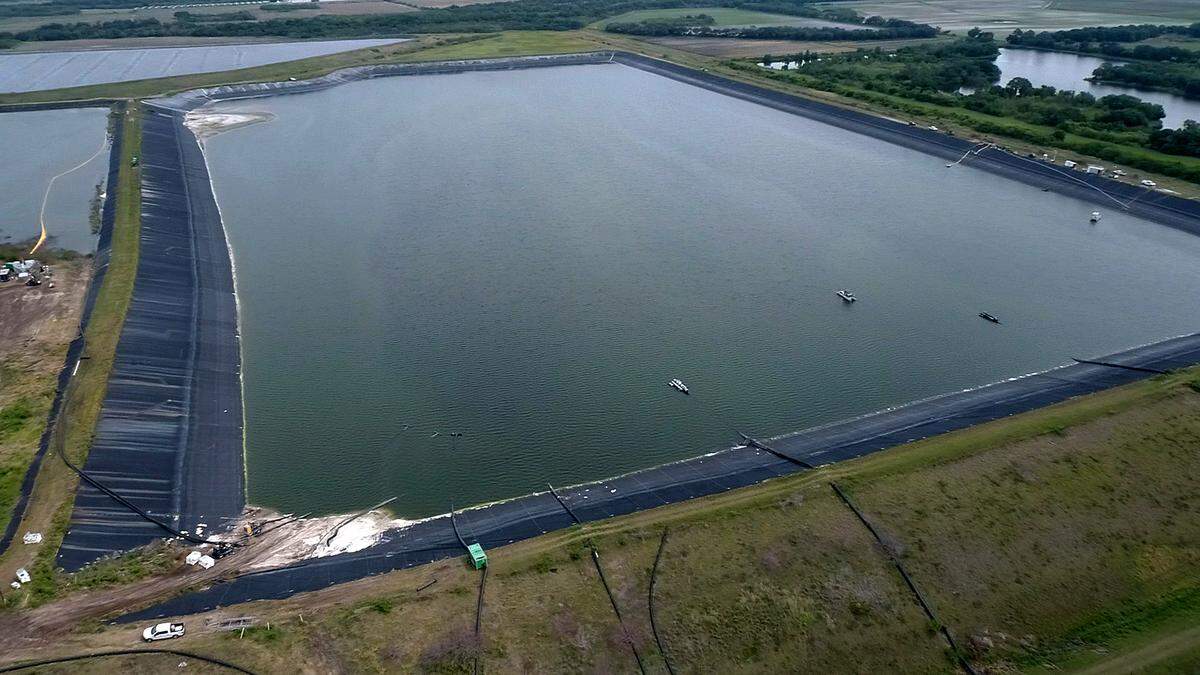
Once it’s broken down, phosphate rock leaves behind gypsum, a slightly radioactive material that cannot be used for any purpose. At Piney Point, the gypsum is piled into huge mounds and covered with a thick plastic liner to ensure it doesn’t contaminate the surrounding areas.
Ponds of process water holding roughly 800 million gallons sat on top of that liner before a tear was discovered in March. In order to prevent the entire system from collapsing, the state allowed 215 million gallons of water to be dumped into Tampa Bay. Scientists have said that release may have contributed to red tide this summer.
The environmental crisis garnered attention from the state’s top leaders. Gov. Ron DeSantis issued a state of emergency in April before directing the Florida Legislature to set aside $100 million for Piney Point’s closure. The governor is expected to approve another $100 million in 2022.
How will it help close Piney Point?
By the end of 2022, county officials hope to have finished construction on the well, which will sit just across Buckeye Road on 42 acres of county-owned property. County government officials will own and operate the well, giving them control over what it used for and how the water is treated before it is pumped underground.
Hydrogeologists say deep injection wells are a trusted method to dispose of wastewater. The well shoots the water about 3,000 feet below ground and into the Lower Floridian Aquifer, which is not a source of drinking water.
Once underground, natural processes are expected to remove contaminants from the water as it rises back up through the earth’s layers. The water is expected to reappear as clean water in the Gulf of Mexico in roughly 100,000 years, scientists say.
But the well at Piney Point isn’t a quick fix. The county expects to pump about 1 million gallons of wastewater a day. At that rate, it could take more than two years to get rid of the water on the site.
During that time, including hurricane season that begins in June, county officials will rush to get rid of the water faster than the ponds can fill up with rainwater. Because the ponds are so large, one inch of rainfall adds 3.7 million gallons of water to the site.
Critics oppose well technology
Despite its selection as the best technology to close Piney Point, the well has faced tough criticism from activists and some state officials. Several environmental conservation groups came together in September to announce a planned lawsuit if officials chose to move forward with the well.
“Florida’s officials are gambling with our water quality and our children’s futures,” said Annie Beaman, co-executive director of the Our Children’s Earth Foundation, one of the groups that joined in the lawsuit notice. “Manatee County’s proposal relies on guesswork regarding the long-term risks of injecting this dangerous pollution deep underground.”
Nikki Fried, Florida’s Commissioner of Agriculture and Consumer Services, called the permit approval a “reckless” decision. She said she wasn’t comfortable with the potential for the well to fail and affect the state’s drinking water.
“This is a mistake of historic proportions that will harm our environment for years to come,” said Fried, who is also running as a Democrat against DeSantis to become governor in 2022.
The county’s permit requires the construction of a separate monitoring well that is meant to detect any unforeseen changes in water quality. A monthly report will also need to be sent to state officials.
Speaking with a group of community leaders earlier this months, County Administrator Scott Hopes stood behind the decision to use a deep well at Piney Point.
“I’ve heard from everybody, from snake oil salesmen to other technologies and the only way that we can ensure it’s done as an environmentally sound process is to use a deep injection well,” Hopes said recently.
Once the well has removed all of the water from Piney Point, state funding is expected to be used for covering the gypsum mounds with soil, liners and sod to close the site permanently.
This story was originally published December 17, 2021 at 3:07 PM.