Plan to store Piney Point waste in deep well faces pushback from environmental groups
Environmental protection groups say they plan to file a joint lawsuit against Manatee County over a proposal to build an underground injection control well to dispose of Piney Point’s contaminated water.
An underground injection control well, which would send treated wastewater about 2,000 feet below the surface, is set to be the latest step toward closing the former phosphate processing plant. Earlier this year, a leak at Piney Point sent 215 million gallons of contaminated water into Tampa Bay.
While the Florida Department of Environmental Protection and outside engineers have touted the science behind underground injection control wells, organizers said the lawsuit is an attempt to get Manatee County to consider other cleanup alternatives.
“We strongly object to the current plan to discharge the wastewater into the well. The county and the commissioners are ill-informed about what they’re getting into,” said Justin Bloom, founder of Suncoast Waterkeeper, one of the organizations that threatened the lawsuit. “They’re rushing into what could be a very dangerous action. They really need to take a hard look at (underground injection control wells) before they move forward.”
The Board of County Commissioners voted to move forward with a $10 million underground injection control well, also known as a deep well, in April. A public hearing for the permit is set to be held at 4 p.m. Wednesday at the Central Library, 1301 Barcarrota Blvd., in downtown Bradenton.
Hydrogeology experts say the Piney Point well would pump the wastewater into the Lower Floridian Aquifer, where the water will undergo a natural treatment process over several thousand years. The wastewater will be fully clean when it reappears in the Gulf of Mexico 100,000 years later, according to scientists.
Reached for comment Friday afternoon, County Administrator Scott Hopes urged the environmental groups to attend that hearing in order to discuss their concerns with state experts.
“I believe the proposed plaintiffs, should they file a lawsuit, should attend the public hearing next week, so they can learn more about the proposed well and why it may be the least harmful option from an environmental perspective,” Hopes wrote in an email to the Bradenton Herald.
“My question for them is, what is their alternative solution and do they really want to risk another controlled or uncontrolled release of the process water into the bay?” Hopes added.
In previous discussions with the board, Hopes also emphasized that because the well would belong to Manatee County, commissioners will be able to determine what treatment the water must go through before it goes underground, giving local officials much more control over the operation.
Piney Point, which sits along U.S. 41 just south of Manatee’s northern border with Hillsborough County, became home to an environmental disaster in March once site operators learned that the largest pond on the site had begun to leak.
When the property’s previous owners abandoned the phosphate operation in 2001, they left their machinery and hazardous waste behind. Florida’s top environmental agency took control of the land, but a full closure of the site never happened.
While it was in operation, the Piney Point facility took in phosphate rock and ran it through machinery in order to extract phosphorus, a key ingredient in fertilizer. The water that helped run the machinery absorbed some of the nutrients that are known to be harmful to the environment, such as nitrogen and ammonia, and became classified as process water.
Because process water contains certain chemicals, it has to be treated before it can be released into the local waterways. Breaking down phosphate rock also created a byproduct called gypsum, which is slightly radioactive. Because of its radioactive nature, gypsum cannot be used for any other purpose.
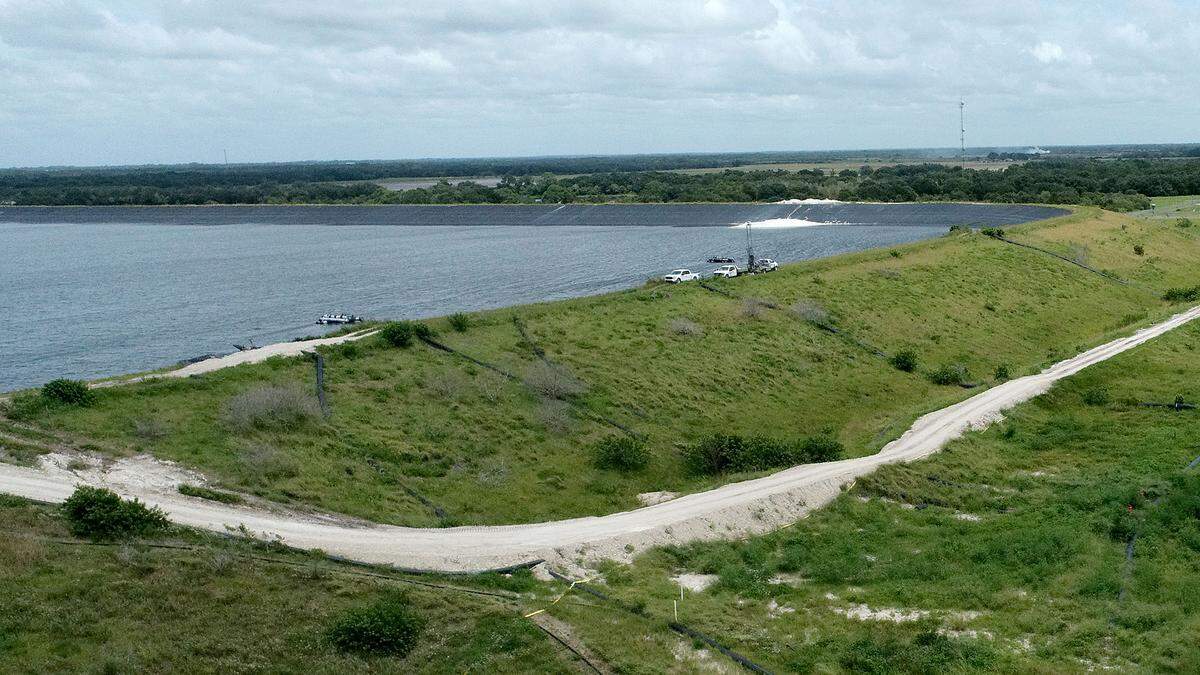
At Piney Point and other phosphate processing plants in Florida, gypsum is piled into huge mounds called gypsum stacks. The stacks are covered with heavy-duty plastic liner to prevent the material from contaminating the surrounding area. At Piney Point, the leftover process water sits on top of the mounds and their plastic liner, forming massive ponds.
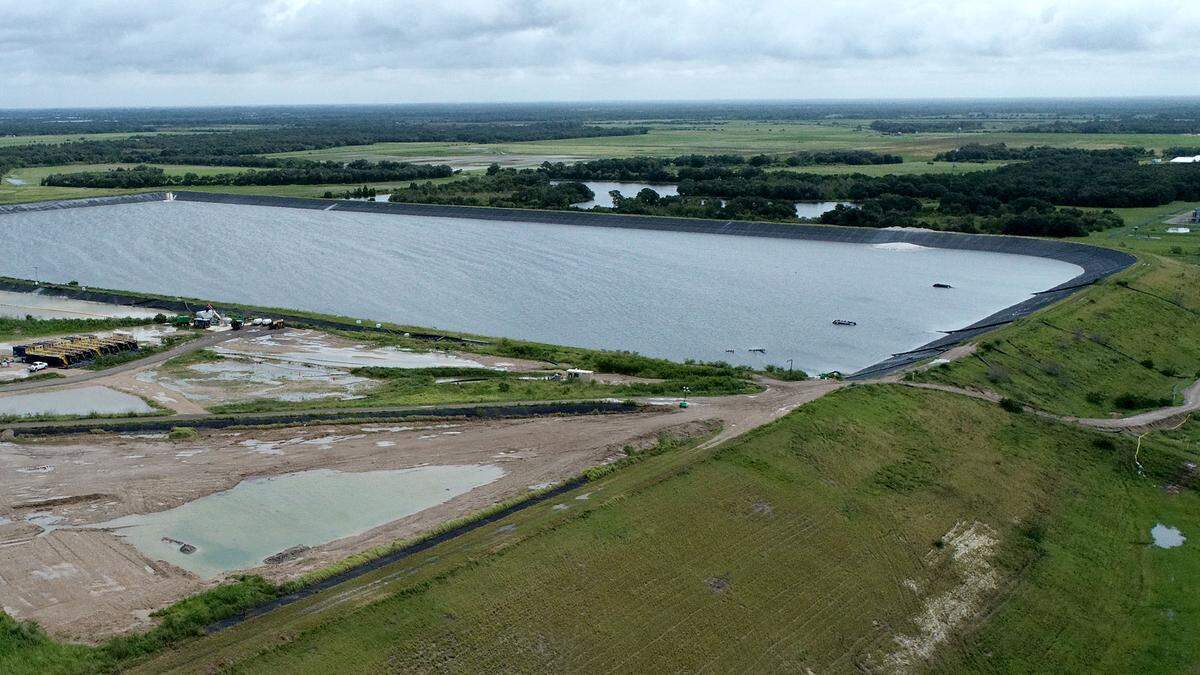
A tear in the liner of the largest pond on the site, which held 800 million gallons of water at the time, was discovered in March. The liner tear could have caused the entire stack system to collapse, leading state officials to authorize the emergency release of 215 million gallons of process water into Tampa Bay.
Now, as the Piney Point cleanup continues, environmental groups say an underground injection control well isn’t the only option that the county should be considering.
“It is both unlawful and unwise for Manatee County to inject Piney Point’s hazardous waste into the ground simply for the sake of expediency,” Daniel Snyder, an attorney representing the groups, said in a press release.
“Florida’s officials are gambling with our water quality and our children’s futures,” said Annie Beaman, co-executive director of the Our Children’s Earth Foundation, another group that joined in the lawsuit notice. “Manatee County’s proposal relies on guesswork regarding the long-term risks of injecting this dangerous pollution deep underground.”
Manatee’s commissioners were historically opposed to FDEP’s suggestion to use a deep well to clear the contaminated water from Piney Point. State officials made the recommendation in 2014, but the board backed away from the idea following concerns from residents and farmers concerned about the impact it might have on the county’s drinking water.
In a February 2021 presentation to the board, Mark McNeal, CEO of the ASRus hydrogeology firm, assured local officials that an underground injection well would provide several safeguards to prevent the waste from mixing with the drinking supply.
“Class I injection wells are monitored so that if migration of fluids were to occur, it would be detected before reaching what we call an underground source of drinking water,” McNeal said, pointing to FDEP’s strict standards.
In recent months, FDEP has touted its site cleanup progress, noting that innovative water treatment technologies have removed hundreds of tons of nitrogen and phosphorus from the process water. Process water can also contain heavy metals, such as lead, nickel and arsenic.
But in their 12-page lawsuit notice, conservation groups argued that sending that water underground isn’t a risk worth taking.
“(Commissioners are) only hearing from FDEP and engineering firms that are in the business of constructing these deep injection wells. I think they need to try to become better informed about the risks and the alternatives,” Bloom said.
This story was originally published October 1, 2021 at 3:37 PM.