Florida fears another spill at Piney Point as rain pushes hazardous site close to capacity
State officials are heightening the sense of urgency at Piney Point by asking a judge for an emergency hearing to appoint a third-party operator to take control of the troubled site.
Earlier this year, the Florida Department of Environmental Protection approved the release of 215 million gallons of contaminated water into Tampa Bay from the former phosphate processing plant. That decision was made in order to prevent a larger spill after site operators discovered a leak in a giant pond.
That release held off an emergency situation at the time, but recent rainfall has brought the issue back to the forefront. Saturday’s legal filing for an emergency hearing paints a grim picture of the current situation at Piney Point, which is located on U.S. 41 near Manatee County’s northern border with Hillsborough along Tampa Bay.
Since June, 23 inches of rain have fallen at Piney Point, adding roughly 169 million gallons of water. By the end of September, the site is expected to see at least another foot of rain, bringing another 60 million gallons of water.
That leaves one major problem, according to FDEP’s legal complaint: There’s only space for 52 million more gallons of water before the site reaches maximum capacity. If the ponds fill up, FDEP says it could result in another dangerous spill.
“Combined with additional significant rain volumes expected over the coming months as we continue into the rainy season, the potential for overtopping of the compartments into the surrounding areas, including Bishop Harbor (designated an Outstanding Florida Water), poses an imminent threat to public health and safety, and the environment,” the agency said in a press release. “Therefore, the department is requesting an expedited hearing to have a receiver appointed and in place as soon as possible.”
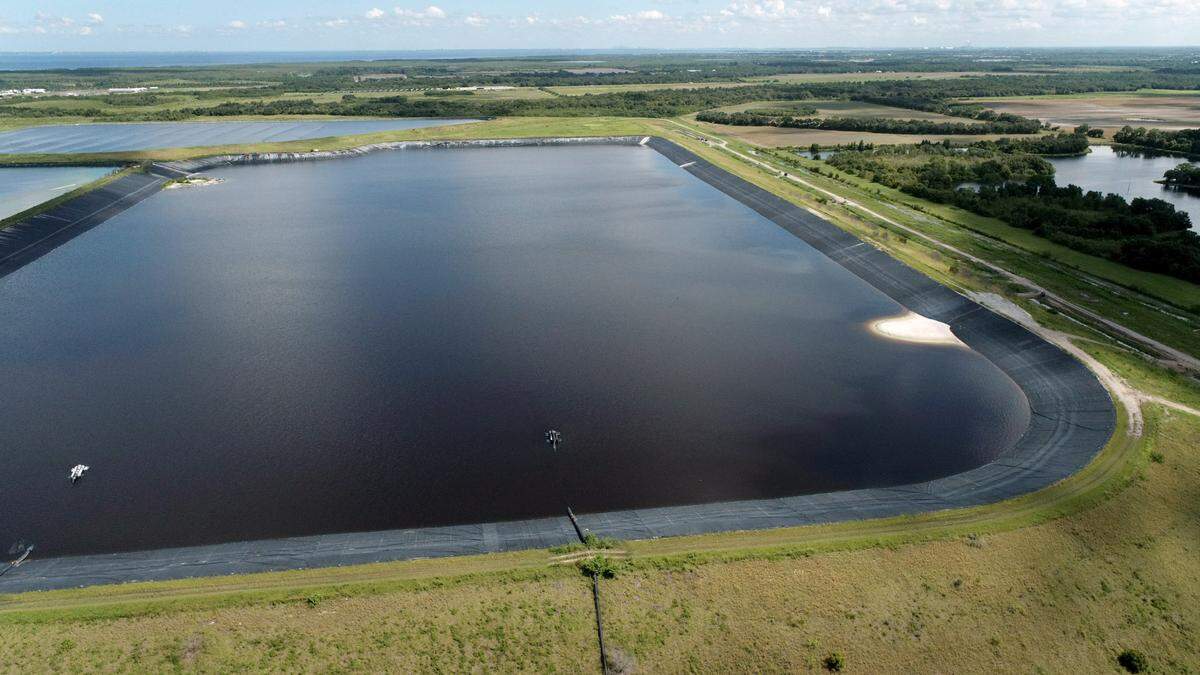
State officials recently filed a lawsuit against HRK Holdings, LLC, the owner of the Piney Point site. In a written complaint, the state’s environmental agency said it planned to levy significant fines against the company while pushing for a judge to give control of the site to someone else.
“HRK is incapable of operating the Facility in compliance with Florida’s environmental laws and the standards, permits, orders, agreements related to the management of the Property and Facility,” FDEP’s lawsuit said. “If HRK is allowed to continue operating the Facility and Property, irreparable harm is likely to occur.”
The emergency hearing motion notes that HRK hasn’t made significant progress in reducing water amounts at Piney Point in recent months. State officials hope that a third-party operator will handle the site more efficiently, preventing further disaster.
A date and time for an emergency hearing on the Piney Point site has not been set.
Engineers highlight capacity problem
FDEP’s emergency request comes after HRK’s own consultants warned of the rising water levels on the property. Engineers determined that the leak was caused by a tear in the liner, pointing to the liner’s age and history of tears.
Site operators were able to patch the liner tear in May, but elevated water levels could put that patch in danger. In public documents reviewed by the Bradenton Herald, HRK’s consultant urged the company to keep water levels much lower than they had been before.
“Any storage of water at levels higher than recommended above can result in increased risk of damage and failure of the liner breach repair mechanism, or opening of a new breach in the liner at a different location, resulting in an uncontrolled release of wastewater,” HRK’s hired engineers wrote.
Without major changes to the site, a report prepared on Aug. 4 by HRK’s consultants predicted that the site could reach capacity by the end of September. According to a press release from FDEP, the state is still pressuring HRK to manage the dangerous site in a safe manner.
“The department expects HRK to continue to explore all short-term water management options to remove water from the site, such as piping and trucking water to nearby water treatment facilities, until a receiver is appointed and long-term water management remedies are in place,” the agency said in a Sunday statement.
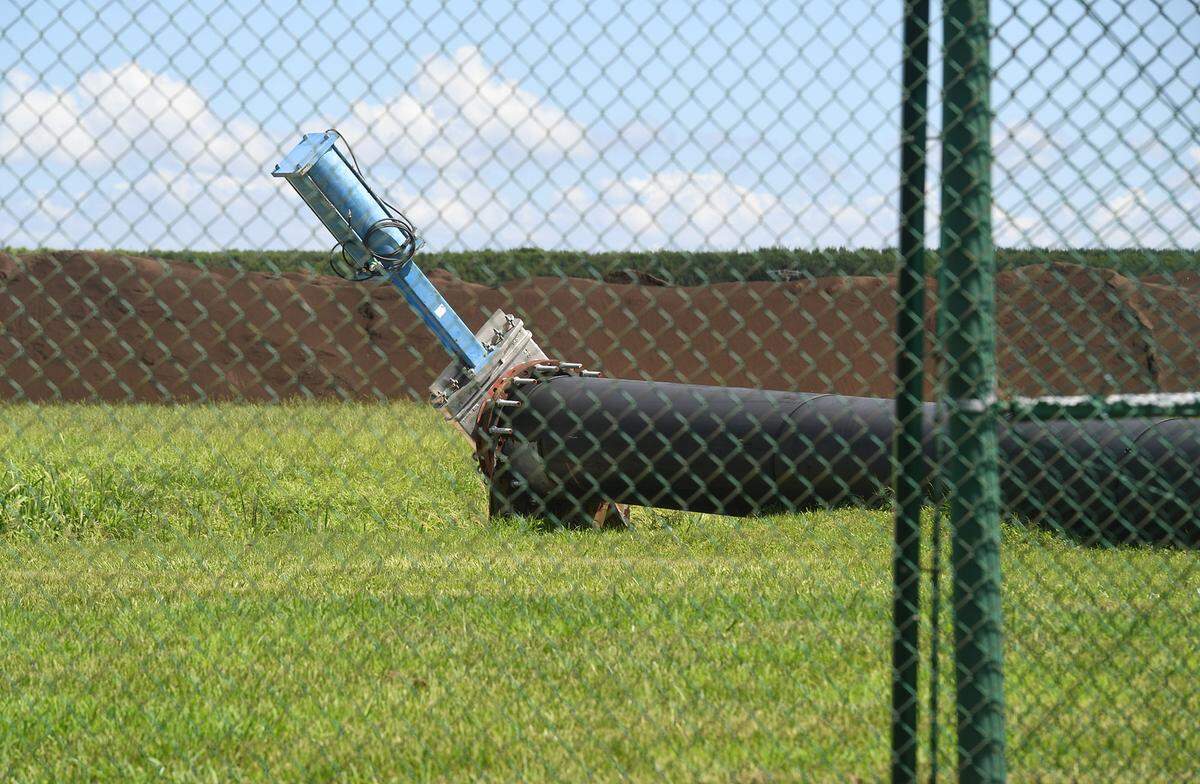
What is the danger at Piney Point?
The environmental crisis at Piney Point was years in the making. As a former phosphate processing plant, there are still tons of hazardous materials on the property. The most pressing issue is the millions of gallons of process water that former owners left behind.
Process water, which was used to help run the machinery, is high in nutrients such as nitrogen and phosphorus. Because those nutrients can have harmful impacts on the environment, that water must be treated before it is released into local waterways.
The ponds of process water sit on top of huge mounds of gypsum, a slightly radioactive byproduct that’s left over when extracting phosphorus, a key ingredient in fertilizer, from phosphate rock. Because it cannot be used for any purpose, gypsum is piled up to form large hills called gypsum stacks.
Those gypsum stacks are covered with thick plastic liners meant to prevent contamination into surrounding areas. Process water from the fertilizer operation sits above those stacks, with the liner separating the water from the gypsum.
State officials acquired the site in 2001 when the property owners went bankrupt and abandoned the operation. FDEP did not shut down the site at the time, instead choosing to sell the site to HRK. The company planned to use the site to turn a profit by managing the long-term closure of the gypsum stacks while leasing other parts of the 667-acre property to industrial users, such as warehouses and factories.
At the end of March, site operators went into crisis mode when they discovered a leak in the largest pond on the site. The leak threatened to destabilize the entire gypsum stack, which could have created a flood event.
In order to avoid the flood scenario, FDEP allowed some of the contaminated process water to empty out into Tampa Bay. By having a judge transfer the site to a third-party operator, state officials are hoping to avoid a repeat of that situation.
The nutrients in process water are known to contribute to harmful algae blooms, such as red tide. In the months following the initial Piney Point discharge, Tampa Bay suffered from a bout of red tide that scientists say could have been influenced by the site’s contaminated water.
In the meantime, Manatee County officials are hoping to get started on an underground injection control well that would dispose of the contaminated process water at Piney Point by pumping it below the Floridian aquifer. While experts say the water would go through a natural treatment process over the next 100,000 years, commissioners have said that they would prefer to see the water cleaned before it goes down the well.
A public hearing to finalize permits for the well is expected to be held at the end of September. The meeting will be publicly noticed at a later date.
This story was originally published August 17, 2021 at 1:12 PM.