Treatment makes wastewater at Piney Point cleaner, state says. Discharges could resume.
In a stunning turnaround, the controlled release of wastewater from Piney Point holding ponds into Tampa Bay could resume in coming weeks — but that water will be much cleaner, state officials say.
The Florida Department of Environmental Protection announced Wednesday that innovative water treatment technology has removed most of the harmful nutrients from the giant ponds of water at Piney Point, a former phosphate processing plant. Earlier this year, the agency was forced to dump 215 million gallons of contaminated water into Tampa Bay.
But heavy rainfall in recent months has brought Piney Point closer to max capacity. On Saturday, FDEP officials asked a judge to consider an emergency hearing to strip control of the site from the property owner, HRK Holdings, LLC, and turn it over to a third-party operator in order to prevent further disaster.
Since June, nearly 170 million gallons of rain have accumulated on the site, with another 70 million gallons of rain expected by the end of September. If action isn’t taken, officials say the ponds of contaminated water could fill up and spill over the sides, ending up in protected local waterways, such as Bishop Harbor.
While FDEP emphasized that discharges of wastewater have not begun, the state agency hinted at the possibility of another controlled release in the near future.
“At this time, treated discharges are not being conducted. However, with additional significant rain volumes expected as we continue into the rainy season, water levels at the site will likely need to be lowered at a future time to prevent the overtopping of on-site compartment areas into the surrounding area,” the agency said.
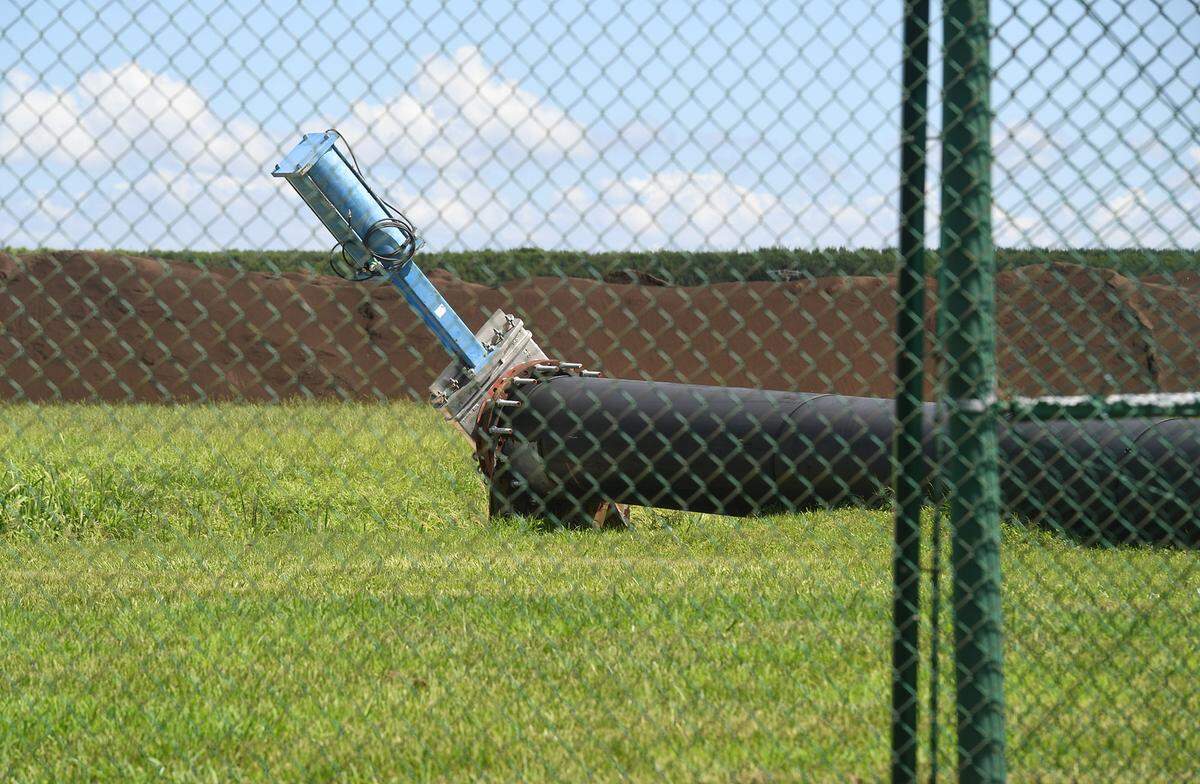
In the meantime, the state said it expected HRK to continue exploring every possible option, such as trucking water to other facilities and using a spray evaporation technique, to continue lowering the water levels. If a release has to occur, the treated water that would be pumped out to the bay would be far less dangerous for the environment, according to a press release.
Thanks to innovative water treatment companies that have been working on the site since April, FDEP officials are confident that the water stored at Piney Point is much safer than before. Those companies have already removed 200 tons of nitrogen and 150 tons of phosphorus from the water.
“This treatment will help minimize environmental impacts. Gallon per gallon, once treated, the nutrient loading from the discharge would be reduced by approximately 97-99% compared to the prior untreated conditions,” FDEP said.
Scientists have pointed to Piney Point’s discharge of the untreated contaminated water in April as a major contributor to the red tide that followed in Tampa Bay. The water that was discharged was rich in nitrogen and phosphorus, two nutrients that are known to fuel harmful algae blooms such as red tide.
FDEP’s recent request to turn the property over to a third-party operator is part of an ongoing lawsuit against HRK. HRK’s own consultant warned that the site will reach maximum capacity by the end of September, highlighting the likelihood of a controlled release of wastewater in the coming weeks.
The rising water levels pose a threat to the patch that site operators used to seal the leak that began earlier this year. A 10-foot steel plate is covering the torn liner, along with more than 17,000 cubic yards of sand. As the water levels rise, engineers say the extra pressure on the patch could lead to problems.
“Storage of water at levels higher than recommended above can result in increased risk of damage and failure of the liner breach repair mechanism, or opening of a new breach in the liner at a different location, resulting in an uncontrolled release of wastewater,” HRK’s hired engineers wrote in an Aug. 3 report.
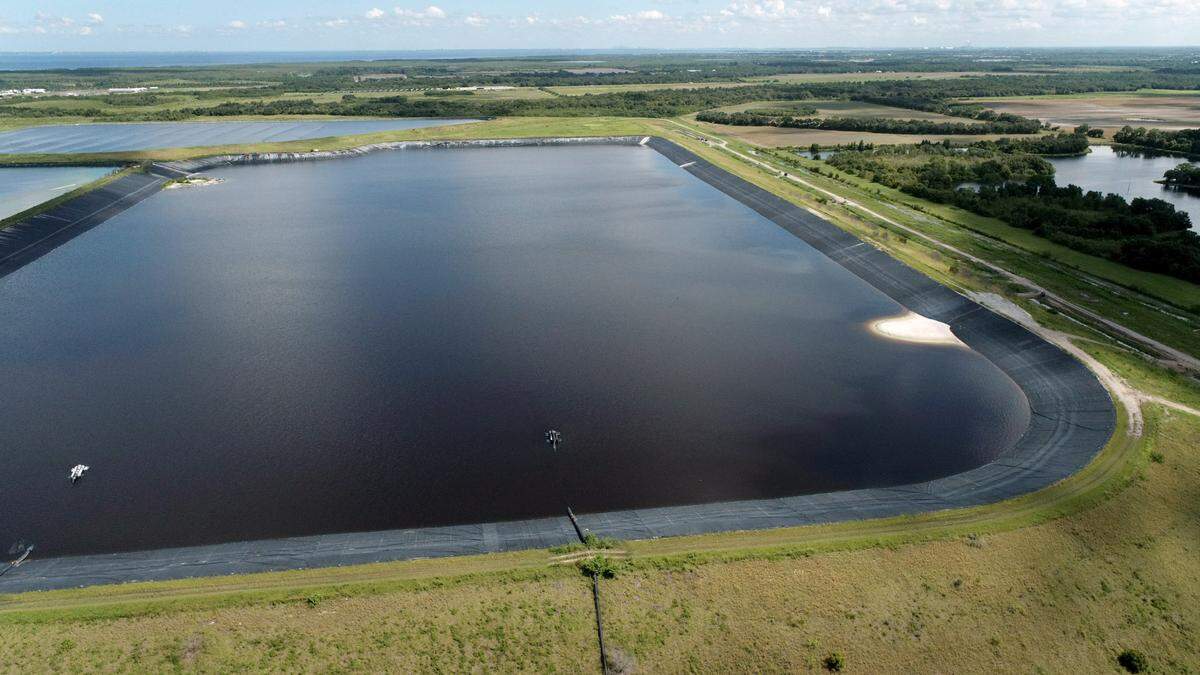
As a former phosphate processing plant, Piney Point holds millions of gallons of process water that hadn’t been treated to remove harmful nutrients. Process water, which was used to help operate the site’s machinery, is rich in nitrogen and phosphorus. Because those nutrients contribute to algae, process water must be treated before it is released into local waterways.
At Piney Point, the process water ponds are massive. They sit on top of huge mounds of gypsum, a slightly radioactive byproduct of phosphate rock processing. Because gypsum cannot be used for any other purpose, it is piled high on the site, forming what are known as gypsum stacks.
In order to prevent contamination with the surrounding area, the gypsum stacks are covered with thick plastic liners. The process water ponds, which held 800 million gallons of water in March, sit on top of those gypsum stacks.
Piney Point’s site operators have managed the site for 15 years, without making significant headway in getting rid of all the process water on the property. Last September, Jeff Barath, the site manager, alerted the Manatee Board of County Commissioners to a dangerous situation, noting that HRK has been unable to get rid of water faster than the rainfall that contributes to the problem.
By the end of March, Barath presented a devastating update: The largest pond, which held 480 million gallons of water, had begun leaking. At the time, the leak threatened to collapse the entire gypsum stack, leading Gov. Ron DeSantis to authorize a state of emergency and authorize the release of 215 million gallons of contaminated water in order to avoid that disaster.
In a lawsuit filed earlier this month, FDEP officials said they plan to hit HRK with huge fines in response to the leak, arguing that the company failed to meet a February 2019 deadline to remove the contaminated water from the site.
Local conservation groups have also criticized state leaders and launched a federal lawsuit, making a case that FDEP isn’t blameless in the Piney Point saga. When Piney Point was abandoned in 2001, it became the state’s property, but the government took little action to close the site for good.
Instead, FDEP sold the property to HRK in 2006 after the company hatched a plan to manage the long-term closure of the gypsum stacks while leasing the other 200 acres of the site to industrial users, such as warehouses and factories.
Manatee County leaders also are working with the state to approve and construct an underground injection control well that would shoot the treated wastewater up to 3,500 underground, below the Floridian aquifer. Experts say the water would undergo a natural treatment process before it reappears in the Gulf of Mexico 100,000 years later.
A public hearing required as part of the permitting process is expected to be held by the end of September. That meeting will be publicly noticed at a later date.
This story was originally published August 18, 2021 at 6:24 PM.