
Manatee wants to protect more land from development. What will it cost you?
Funding more land conservation could be on the ballot for Manatee County voters this year.
To do that, voters would most likely have to approve a new tax, according to the Trust for Public Land, the national conservation group that helped Manatee County put its 2020 conservation referendum on the ballot. Now, commissioners are considering a plan to take environmental land purchases even further.
Manatee County voters passed the 2020 measure by 71%, agreeing to fund the purchase and upkeep of new parks and preserves through a 0.15 mill property tax and up to $50 million in bonds. Bonds allow the county to access cash immediately to start purchasing land.
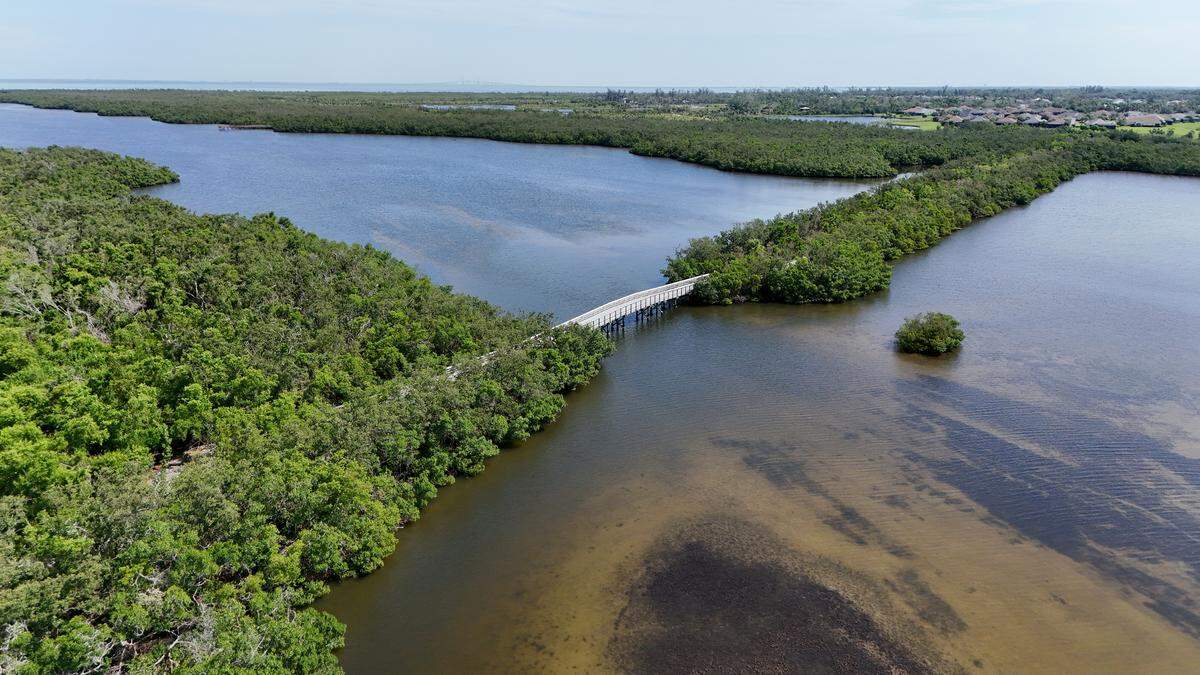
The referendum funds have allowed the county to purchase seven properties totaling over 305 acres to expand existing parks and establish new ones. They include over 90 acres for an expansion of Emerson Point Preserve in Palmetto and creation of the 67-acre Crooked River Preserve in Parrish and the 103-acre Triple Oak Preserve in Myakka. Several more purchases are in progress.
But the program’s $50 million limit is now maxed out, leaving a limited pool of money for new land purchases. While the voter-approved property tax draws in several million dollars each year — for example, this year’s expected revenue is $11.2 million, according to the Trust for Public Land — most of those funds go to paying the bond debt and funding the building and maintenance of new parks.
As development continues at a rapid pace, county leaders are considering options to raise more money for land conservation.
At a recent board meeting, the Trust for Public Land presented several options the county could use to ask taxpayers for more land-buying power via a new referendum in November.
Now, the group is preparing to gauge public interest in the idea with polling before the board decides whether to move forward.
How could Manatee County fund more conservation?
The Trust for Public Land recommended that voters could choose to raise money for land conservation by increasing the tax rate, increasing sales taxes or bond options.
Any option would be in addition to the current millage for the Environmental Lands Program, which costs the average homeowner about $47 per year, according to Trust for Public Land figures based on single-family homes and condominiums.
Commission weighs options for land conservation
Commissioner George Kruse questioned whether the county could increase its conservation budget without raising residents’ property tax bills by asking voters to approve additional bonding capacity with the existing millage. Kruse previously pushed for such a move in 2024, but the board at that time opposed it.
“Did you run an analysis that just showed what, realistically, is the maximum bonding capacity based upon our existing millage? All of your solutions ... involve people paying more,” Kruse said.
He argued that the board is trying to lower the millage this year, and asking voters to add a new tax could cancel that out.
But Will Abberger, vice president of conservation finance for the Trust for Public Land, said that could be a stretch. He said that while it could be possible to fund extra bonding capacity with the existing millage, there may not be enough funds available to achieve the county’s conservation goals.
According to the Trust for Public Land’s report, the county is already using about two-thirds of the annual income from the referendum property tax, leaving little left over for large land purchases or taking on new bond debt.
For example, this year’s expected revenue from the millage is $11.2 million. Of that, $7.6 million is already pledged for debt, expenses and parks management, leaving $3.6 million. An additional $1.4 million in program revenue is expected to come from other sources, including user fees at parks.
Florida law requires the county to use the millage to pay the bond debt first, before any other uses — currently about $2.9 million per year, according to the report.
“The question becomes what’s left over after the debt is paid off, and how does the county want to use it?” Abberger said.
Whether the county opts to pursue more bonds, a new property tax or a combination of the two, voters would still have to approve the change, Abberger explained.
Commissioner Tal Siddique said he favors a bonding approach if the county moves forward with another referendum.
“It’s just more doable, and more easy to understand for voters,” Siddique said.
What happens next?
The question of whether to fund more land conservation comes as anti-development sentiment remains strong in Manatee County. At the same time, property taxes are under scrutiny in Florida as Gov. Ron DeSantis and other Republican leaders push to eliminate them.
The Trust for Public Land report notes that property tax cuts could threaten the future of local conservation programs like Manatee County’s. The organization will conduct polling in the coming weeks to see how residents feel about another conservation referendum, and potentially paying more taxes to support it.
“Based on what we learn in the feasibility research and the poll, we’d be back in front of you later this summer with a recommendation on whether or not to proceed,” Abberger said.
That update is expected in June, county staff said.
“I’m looking forward to seeing what the data shows. Because the best data we have is 71% approval from 2020,” Siddique said. “Certainly development is a top issue of mind, but I also think a lot of people don’t fully understand just how quickly we bought so much property and bonded out ... and just how many acres we have preserved.”
“People also seem to be under the misconception that we would sell off the land to develop into hotels or something,” Siddique added. “That’s not the case ... they’re very much going to be kept as they are.”
Voters will definitely see one conservation question on the November ballot, according to county staff.
Currently, the county can only use funds from the 2020 tax to buy land outright. But with a voter-approved amendment, the county could use those funds to buy conservation easements as well. If approved, the county could buy development rights on large tracts of agricultural land. While the lands would remain in private hands, they would be permanently protected from high-intensity development.