
‘We’re not playing anymore.’ Manatee County officials planning big development changes
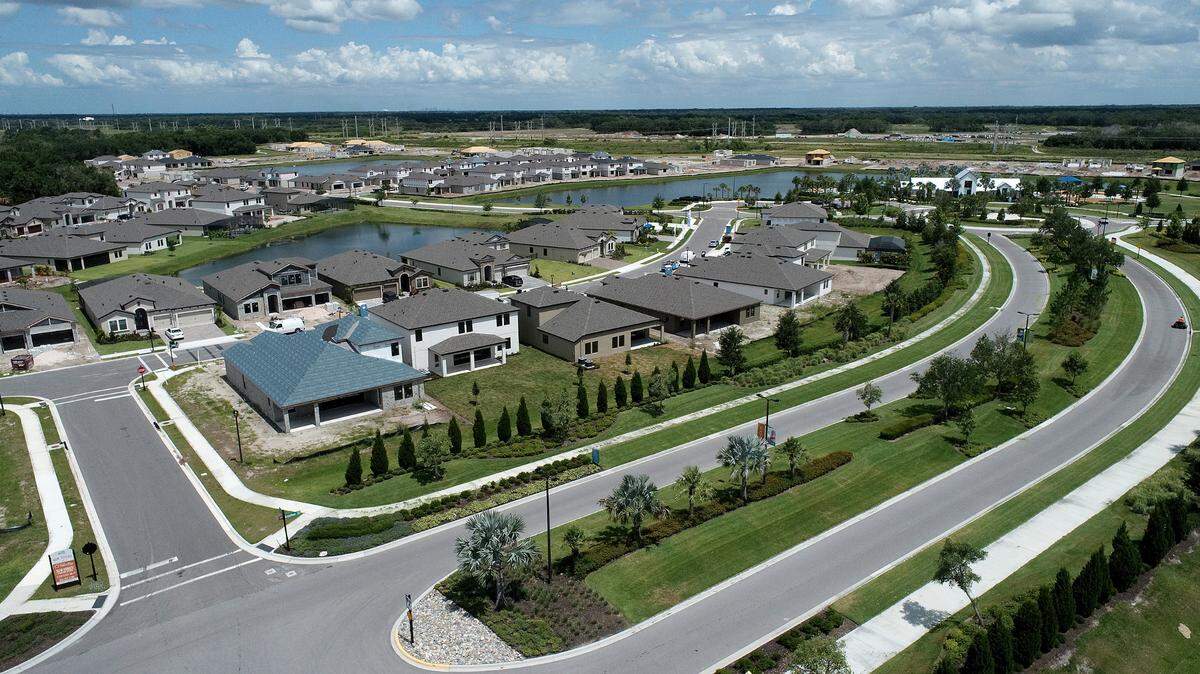
Manatee County officials are making moves to put more guardrails on local development.
A new batch of commissioners elected in 2024 campaigned on reining in growth that some residents feel is happening too fast, especially in East Manatee County.
Now the new leaders are looking for ways to give residents more input on development projects and require developers to do more to support infrastructure. They’ve also started the process of rolling back some of the pro-development changes made by previous boards.
A series of recent actions approved by a majority of commissioners include:
- Moving to restore local wetland buffers that protect environmentally sensitive areas from development.
- Moving to seek the highest impact fees possible from developers. Developers pay impact fees to help cover the costs of roads, sewers, emergency services and other needs created by new development. The previous board voted to increase the fees by 50% over the next four years, but the new board has ordered a study that could allow the county to increase the rate and collect millions more.
- Moving to undo a 2021 Comprehensive Plan amendment that let some development occur east of the county’s Future Development Area Boundary.
- Moving to require neighborhood workshops for all proposed development projects.
But other ideas, including a potential moratorium on development recently proposed by Commissioner Bob McCann, remain up for debate as the new board figures out how far it wants to go in limiting growth.
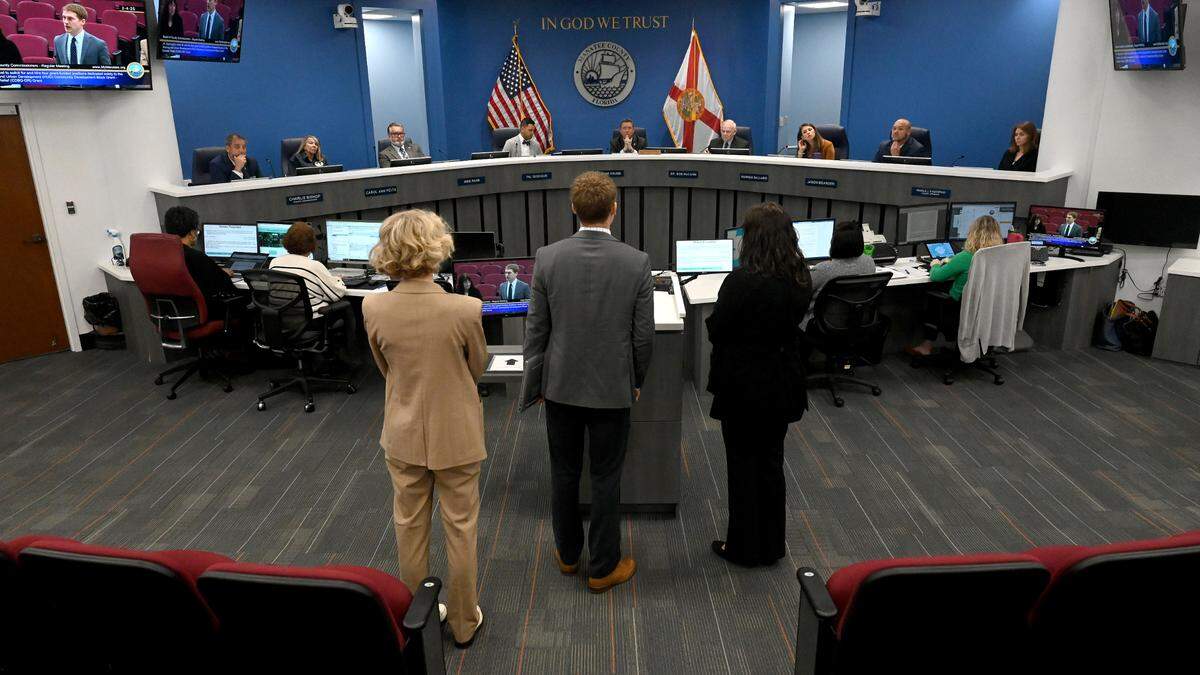
Commission debates how best to address development concerns
While the new board has moved forward on several development issues, its first few months have not been without conflict. Commissioners have clashed over how much they should dial back on growth. They have also debated the proper legal process to update development rules.
Some commissioners have expressed frustration with the time it will take to reverse policies set by former commissioners. But the county attorney’s office says those reversals will require a lengthy public hearing process.
During a recent public meeting, commissioners debated for hours about whether they could put a last-minute halt on some East Manatee County development projects that had already been approved. During hearings for final plats, which determine whether a pre-approved development meets county requirements before construction begins, Commissioners Carol Felts, Jason Bearden and McCann voted against approving several projects.
Commissioners George Kruse and Tal Siddique argued that it was the wrong approach to curbing development and could waste taxpayer money with legal challenges that the county is likely to lose.
Could Manatee County pass moratorium on development?
McCann has repeatedly raised the possibility of a one-year development moratorium in District 5, which includes Lakewood Ranch and parts of East Bradenton.
In a presentation to fellow commissioners on Jan. 28, McCann argued that the county needs time to catch up to an influx of new residents with upgrades to infrastructure to prevent flooding and traffic congestion.
“We are building and building and building in Manatee County to the detriment of the people that live here,” McCann said. “The builders want to build houses. They want to put those in before we have roads, before we have stormwater drainage taken care of, before we have even the river cleaned out.”
McCann said he wanted to “start the conversation” with prominent developers to find solutions. A moratorium could be a last resort, he said.
“I’m hoping to ... actually bring the builders to the table so we can start the discussion, so we can actually work together,” McCann said. “Then we can avoid this moratorium. If not, then I’ll make a motion.”
The idea received support from Bearden and Felts, who said she would like to see a moratorium in District 1 as well.
“Can we do that? We can try. We’re not playing anymore,” Felts said.
“We wouldn’t have this discussion about a moratorium if we did things the right way,” Bearden said. “Because if we did things the right way, then our roads would have been built.”
Other Florida communities consider pausing development
Other Florida municipalities have considered similar measures to address flooding and infrastructure concerns.
City officials of Edgewater in Volusia County recently passed a one-year moratorium on certain kinds of development, including new single-family homes in flood-prone areas.
“During the temporary moratorium the city will repair, maintain, and improve ditches, canals and other stormwater systems while the city awaits the completion of the master stormwater plan to make new improvements,” city officials said in an update.
Volusia County officials considered a similar county-wide measure but decided instead to pursue other options to address local flooding, including stronger wetland protections and canal cleaning.
But some Manatee County commissioners argued that a moratorium might not be the right answer.

“The reality is we all have infrastructure problems,” Siddique said. “Every county in Florida is feeling it ... because we’ve been behind in infrastructure and growth. I don’t think this moratorium really addresses the underlying issue, which is really under-investment in your infrastructure.”
Siddique argued that the board can better address development-related issues by updating the county’s Comprehensive Plan and Land Development Code.
“I think there are other issues that we can certainly fight for residents on,” Siddique said.
“There are lots of things we can talk about that aren’t as absolute as a moratorium,” Commissioner Kruse said. “You can start putting people in a position where it makes it more difficult for them to build. And if they do build, it’s going to cost them more, allowing us to cover the cost of their development. And they’ll be more encouraged to do it in a sensible way based upon policies that we put in.”
McCann did not make a motion related to the moratorium but said he would bring the issue back at a future meeting.
Residents could get more input on growth
In another move, Commissioner Felts recently made a successful motion to change how the county informs residents about proposed developments in their neighborhoods.
Felts called for county staff to prepare an amendment to the Land Development Code that will require neighborhood workshops for all projects. Felts called it a “little step” toward giving residents more input.
“We all know that I’ve had an issue with the little yellow signs (and) the amount of notice that we get,” Felts said, referring to the public meeting notice signs posted in places where new development is proposed. “What we’re trying to do is adopt some procedures that will lend to greater transparency, and our citizens will be informed, educated and involved in the process so we can be fairer to everyone.”
Commissioner Mike Rahn questioned whether the rule change would over-regulate developments that are not impacting residential areas. Commissioner Siddique argued that requiring the meetings for all projects could “unfairly target” affordable housing and redevelopment projects that the board wants to support.
“It’s just jumping to another extreme and I think over-regulating the issue,” Siddique said.
But other commissioners were supportive, and the measure passed 5-2 with Siddique and Rahn dissenting.
“I think having neighborhood meetings in any and every case is a good thing,” Commissioner Amanda Ballard said.
Several residents called in to support the move.
“We never know when something is happening in our area until it’s too late,” East Manatee County resident Paula Loomis said. “It has been grossly overdeveloped.”
Leaders move to undo development-friendly rule for East Manatee County
Commissioners also recently voted to undo a Comprehensive Plan change made in 2021 that allowed new housing construction east of the county’s Future Development Area Boundary. The rule change led to thousands of new homes approved beyond the boundary.
In recent years, commissioners debated whether the FDAB should be moved farther east, and previous District 5 Commissioner Raymond Turner even floated the idea of getting rid of the boundary entirely.
But today’s board signaled it will reinforce the line and prevent new development on the other side.
The board recently voted unanimously to begin the process of repealing the 2021 Comprehensive Plan amendment.

This story was originally published February 7, 2025 at 5:50 AM.