Hospital fought family of brain-damaged baby for years. The girl died. The fight raged on
READ MORE
Birth and Betrayal
A Florida program designed to protect OB-GYNS from huge malpractice bills deprives families of their right to sue in the event of a birth gone terribly wrong. It provides a one-time payment and promises to cover lifetime medical expenses. Some hard-pressed parents report a bureaucratic nightmare that’s anything but supportive.
Expand All
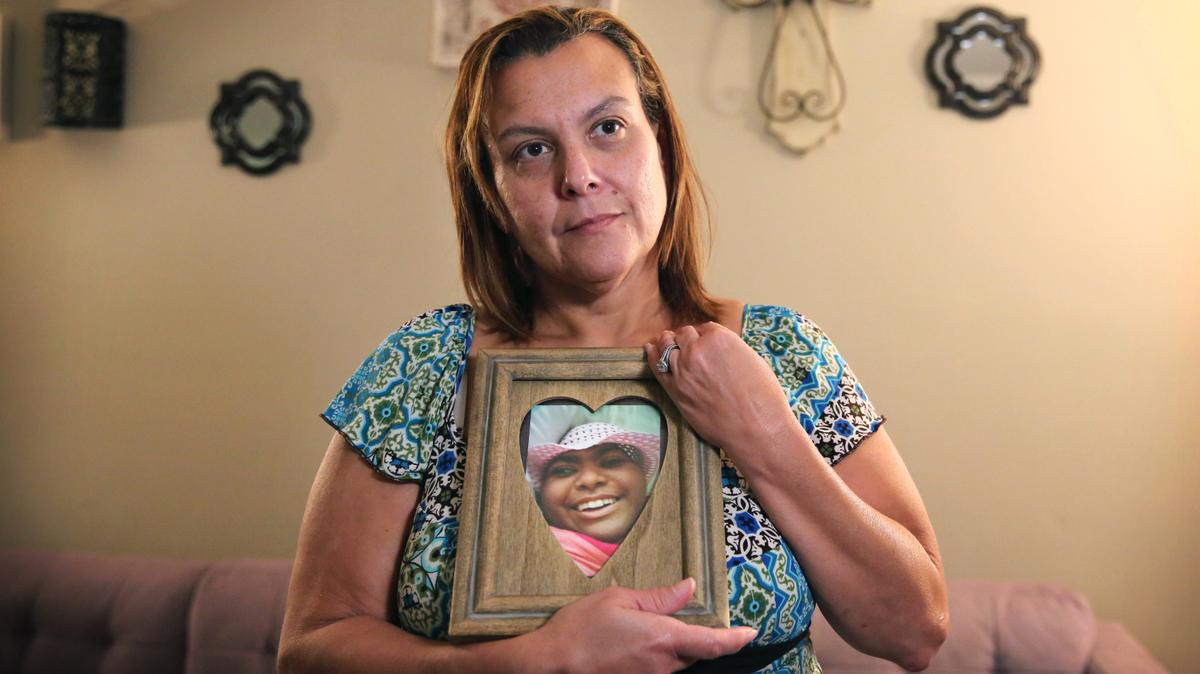
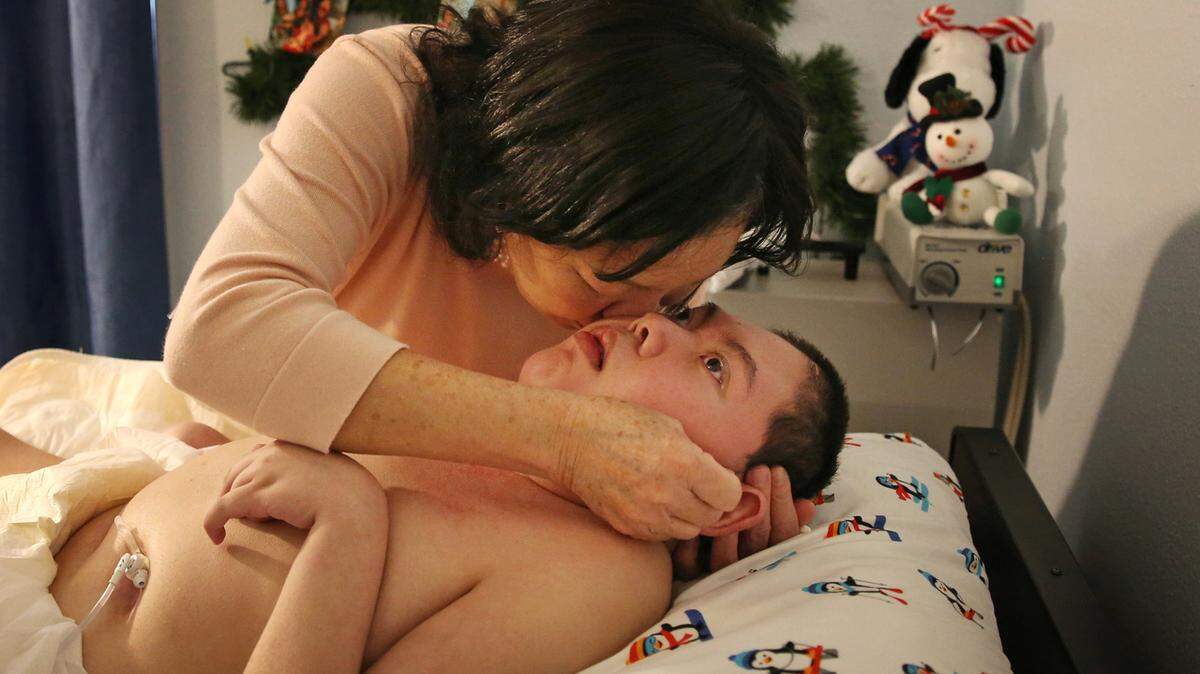
Lylyauhnie Williams died on Jan. 2, 2016, the day before her fourth birthday. That would be a tragedy for any family. The cake, the candles, the cheerfully wrapped presents — all gone.
But for Lylyauhnie and her parents, Desiree and Robert Williams, those treasures of childhood were all but lost four years earlier, on Jan. 3, 2012, the day she was born with profound brain damage. Her birth triggered years of litigation between Lylyauhnie’s parents and the hospital where the little girl was born.
The end of Lylyauhnie’s life brought one last bitter realization. In the antiseptic calculus by which courts assign a monetary value to human suffering, the death of a frail, brain-damaged child often reduces the amount in damages paid by a hospital or doctor. If the child lives, the judgment or settlement is generally higher.
The litigation outlasted Lylyauhnie by a year.
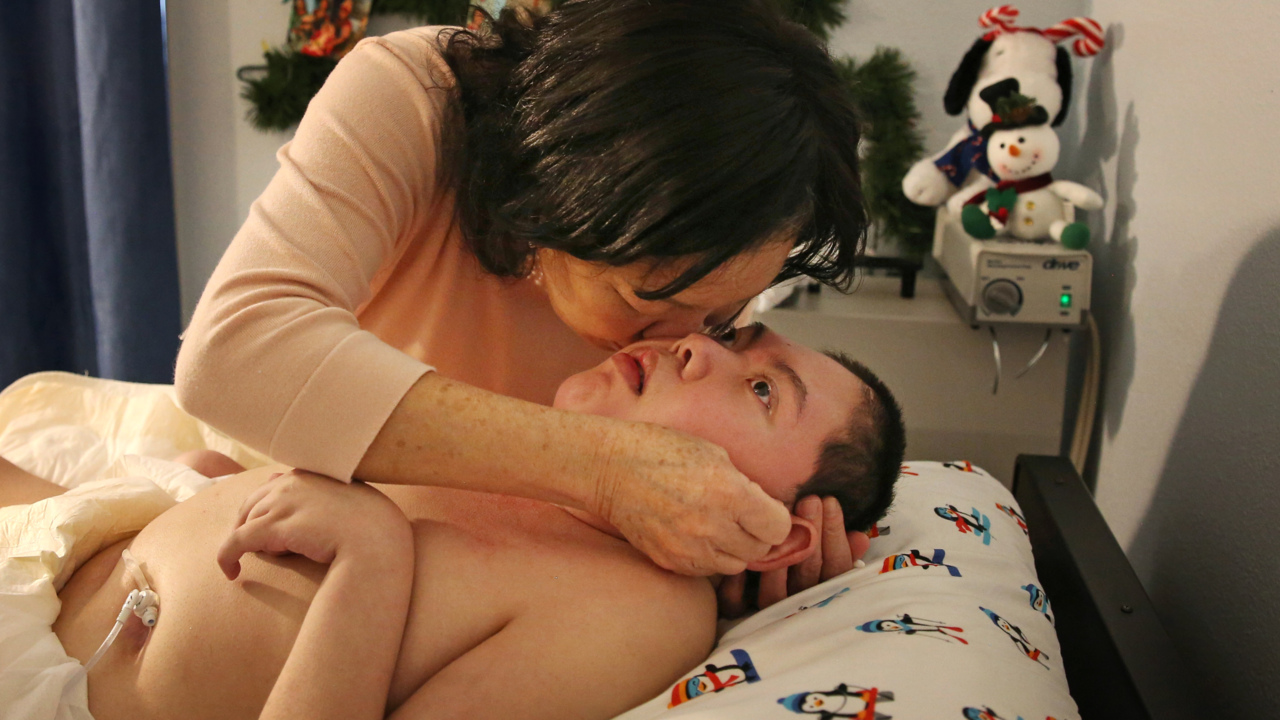
When a child is born with catastrophic brain damage due to oxygen deprivation during delivery, parents often find themselves routed into Florida’s Birth-Related Neurological Injury Compensation Association (NICA). The 33-year-old program, set up to protect obstetricians from medical malpractice lawsuits, pays families $100,000 upfront, and promises to cover the cost of medical care for the life of the child.
Lawsuits where newborns sustain injuries like Lylyauhnie’s can pay millions more than that — while also holding someone accountable for the child’s condition, which is why parents sometimes look for loopholes to get out of NICA.
But when parents like Desiree and Robert Williams try to extricate themselves from the program, they find themselves fighting a war of attrition — often against adversaries with the time and resources to outlast them. The pushback by powerful institutions can add months or years to the process. In the Williamses’ case, they battled for 859 days at the Division of Administrative Hearings, where NICA claims are litigated, before their malpractice lawsuit could even be heard.
Their opponent was Palms West Hospital in Loxahatchee, which is owned by HCA, a multibillion-dollar health care giant.
_fitted.jpeg "download (79)_fitted.jpeg")
Whether by design or just due to diligent lawyering on behalf of clients able to mount multiple appeals, the gears of justice grind slowly.
“You can drag it out in a way that causes people to lose heart and to give up,” said David Hyman, a doctor and lawyer who teaches health law and policy at Georgetown University Law Center, “or to lose heart and take less, or to lose heart and take NICA.”
And in litigation over frail, medically complex children, delays can change the very nature of the dispute: The subjects of the litigation sometimes die.
“Cases that are known as ‘bad baby’ cases are worth millions if the child is living, and potentially worthless … if the child dies,” Hyman said. “The dead child doesn’t have any future medical expenses.”
Though she was, first and foremost, Desiree and Robert Williams’ infant daughter, Lylyauhnie, also called Lyly, was what some lawmakers and attorneys grimly called a “bad baby,” at least back when the NICA law was passed.
In 1988, the Florida Legislature sought to immunize doctors and hospitals from the financial consequences of births like Lylyauhnie’s that went catastrophically wrong. Some lawmakers called the legislation “the bad baby bill.”
The law prevents the parents of children like Lylyauhnie from pursuing a lawsuit against their doctor or hospital for malpractice, except under a handful of circumstances. Instead, lawmakers created NICA, a no-fault program.
Only one other state — Virginia — has a program like NICA. Anywhere else, cases like Lylyauhnie’s can and sometimes do generate millions in damages.
Parents often find out about NICA after they try to sue in civil court and the hospital or doctor invokes their protections under the program. Typically, the lawsuit is paused while the parents petition for NICA. But in Lylyauhnie’s case, the Williamses went to NICA first.
The critical issue wasn’t whether Lylyauhnie suffered severe brain damage; NICA experts said she suffered a neurological injury at birth, the result of oxygen deprivation, which left her “substantially” impaired both physically and cognitively, as the law requires.
The question was who should pay: The hospital wanted to force Lylyauhnie’s parents to accept NICA compensation, which would have meant the hospital owed nothing. The Williamses were able to reject NICA because a provision of the law requires that the hospital provide families with timely notice of its participation in the program. The administrative judge ruled it had not.
The hospital argued that, by rejecting NICA’s no-fault benefits, the Williamses were placing their own needs above their daughter’s.
Resolving the dispute involved a five-year slog through four separate venues — administrative court, where NICA cases are heard; civil court, where lawsuits are adjudicated; probate court, where judges can appoint guardians to safeguard a minor’s interests; and the Fourth District Court of Appeal.
By April of 2015, a West Palm Beach probate judge became exasperated when, after a string of defeats, hospital lawyers wanted the judge to allow them to select a guardian to represent Lylyauhnie’s interests. The lawyers acknowledged they hoped the guardian would find the parents were acting contrary to what was best for Lylyauhnie and that the judge would then send the case back — yet again — to administrative court and NICA.
Judge Krista Marx told hospital lawyers they had no standing, adding: “Good luck finding authority that’s going to convince me that that’s appropriate.”
Robert and Desiree Williams did not respond to interview requests from the Miami Herald. The details of their litigation are contained in voluminous records from the various courts.
Neither Palms West nor a hospital lawyer, Robert Biasotti, would discuss the family’s litigation.
Williams arrived at Palms West at close to 2 a.m. on Jan. 3, 2012, records show.
By 5:36 a.m., according to administrative court records, a monitor began to register an abnormally low fetal heart rate for Lylyauhnie, and a nurse attending the delivery “failed to call” and alert Williams’ doctor.
Questioned later under oath, Williams said she became alarmed when she could not hear the baby’s heartbeat while in the delivery room. She “advised [a nurse] and advised and advised again and again that I could not hear the baby’s heartbeat.”
In the deposition, Williams said the nurse told her “ ‘well, I can hear it,’ and she walked out.”
Williams said in the deposition that the charge nurse — a supervisor — seemed concerned after examining Williams. The unborn baby’s umbilical cord was wrapped around Lylyauhnie’s neck — twice — essentially strangling her.
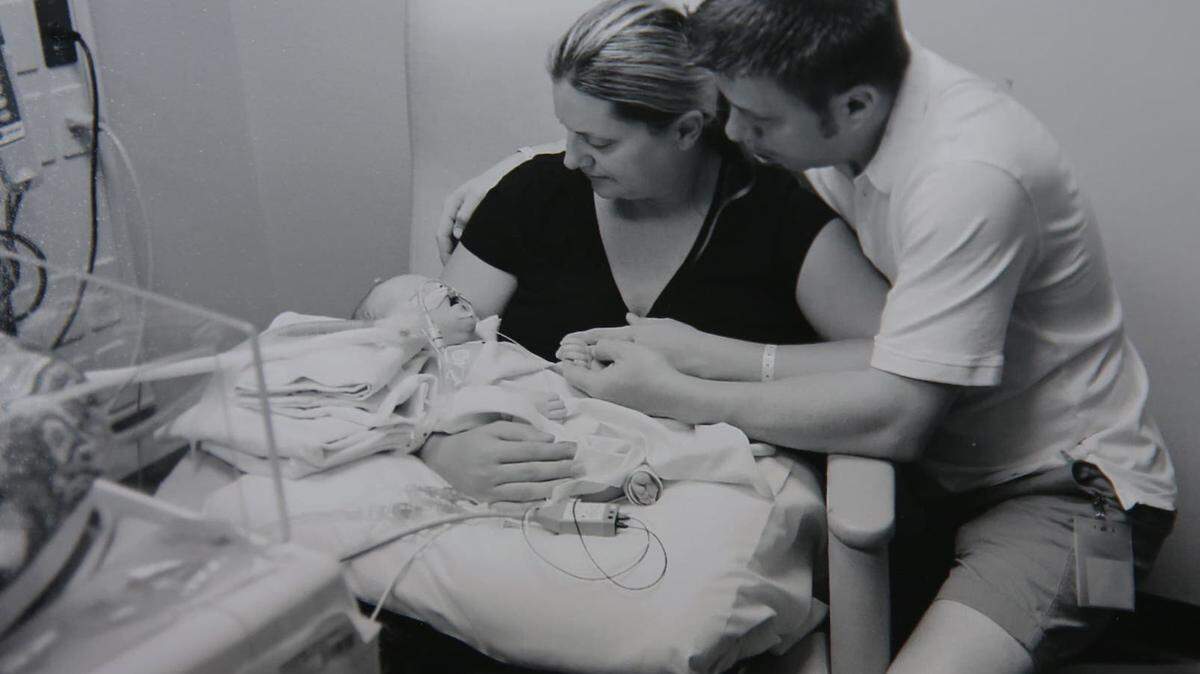
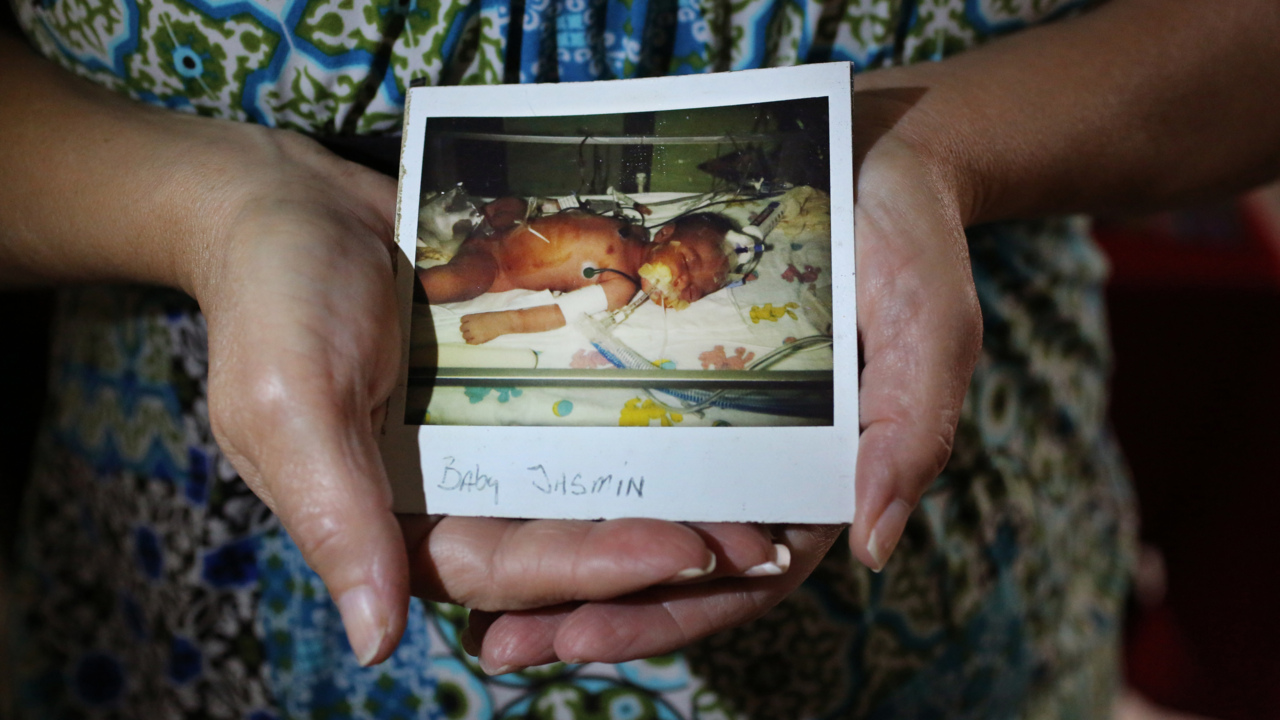
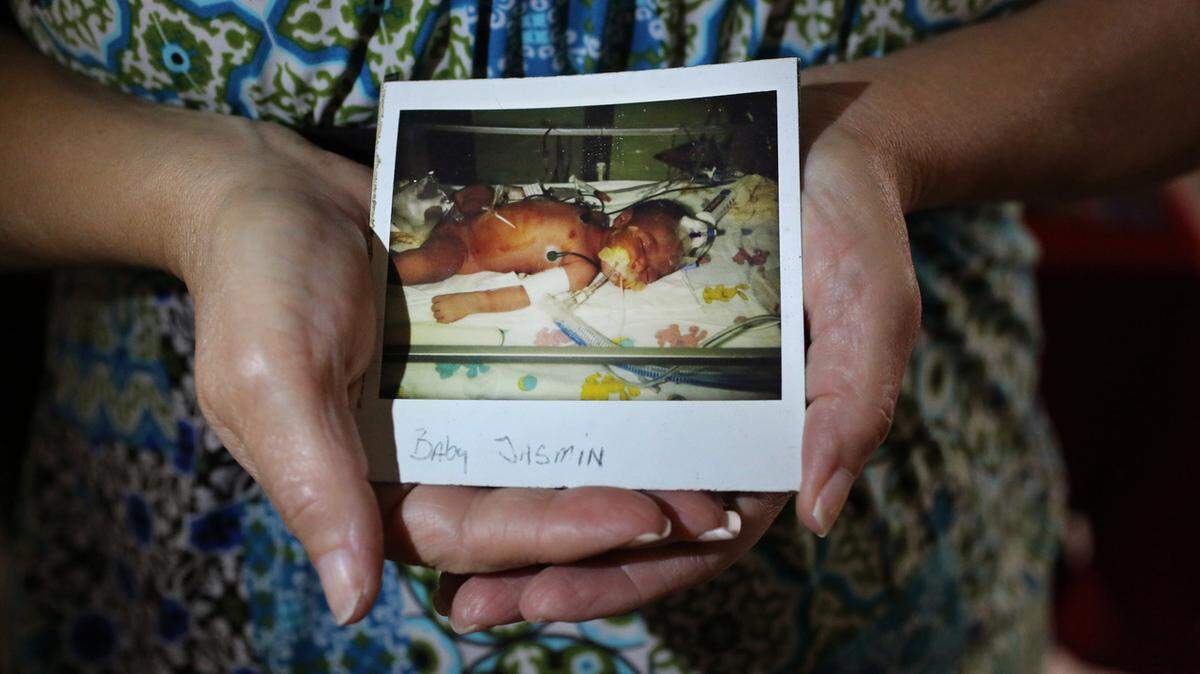
Lylyauhnie Williams was delivered by C-section at 6:42 a.m., “born in a vegetative state with no heartbeat,” the couple said in a court document. Doctors were able to restart Lylyauhnie’s heart, but the newborn experienced seizures. Doctors inserted a breathing tube, and then placed Lylyauhnie on a ventilator. Later, she was airlifted to St. Mary’s Medical Center in West Palm Beach, a larger hospital with more sophisticated resources.
The Williamses filed the NICA claim in March of 2012, then amended it that July after hiring new lawyers, signaling their intention to fight their way out of the program.
The couple argued that they had not been properly notified by Palms West that the hospital participated in NICA, whose rules bar lawsuits provided the baby met certain criteria. Parents must be given adequate time to choose a provider that isn’t in the program.
When Susan Belyeu Kirkland, the judge who presided over the NICA claim at the state Division of Administrative Hearings, or DOAH, ruled that the hospital had indeed failed to give the family adequate notice, that freed the Williamses to pursue a medical malpractice claim in Palm Beach Circuit Court.
In civil court, Palms West’s lawyers continued a years-long campaign to override the parents’ decision and send the case to NICA.
The defendants said in a pleading that Lylyauhnie’s parents rejected “substantial, immediate, no-fault benefits” — meaning NICA — “in order to pursue a speculative, complicated civil lawsuit” against the hospital.
Court dockets contain three requests from Palms West or Williams’ obstetrician, and an appeal, all seeking to appoint the guardian. The hospital kept losing, but the clock kept ticking and the calendar kept advancing.
Ultimately, as it became likely that the Williamses would be allowed to sue the hospital, the parents made their own request for a guardian. That was in probate court, and the purpose was different. This guardian would oversee Lylyauhnie’s interests as the litigation progressed and a financial settlement came nearer.
The hospital didn’t like the choice of the guardian, an attorney who specializes in estate planning and trusts, and asked for a new one — one who might be inclined to send the case back to NICA. That brought the parties to Krista Marx’s courtroom in April 2015.
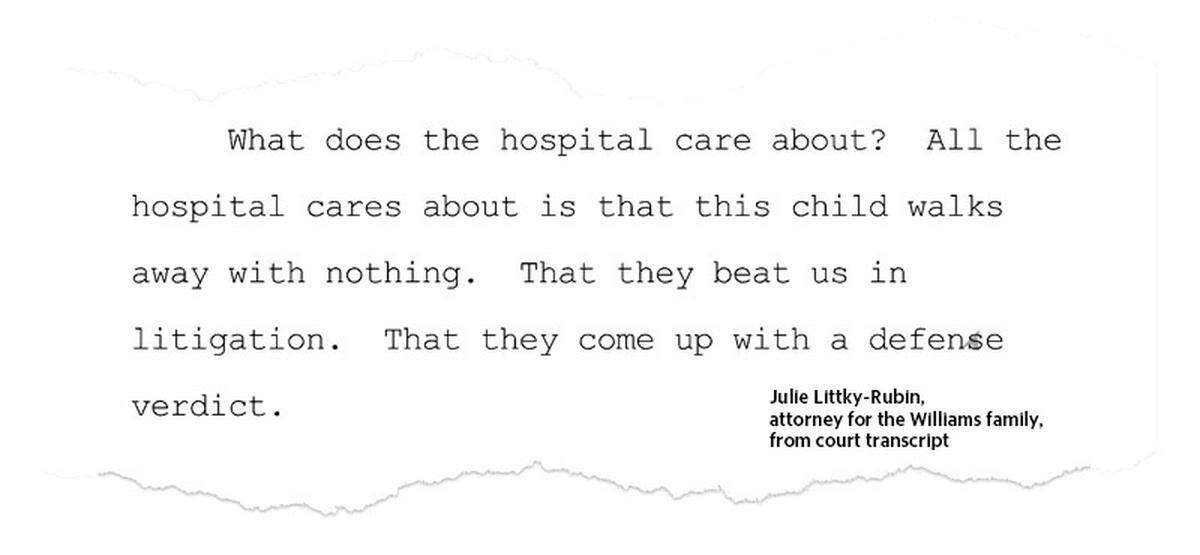
An exasperated Julie H. Littky-Rubin, the lawyer for the family, scolded the hospital for arguing in open court “with a straight face” that it — more than the family — was concerned about Lylyauhnie.
“What does the hospital care about? All the hospital cares about is that this child walks away with nothing. That they beat us,” Littky-Rubin said.
“The hospital has been unrelenting,” Littky-Rubin said. “The time has come, Your Honor, for this to end,” she said.
What ended first was Lylyauhnie’s life.
Lylyauhnie never became a NICA client. But NICA was a hurdle that her family required more than two years to overcome. Such programs can become a “procedural roadblock or speed bump” to securing justice, one that “violates our sense of fair play,” said Carmel Shachar, executive director of the Petrie-Flom Center for Health Law Policy, Biotechnology and Bioethics at the Harvard Law School.
On Dec. 6, 2016, Palms West Hospital’s insurer settled with the couple for $2.25 million. Palms West spent another $906,203 on attorney fees and court costs.
The time lost — and the death of Lylyauhnie Williams — reduced the hospital’s liability, said Nancy La Vista, one of the family’s lawyers.
This past month, after a series of articles by the Miami Herald and the investigative reporting nonprofit ProPublica, the Florida Legislature passed a sweeping overhaul of NICA, sending the bill to the governor for his signature.
In a prepared statement responding to the reporting, NICA said it supported the Legislature’s reforms, including increasing the one-time parental “award” from $100,000 to $250,000 and adding a parent to the NICA board — a measure the executive director had previously rejected.
“NICA aims to treat every family in the program fairly and individually, providing the benefits they are entitled to based on their specific needs,” the statement said.
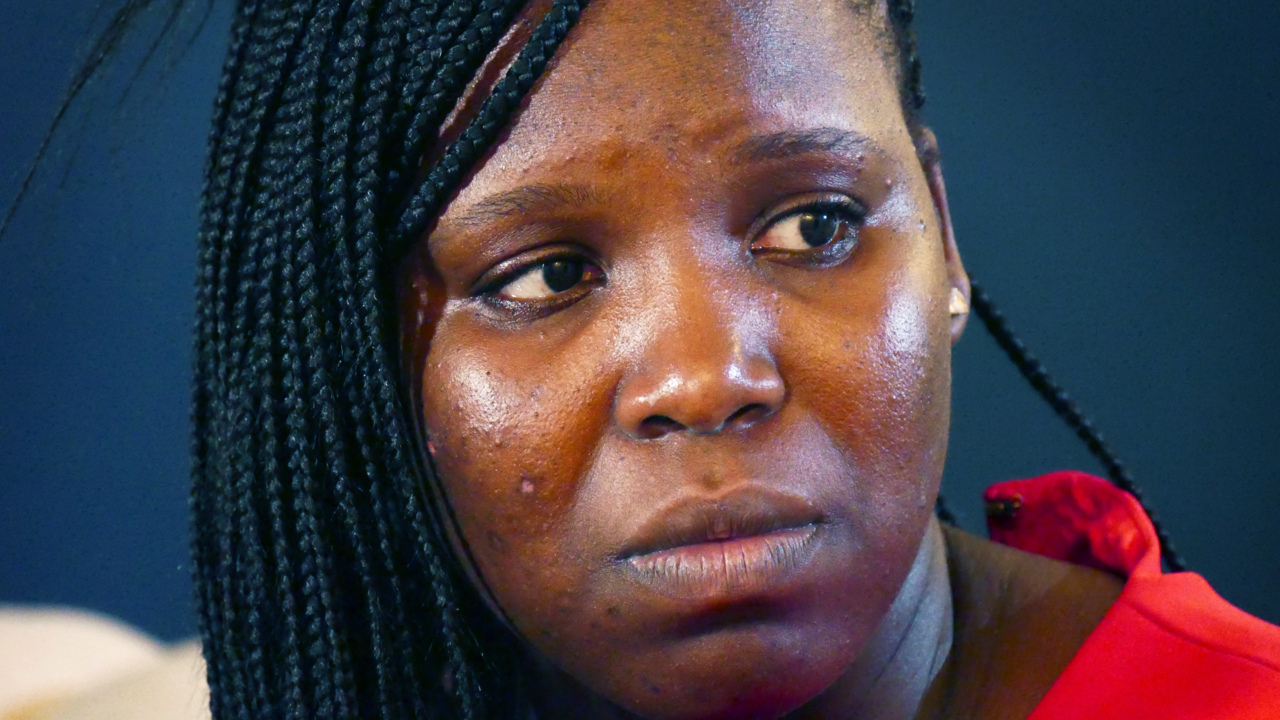
Under oath, Desiree Williams was asked what she thought about NICA.
“It’s a sorry excuse for doctors and nurses to get away with neglect,” she replied.
This story was originally published April 30, 2021 at 4:07 PM with the headline "Hospital fought family of brain-damaged baby for years. The girl died. The fight raged on."