Jury finds Sur 13 gang member guilty in Bradenton shooting that killed 24-year-old
A Bradenton man and previously documented gang member is facing life in prison after a jury convicted him of murder in the 2019 fatal shooting of 24-year-old Joshua Gonzelez.
Bradenton police found Gonzelez dead on Feb. 11, 2019, when they were called to his home in the 2200 block of Seventh Avenue East in the Manatee Mobile Home Park.
Catalino Reyes, 26, and two other men were wearing masks and dressed in black when they broke into the victim’s home. Reyes was shot in the face during the exchange of gunfire, and a trail of his blood leaving the scene was later found.
On Thursday afternoon, after deliberating for about three hours, a jury of six men and six women found Reyes guilty of first-degree felony murder.
“We are extremely satisfied with the jury‘s verdict and thank them for their considerable attention. The citizens of Bradenton will be safer now that the defendant will be in prison,” lead prosecutor Rebecca Freel told the Bradenton Herald.
The victim’s wife was present in court earlier on Thursday, but not at the time the verdict was read.
Reyes now faces an automatic sentence of life in prison. A sentencing hearing has not yet been set.
The two other suspects have never been identified by police.
Reyes had been released from a Florida prison seven months before the shooting for a 2013 conviction for possession of ammunition by a person less than 24 years old previously found delinquent. His previous conviction include grand theft.
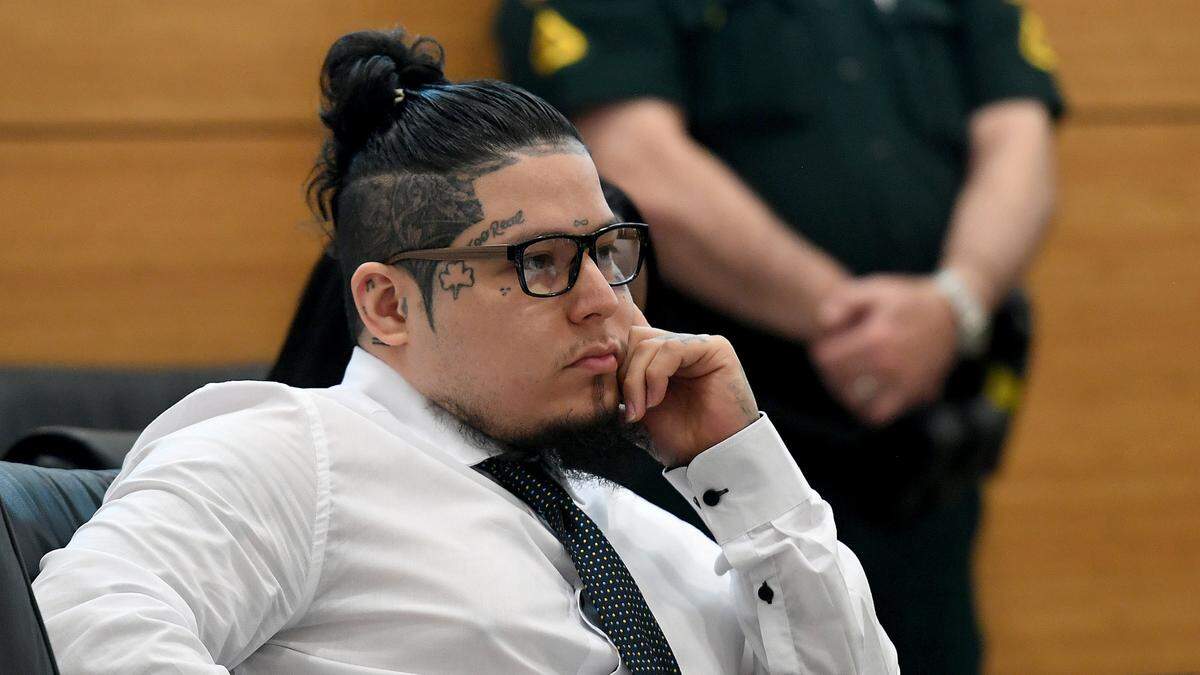
A previously documented member of the street gang Sur 13, Reyes has 187 tattooed on his face — the penal code for murder in California.
At trial, Reyes had several new tattoos visible that he did not have when he was first booked into the Manatee County jail in 2019. One tattoo on his face, three dots, represents “mi vida loca,” which means “my crazy life” in Spanish and is generally a popular tattoo with gang members. Another behind his ear is three dots and two lines which is 13 in ancient Aztec language.
Reyes, who had previously intended to testify, changed his mind following the advice of his public defender Anne Hunter. The defense did not present its own case and declined to make an opening statement at the start of the trial.
In the state’s closing arguments, Freel reminded the jury that Reyes and the other two suspects “went into that home to commit a crime.”
“We really don’t know what that crime is. I think you already know he had the intent to commit a crime based on what he was wearing and what he was doing,” she said. “How do we know it’s Catalino Reyes, he left his blood for us.”
During the defense’s closing arguments, Hunter argued to the jury that police had been quick to narrow their investigation quickly as they collected evidence and that there were enough gaps in the prosecution’s case for reasonable doubt.
“I don’t have to give you a reasonable explanation. I don’t have to give you an alternate explanation,” Hunter said.
But Freel rebutted saying, “A reasonable doubt is not a mere possible doubt, a speculative doubt or forced doubt.”
This story was originally published November 19, 2021 at 4:52 PM.
CORRECTION: The wife of Joshua Gonzelez was present in court last week for the conviction of Catalino Reyes. An earlier version of this story contained incorrect information.