Will Manatee County cut wetland protections? Science and developer interests clash
Environmental experts are pleading with Manatee County leaders to reverse course on their plan to remove local protections for wetlands — a move that favors developer interests.
Manatee and other neighboring coastal counties have long had more strict water quality protections in place than the state minimum.
While local officials have billed the proposal as a “county-initiated” amendment, the decision to reduce wetland buffers came after homebuilders approached staff with requested changes to the county’s development rules, according to public records obtained by the Bradenton Herald.
It’s a 180 for the county, which previously defeated a developer challenge to the regulations in court.
The Manatee County Commission signaled its approval of the regulation cuts with a preliminary vote in August.
The proposed updates to the county’s wetland rules have been met with fierce opposition from residents and scientists who have spoken in public forums. Manatee County’s Planning Commission also voted against adopting the changes.
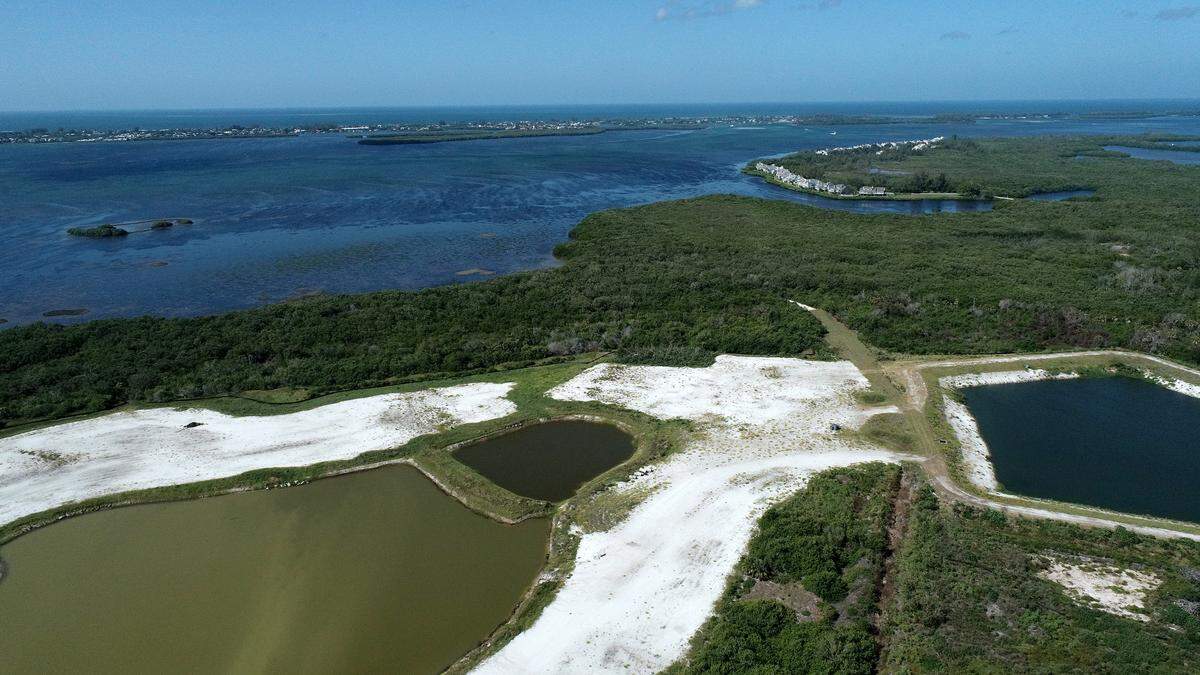
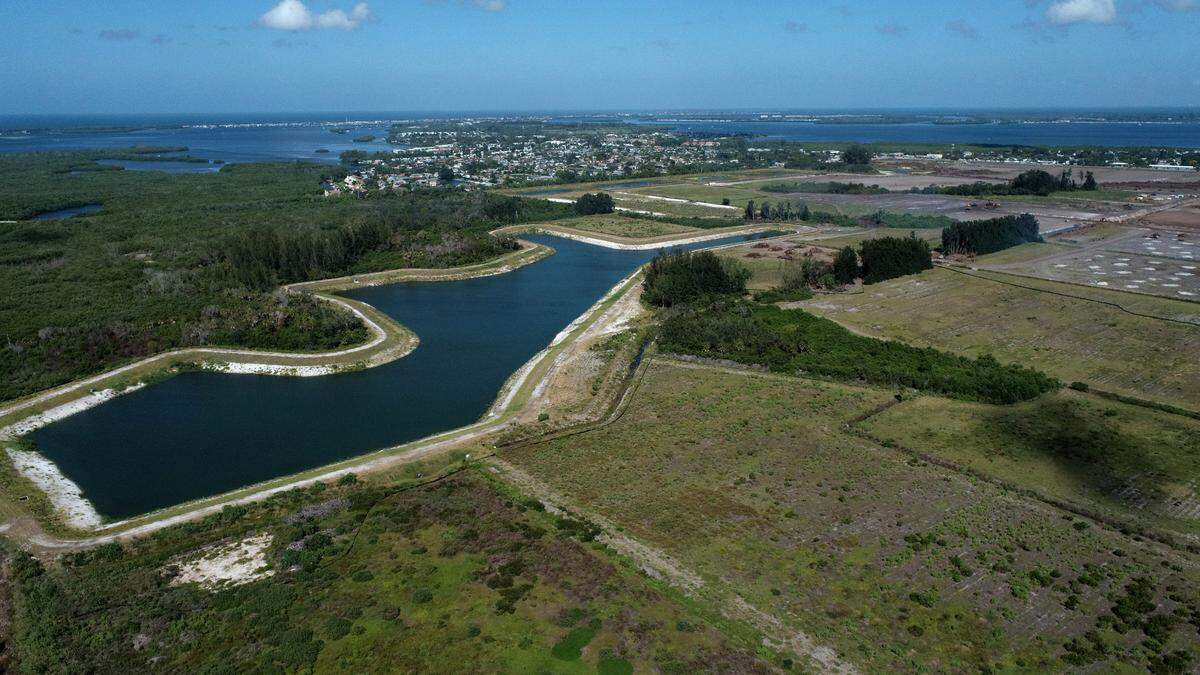
If approved, the required buffer between wetlands and development would be cut in half to match the state’s minimum requirement of 15 feet with a 25-foot average, and other wetland protections beyond the state minimum would be removed.
During the first public hearing on the proposed wetland changes, commissioners argued that the move would restore property rights for developers.
A final vote is set for Thursday.
But experts in wetland ecology are pushing back on the idea, calling it a clear step back for the future of Manatee County’s environment.
“Science informs that there’s quite a range of benefits provided by these buffers,” said Jim Bays, a wetlands ecologist and president of St. Petersburg nonprofit Stewards of Our Urban Lakes.
“Any buffer is beneficial. But any reduction is going to have a negative effect, or at least be less beneficial than it is right now. Those are hard to bring back once you’ve lost them.”
Homebuilder interests push wetlands rule change
Emails obtained by the Bradenton Herald reveal how Manatee County staff began revising the development rules earlier this year after a meeting with Jon Mast, CEO of the Manatee-Sarasota Building Industry Association.
In a Jan. 6 email, Manatee County Development Services Director Denise Greer thanked Mast for meeting earlier that day. Development Services Deputy Director Nicole Knapp and Deputy County Administrator Courtney De Pol were copied on the email.
“Thank you all for meeting with us this morning to discuss our proposed changes to the (Land Development Code),” Mast responded. “The attached is the Word document with the proposed changes.”
The document strikes through environmentally-friendly development rules, including shade tree planting and “greenbelt” buffers — areas of undeveloped, natural land around residential projects.
County staff soon began drafting revisions to the comprehensive plan and land development code that eliminated development regulations, often to the minimum level required by the state. However, early drafts still maintained some extra wetland protections.
In May, Manatee County Government hired consultant Daniel DeLisi to help further revise the wetland rules. DeLisi has previously criticized the county’s wetland buffer regulations on behalf of developer Carlos Beruff’s Mandarin Development Inc.
Court documents linked to Beruff’s 2015 lawsuit against the county show DeLisi argued that a blanket 50-foot buffer is not necessary because it lacks a scientific basis.
During a deposition, DeLisi acknowledged that he was not an expert in wetland function.
A judge later ruled in favor of Manatee officials, allowing the county to continue requiring a larger wetland buffer than the state requires.
More recently, DeLisi has said in public presentations that the proposed changes eliminate “duplication.” But the county’s current rules are more stringent than the state’s, and eliminating them will leave local water bodies with less protective rules.
Beruff did not respond to the Bradenton Herald’s request for comment Tuesday. The BIA also did not respond.
The president of another large development company, Neal Land & Neighborhoods, described the vote as a “sensitive issue,” and said that Florida’s wetland buffers should be applied evenly across the state.
“All land owners and residents of Florida value wetlands and their importance to the environment,” said John Neal. “However, I see value in establishing a standard which is equal for all landowners in all counties of Florida, and not arbitrary in any way.”
Why are wetlands important?
Wetlands play a critical role in Florida’s environment, local experts told the Bradenton Herald. Generally described as swamp or marshland, wetlands are key to stormwater drainage, filtering pollution and preventing erosion.
They also provide drinking water supplies and crucial habitat for many species of wildlife, including a role as a nursery for fish of ecological and economic importance.
At a recent science panel hosted by Suncoast Waterkeeper, experts said preserving wetlands is much more cost-effective than attempting to restore altered habitat in the future.
Bays said some Florida counties that have been overdeveloped are now paying millions to restore wetland function.
Bays said studies support the premise that buffers 30 to 50 feet or more wide are needed to provide the desired benefits to wetland functions — including the removal of harmful nutrients.
Ed Sherwood, executive director of the Tampa Bay Estuary Program, said that many local waterways are already overburdened with nutrients. Encroaching development could add more strain, he added.
“There are disturbing trends for some of our lake systems as well as some of our marine systems,” Sherwood said.
He noted that pollution-fed algae blooms in inland ponds can eventually send nutrients to coastal water bodies.
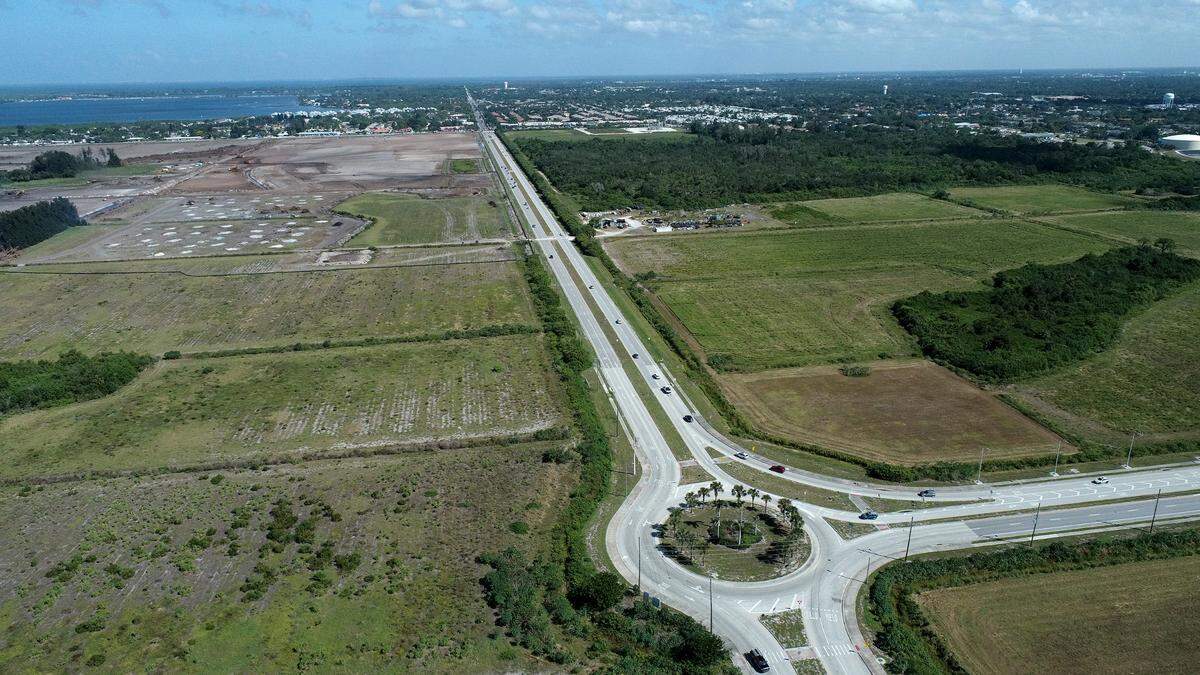
“Thinking about how we restore some semblance of nature in these systems is important,” Sherwood said. “That’s what we should be focused on moving forward. How do we develop smartly in the region?”
Once a habitat is altered by development, it’s a “lost opportunity” for conservation, Sherwood added.
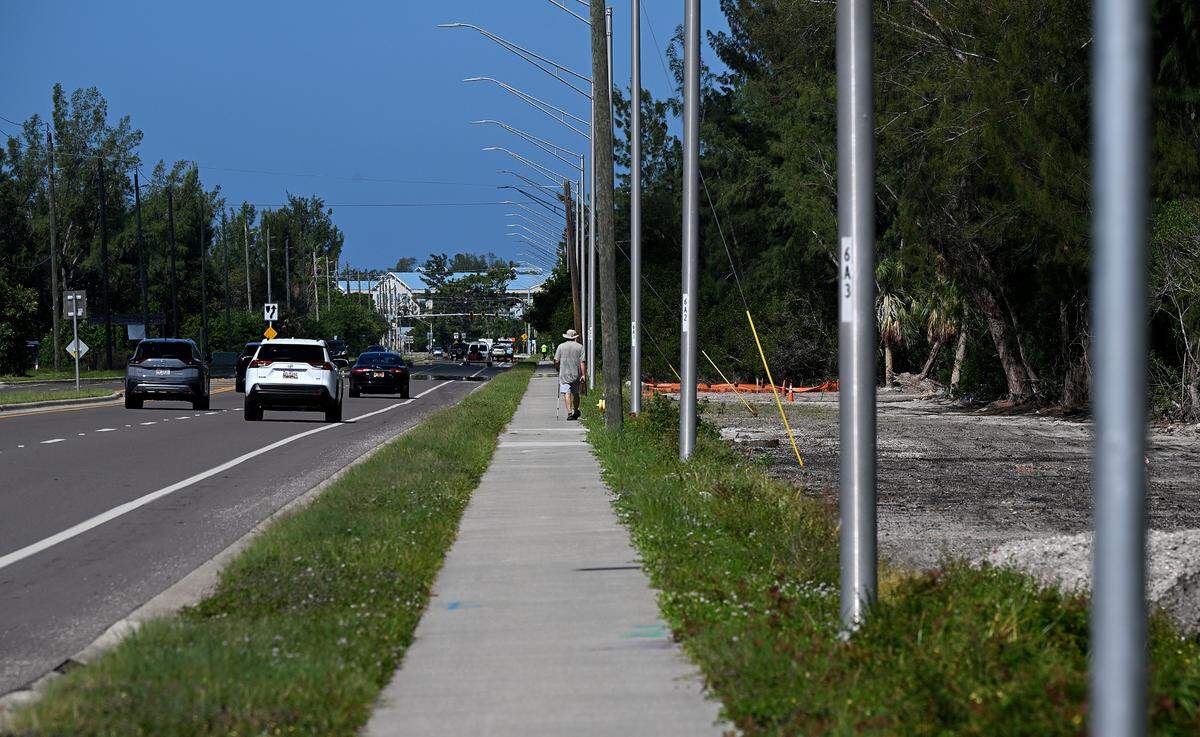
Suncoast Waterkeeper executive director Abbey Tyrna, a wetlands scientist, said the main threat is to the remaining wetlands in east Manatee County, where development is rapidly expanding.
Stormwater ponds are a common solution to restore some of the functions of wetlands in developed areas. But their benefits don’t compare, Tyrna said.
“Wetlands provide a vast number of services which outweigh the number that stormwater ponds provide,” Tyrna said. “Once they’re gone, they’re gone. And we have to spend a lot of money in the future to try to get some of the benefits that were lost back.”
Manatee leaders favor less regulation
The Manatee County Commission, which is made up of conservative Republicans, has publicly declared that it aims to remove the “red tape” of certain government regulations by lowering fees and getting rid of certain rules.
In campaign literature, board members vowed to end “government overreach,” promote “individual liberty” and push for limited government. As they debated the issue in August, commissioners said this proposal is in line with those ideologies.
“I don’t believe in more government regulation,” said Commissioner Jason Bearden. “I never have and never will.”
That ideology also benefits developers and homebuilders, who will have more acreage available to maximize their profits if Manatee County reduces wetland buffers.
The Bradenton Herald previously reported on the former acting county administrator’s allegation that two commissioners pressured him to hire Mast, the CEO of the BIA, as a deputy county administrator earlier this year. After he refused to do so, the board voted to name Mast as the new interim administrator, but the contract negotiations fell apart.
The current commission also has close ties with the BIA. Commissioner Mike Rahn is a past director of the organization and is listed as a “life director” on its website, and Commissioner Raymond Turner is the BIA’s treasurer.
Before the commission’s recent approval of a controversial townhome development near the Braden River, Turner argued that the county is “behind the eight ball” in keeping up with housing demand.
Other commissioners have received thousands of dollars from developers, homebuilders or real estate agents to support their successful bids to join the Manatee County Commission, campaign finance records show.
Ahead of this week’s vote, Manatee County Government posted a video on social media Tuesday that promotes “how wetlands are protected in new developments.” The video says that the stormwater ponds required in new construction projects also protect wetlands by reducing nutrient runoff.
But some experts disagree, arguing that engineered stormwater ponds are not an adequate replacement for Florida’s wetlands.
“Our urban stormwater ponds are not functioning as well as natural areas,” said AJ Reisinger, a wetland ecologist and University of Florida professor who studies stormwater ponds. “We aren’t really sure how effective they are at doing what we hope they’re doing.”
Reisinger said research suggests that stormwater ponds do offer benefits, but they are not as good at protecting water quality as natural areas. Some research suggests that they can amplify pollution downstream, Reisinger said.
Commissioner George Kruse, who has been on the losing side of several controversial votes in recent months, cast the lone vote against reducing the buffers in August.
“To me, (keeping the buffers) makes logical sense,” Kruse said. “There is science to support this. Bigger buffers are better.”
The board is set to discuss the wetland buffer reductions during Thursday’s public Land Use Meeting, which begins at 9 a.m. at the County Administration Building, 1112 Manatee Ave. W., Bradenton.
READ MORE ON THIS ISSUE:
‘We love our waters.’ Kids for Clean Water protest Manatee’s wetland protection cuts
Manatee County officials OK cuts to wetlands protections. But it’s not a done deal yet.
‘We must do better.’ Bradenton residents speak out against cuts to wetlands protection
After years of water issues, Manatee County wants to cut back on wetlands protections
This story was originally published October 4, 2023 at 5:50 AM.