
After years of water issues, Manatee County wants to cut back on wetlands protections
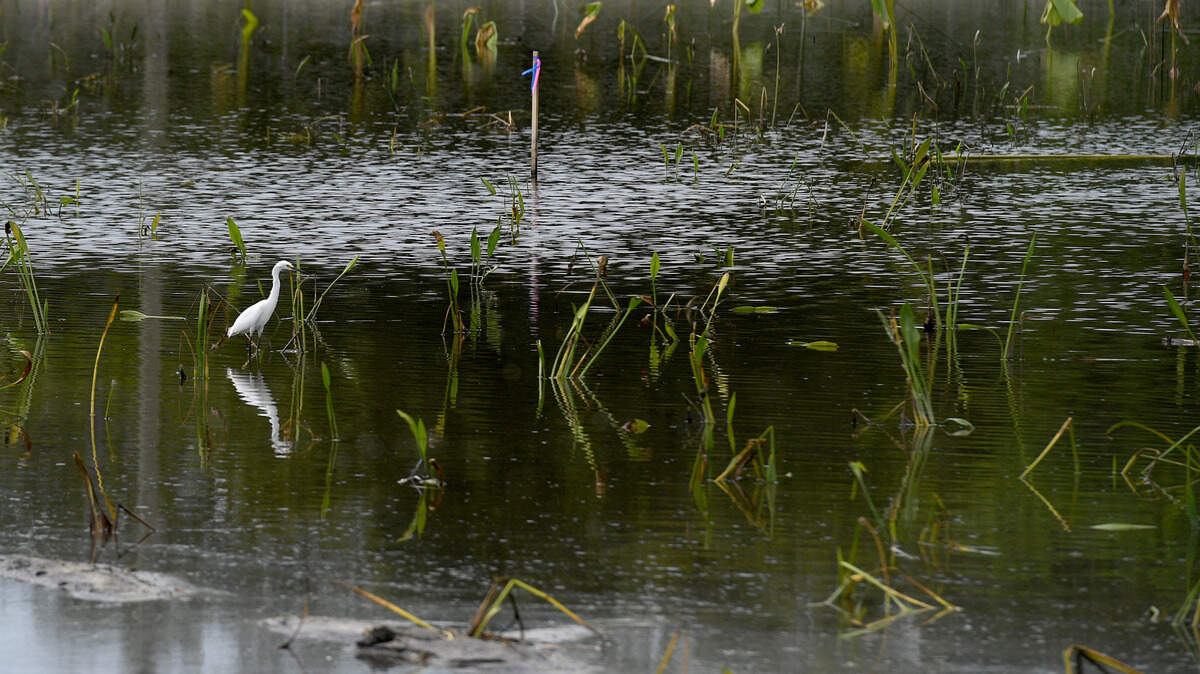
Manatee County leaders are fast-tracking proposed cuts to local wetland protections that would make it easier for developers to build near natural habitats.
The changes would reduce the required buffer zone between wetlands and development. They would also remove rules that require developers and the county to make efforts to restore habitats disturbed by building.
A hearing before the county planning commission is set for 9 a.m. Thursday. The rules could appear before the county commission for initial approval as soon as Aug. 17, and a final vote is slated for Oct. 5.
Critics of the proposed changes say they could lead to an increase in pollution and habitat destruction. Runoff from residential areas is a known contributor to nutrient pollution in Florida waterways.
Wetlands, like marshes and swamps, absorb water and can slow flooding and storm surge, the EPA says. Their plants also filter the water and act as a “sink” for chemicals like atmospheric carbon.
The regulation cuts would be the opposite of what conservation groups have been calling for in light of recent water quality problems, including the wastewater spill from Piney Point, sewage spills, dwindling seagrass beds and severe blooms of harmful algae like red tide.
The changes would roll back several of Manatee County’s wetland rules to the minimum required by the state. County staff making the recommendations argue that state laws are sufficient to protect local wetlands.
“Manatee County’s regulations, including increased setback requirements from wetlands and water bodies, are intended to address the same water quality and wildlife protections achieved through the state and federal permitting frameworks,” a staff report says. “However, the County framework is unduly rigid and does not provide any scientifically documented demonstrable additional benefit.”
Community groups including the League of Women Voters of Manatee County, ManaSota-88 and Suncoast Waterkeeper disagree.
In an email to commission chair Kevin Van Ostenbridge in April, Suncoast Waterkeeper Director Abbey Tyrna argued the changes would “significantly reduce flood control, water quality protection, and species conservation,” as well as the acreage and function of wetlands in Manatee County.
The League is calling on residents to attend Thursday’s meeting and email commissioners in protest of the changes.
“We’re asking you to take these actions to ensure that this threat to our quality of life, local economy and waterways does not become a reality,” the League said in an email Sunday.
Proposed cuts to wetland rules
The proposed changes would alter Manatee County’s comprehensive plan and land use code. They include:
Removal of requirement that developers demonstrate “an overriding public benefit” of projects that remove, alter or encroach upon wetlands.
Removal of policy that requires wetlands on potential development sites to be thoroughly surveyed and allows the county to revoke development permission if wetland survey estimates are incorrect.
Removal of requirement for wetland mitigation efforts for county wetlands that are not protected by the state. This includes the removal of developer-paid mitigation fees and rules that require the creation of additional wetland.
Removal of requirement for wetland buffers of 50 or 30 feet, depending on the type of water body.
Removal of the option for variable width buffers when the standard wetland buffers are not possible.
Removal of a buffer requirement of more than 50 feet for areas deemed “environmentally sensitive coastal wetlands.”
Commission has strong ties to development industry
The current Board of County Commissioners has strong ties to the building and development industry, raising concerns about their priorities for many locals who support habitat protection and oppose rapid development.
All of the elected commissioners won their campaigns with the help of political consultant Anthony Pedicini and his firm Strategic Image Management SIMWINS. The firm has worked closely with politicians backed by local real estate developer Carlos Beruff, founder of Medallion Home and the developer of Aqua by the Bay.
Beruff has clashed with the county in the past over wetland development rules, and the Herald previously reported how he had texted Commissioner Kevin Van Ostenbridge before longtime county administrator Cheri Coryea was voted out.
The newest member of the county commission, Ray Turner, was appointed by Gov. Ron DeSantis after Vanessa Baugh announced her resignation in June. He is a real estate broker and the secretary of developer group Manatee-Sarasota Building Industry Association (BIA).
The Bradenton Times reported in April how the BIA had sent the county a list of proposed changes for the land use code.
Earlier this year, the county tried to hire BIA president and chief lobbyist Jon Mast as the county administrator after Scott Hopes resigned. They offered him the highest salary yet for that position, $225,000, but Mast turned down the offer.
The county has hired consultant Daniel B. DeLisi of DeLisi, Inc. to help revise the wetland rules. DeLisi’s website lists several prominent Bradenton area home builders as current and former clients, including D.R. Horton, Pulte Homes, Lennar Homes and Beruff’s Medallion Home.
County may decrease protections as pollution threat grows
Over several decades, the coastal counties of Manatee, Pinellas, Hillsborough and Sarasota have opted to adopt stricter water quality protections than the minimum required by the state at the urging of experts and conservationists.
They include the extra wetland buffers that may now be eliminated in Manatee, as well as protections like rainy season fertilizer bans aimed at curbing harmful runoff.
Commissioners previously told the Herald that they would consider strengthening local water quality protections after the Piney Point disaster sent millions of gallons of contaminated water into Tampa Bay.
Since then, the county has invested in Piney Point’s closure and secondary water quality control measures such as installing oyster beds that can filter some contaminants from the water. But no action has been taken to further regulate human-caused pollution at the source.
A 2021 review of state data by Calusa Waterkeeper found that Manatee County had the most threats to water quality of any county in Southwest Florida, largely due to the rapid rate of population growth and development.
This story was originally published August 9, 2023 at 5:50 AM.