Are fertilizer laws tough enough to protect Florida’s waters? Take a look at 10 years
READ MORE
Growing pollution: Read more from our series
Expand All
Floridians know the weather can be unpredictable.
And during the summer months in Central and South Florida, the skies can open at any moment.
Rains refresh the landscape, but they can also carry harmful nutrients from the suburbs to the sea. If you had just put down fertilizer, odds are it’s not all going to stay on your lawn.
Fertilizer bans during rainy season are one tool governments have rolled out in an effort to protect Florida’s water quality, which is increasingly under threat from manmade pollution.
The bans prevent the application of certain kinds of fertilizer during the wettest months of the year.
Statewide, 35 counties have passed fertilizer rules. About half of them include a blackout period during rainy season.
In Manatee County, citations for breaking the rules are almost never paired with a monetary fine, a Bradenton Herald investigation found in a review of the past three years.
In that time, the county wrote five warning tickets and issued one fine, and Sarasota County didn’t write any.
“There was pushback the first few years that we had the ordinance in place,” said Rob Brown, Manatee County’s former Environmental Protection Division Manager. “But I think the community is starting to understand what the connection is between these nutrients and our water quality, and these types of algae blooms and red tide.”
Ever since the Manatee Board of County Commissioners first approved the fertilizer rules in 2011, county staff have seen the difference.
“We’re seeing improvements in water quality. So (there is) a direct relationship, as much as we can say,” Brown explained. “We’ve seen a positive trend in water quality improvements since the adoption of the ordinance.”
Hard to catch violators
Speaking with the Bradenton Herald, the county staff members in charge of ticketing fertilizer violations say that stepping up enforcement might be a tall order.
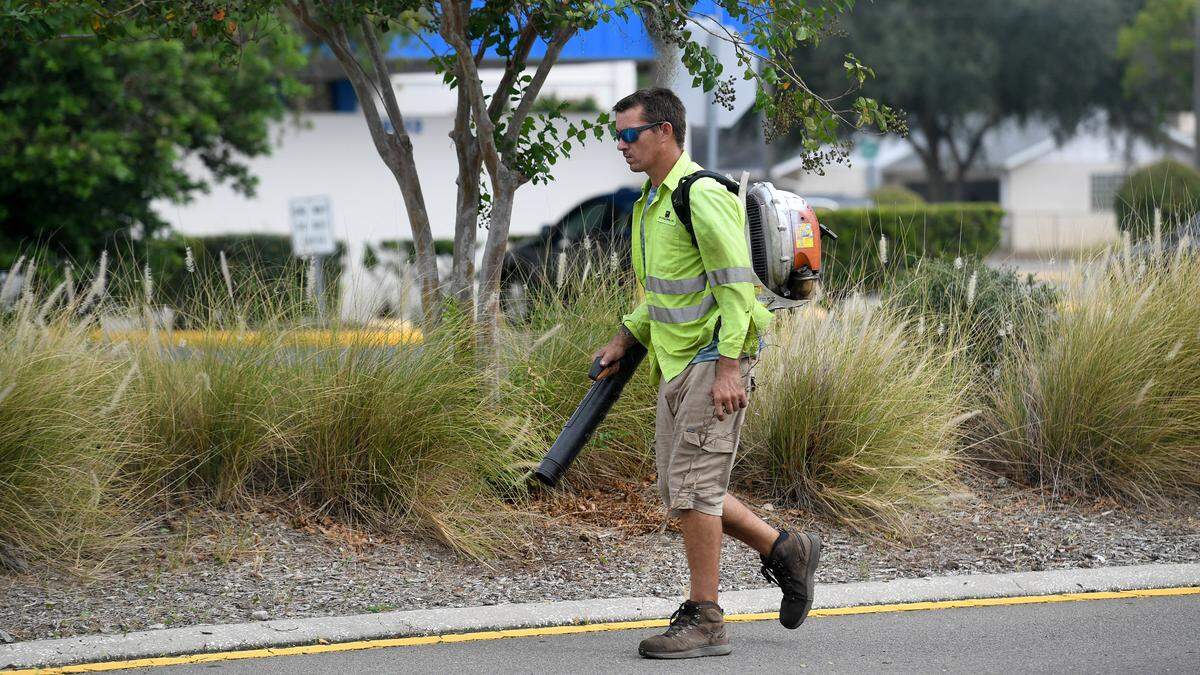
Only one person in the county’s 2,200-employee workforce is able to write those tickets, and he has to catch the offender in the act of laying down fertilizer at the wrong time.
That means code enforcement officers have little power to ticket any improper fertilizer usage.
“I can’t be everywhere all of the time, but if you see something, say something, and we can investigate,” said Paul Panik, the county’s sole fertilizer enforcement official.
Manatee County’s short staff is a byproduct of government layoffs induced by the Great Recession, Panik said. Years later, he remains the only staffer able to write violations.
It is also one of four programs that he oversees.
“We don’t have a dedicated inspector for the program,” Panik said. “So it’s something we do in between everything else.”
Panik told the Herald that more staff would allow his department to better enforce the fertilizer ordinance and other water quality-related measures.
Neighboring Pinellas County has two staff members dedicated to fertilizer ordinance compliance, and two more who regulate landscaping, as well as a supervisor for the group. And a separate staff group works to enforce stormwater pollution regulations.
“Fertilizer is their world,” Kelli Hammer Levy, director of Pinellas County Public Works, said of the two dedicated staff members. “The enforcement of it, the education of it, the inspection of the stores.”
For now, most of Manatee County’s current enforcement efforts are aimed at making sure professional fertilizer applicators and landscapers are properly trained and licensed.
All commercial fertilizer applicators in Florida are required to take and pass a “Green Industry Best Management Practices” course with the latest science about how to landscape yards without contributing to pollution.
Even though the classes are free, compliance remains an issue.
One of the most common citations that Panik issues is for unlicensed fertilizer applicators and landscapers.
Water improving with bans in place
Government staff and water quality scientists agree the bans are working.
But lawn care and turf grass industry advocates, long opponents of the bans, remain critical of their impact on grass health. And they have received some support from University of Florida scientists.
They argue that, when applied properly by professionals, fertilizers can be used year round without harming the environment. The theory has received support from UF researchers who have repeatedly pointed to studies showing that healthy, properly fertilized grass does not leech significant amounts of nitrogen.
However, other science organizations and coastal governments have pushed back on that idea, noting that studies of healthy turf in ideal conditions do not account for “real world” conditions, where homeowner behaviors like inappropriate mowing height, over-irrigation and over-fertilization can contribute to pollution. They also point out that water quality has significantly improved when the rainy season bans are in place.
The concept of a rainy season ban was modeled on UF’s own landscaping guidelines, which, for decades, advised against fertilizing just before rain.
But the state, with UF as one of its advisors, ultimately chose to go a different route.
UF staff helped develop the state’s model fertilizer ordinance, which is meant to be a baseline for cities and counties to adopt locally. Many have, with few changes.
It does not include a rainy season ban.
Over the past decade, both Pinellas and Manatee counties have found evidence that water quality improved in many areas once rainy season bans were in place.
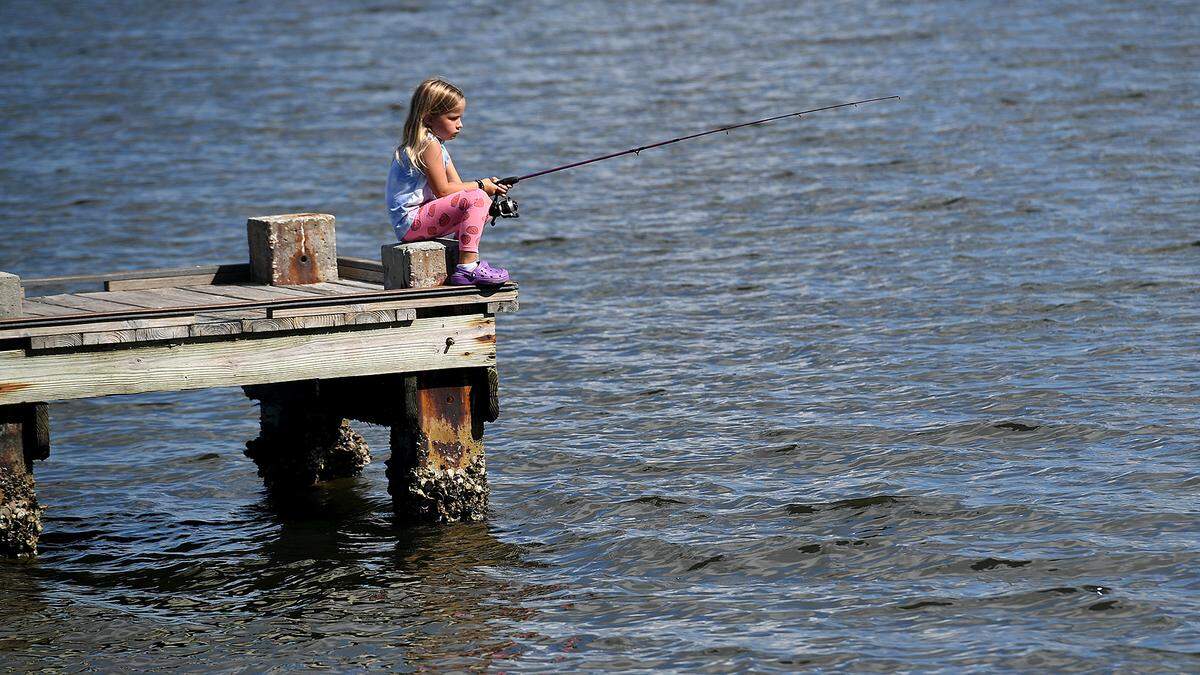
Manatee County staff measured decreasing nitrogen levels in a majority of inland water bodies sampled between 2011 and 2017, including Rattlesnake Slough, Cooper Creek, Nonsense Creek and Mill Creek, which are in the Manatee River watershed and eventually connect to the bay.
While it is very difficult to isolate the exact source of nutrients in polluted water, government staff credit their rainy season bans.
In 2016, Pinellas County staff also found that nitrogen and phosphorus levels had decreased in water bodies since the new fertilizer rules were put in place. Other potential sources of pollution had not significantly changed.
The tough fertilizer ordinance, staff said, “is the one program that may help explain the results.”
Fertilizer bans: Not everyone is a fan
A debate also continues among researchers about if summer is the best time to ban fertilizer.
“I think the summer season blackouts or restrictive periods don’t necessarily make a lot of sense botanically,” according to UF’s Institute of Food and Agricultural Sciences lead turfgrass specialist Bryan Unruh. “A healthy lawn is the best defense from stormwater issues.”
“What contributes to a healthy, dense lawn? One of those things is proper nutrition.”
Unruh helped craft the state’s best management practices, which advise landscapers on how to maintain healthy yards while reducing harm to the environment. He also helps review all new fertilizer ordinances through the university’s partnership with the state.
“I think those restrictive periods in the winter months, or the non-active growth months, make way more sense,” Unruh said.
Several counties have bans during the coldest months, when experts believe grass to be less active in Central and North Florida.
Alachua County has both a rainy season and cold season ban, one of the longest blackout windows in the state.
The new fertilizer rules paired with a countywide education campaign led to a projected 20% load reduction of nitrogen pollution to Alachua’s springs and surface waters, a grant-funded analysis found. An environmental firm compiled the study using surveys of thousands of residents, land use data and scientific data from recent UF studies.
“We’re trying to shift that landscaping paradigm,” Alachua County water resources manager Stacie Greco said. “Let’s have different expectations of our landscapes. We’re not having to use irrigation, fertilizers, pesticides and herbicides to maintain a look that is purely aesthetic. I feel like we’re at the tipping point.
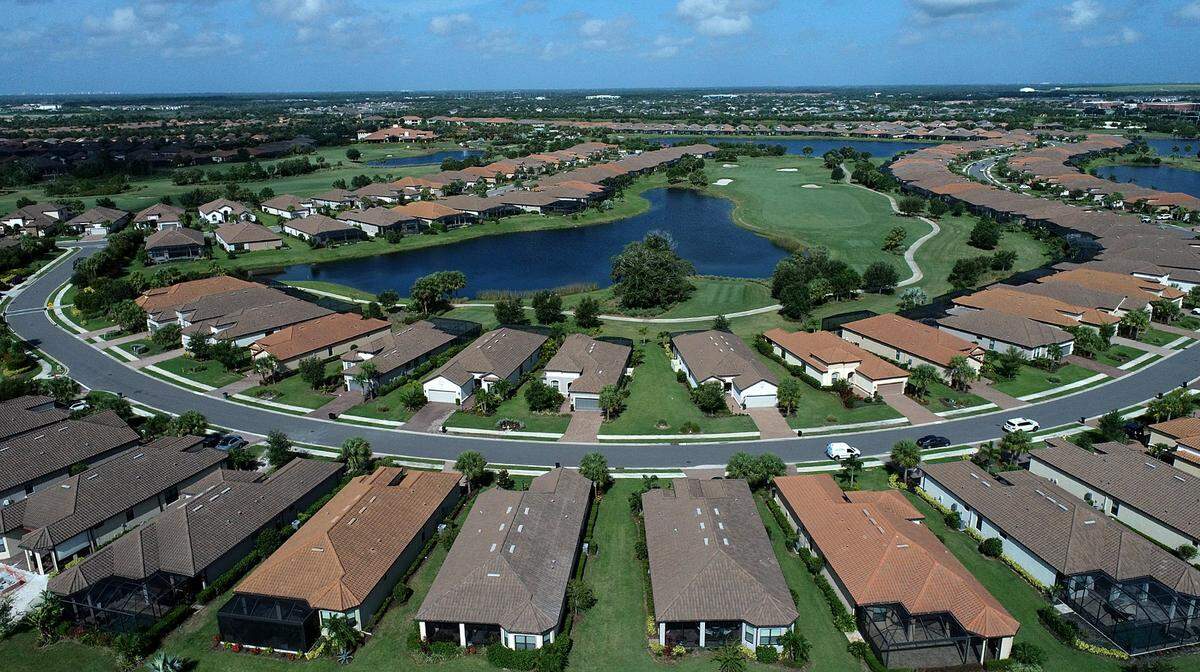
“We can either have perfect, monoculture bright green lawns year round, or we can have healthy springs.”
Mary Lusk, a UF nutrient pollution researcher, also argues rainy season bans are misguided.
“We need more science,” Lusk said. “There’s very little research that shows any effectiveness to those bans. I worry that we enact these bans and we pat ourselves on the back and say job done.
“We point at fertilizer, and we target it and we manage it and think we’ve done the job. But there’s all these other things — there’s atmospheric pollution and there’s soils and there’s wastewater. All these other things that we need to be thinking about as well.”
Lusk co-authored a UF study published in 2021 that measured pollution in a Satellite Beach subdivision during the wet season. It found that, while fertilizer was a significant contributor to runoff from urban yards, local fertilizer rules and landscaping choices did not make a significant difference in the levels of harmful nutrients escaping.
Unruh and others have argued that rainy season bans could ultimately lead to more runoff from unhealthy lawns. But county staff and environmental groups say that lawn health has not been significantly affected by the bans.
While the science remains unsettled, many governments are opting to take a better-safe-than-sorry approach by adding tougher fertilizer measures.
The science debate recently played out in Hillsborough County, where commissioners ultimately decided to strengthen the local ordinance with a rainy season ban.
‘Your lawn will be fine’
When the time comes to review the state’s rules, some water quality groups are hopeful that stricter measures can be inserted.
“The request would be, can we update the state model ordinance to include the language that over 100 local fertilizer ordinances now have in place,” said Leesa Souto, executive director of Marine Resources Council, a water quality advocacy group on Florida’s east central coast.
She lives in Palm Bay, where the Indian River Lagoon, an estuary that spans six counties, was overrun with toxic algae blooms that wiped out seagrass and led to the deaths of hundreds of manatees.
“Right now, you can put down between two and six pounds of nitrogen a year per yard depending on where you are in the state. It’s a ridiculous amount of nitrogen. You could apply zero and your lawn will be fine. It’s just obvious that we don’t need to be applying as much fertilizer as we are.”
The state’s model ordinance was last updated in 2012, Unruh said. As of April 2022, he said there were not yet plans to update it.
“I’m probably going to lead some conversations that way,” Unruh said. “Just to bring it up and dust it off and make sure it’s doing what it’s intended to do.”
Alachua County’s Greco said she also would like to see UF modify its Florida Friendly Landscaping guidelines, which encourage homeowners to fertilize and irrigate “appropriately.”
“Rather than normalizing fertilizing and irrigating, maybe you highlight that you don’t have to use them at all,” Greco said.
Embracing change in the lawn industry
In Florida, thousands of people make a living by providing lawn care services, and industry insiders have mixed feelings about the rainy season bans.
Lawn care lobbyists and fertilizer representatives fought against the adoption of Manatee County’s rainy season ban in 2011. They also tried to have it repealed in 2018.
Joe Rizzo, owner of Advanced Enviro Care in Bradenton, said the fertilizer guidelines in Manatee and Sarasota put too much burden on small lawn care companies, while stores and their customers get a pass.
“So we may have the ban, but it’s only for the professionals,” Rizzo said. “The homeowner could go buy fertilizer every week and go put it down.”
That rings true in Manatee and other Florida counties, where businesses are usually the only ones cited or fined for fertilizer violations.
“It creates a little bit of an unfair situation for the lawn care industry,” said Greco with Alachua County. “It’s much easier for us to catch a business putting fertilizers out during the ban period. Whereas a homeowner can go to the store and buy it and spread it, and we’re just not likely to see them doing it.”
Embracing change in landscaping
Michael Juchnowicz, president of Gardenmaster of Southwest Florida, took a different approach than some of his peers when fertilizer restrictions were first introduced more than a decade ago.
He agreed with the need to protect water quality, and decided to support the proposed bans. He started showing up at commission meetings around the state and speaking in support of the new measures.
Juchnowicz describes how he was in turn vilified by others in his industry. But over the past 10 years, he thinks they’ve come to see that less is more when it comes to fertilizer.
By embracing new techniques, Juchnowicz was able to reduce his fertilizer footprint by an estimated 66%.
“I can look everybody in the eye and say: we applied over 1 million pounds of fertilizer through Southwest Florida last year,” said Juchnowicz, whose business has over 20,000 clients between Tampa and Marco Island. “If I had done things the way I was doing them in 2000, I probably would have applied 3 million pounds.”

Juchnowicz says there has been a major shift in the fertilizer and lawn care industry since the regulations were passed. Training programs and public awareness campaigns have made people more knowledgeable, he said.
But the longtime landscaper has his limit on regulating fertilizer. He feels further expansion of the rules would be detrimental to landscape health.
Where local governments could be stricter, Juchnowicz said, is enforcement — and cracking down on other major sources of pollution.
‘Like having booze on the shelf during Prohibition’
Miami Beach and Miami-Dade County recently touted the passage of one of the strictest fertilizer ordinances in the state, citing Pinellas and Manatee counties’ strong ordinances as an example.
Miami took it further by extending the period of the rainy season ban and requiring higher percentages of slow-release fertilizer and bigger setbacks from water bodies.
But Pinellas County and the City of Tampa have arguably the strictest rainy season bans in Florida because they include a ban on fertilizer being sold in stores.
Without access at the local home improvement store, or even online (the county works with Amazon and other online retailers to prevent those sales, too) it becomes much harder for residents to break the rules.
Keeping it in stores “is kind of like having booze on the shelf during Prohibition,” said Souto in Palm Bay.
Souto co-authored a 2019 study that found Pinellas County residents were significantly more aware of local rules, used less fertilizer and contributed less to pollution, compared to Hillsborough and Manatee, thanks to the sales ban.
But thanks to state lawmakers, no other counties can follow suit.
In 2013, the Florida Legislature passed a law that prevented local governments from implementing new fertilizer sales bans.
Pinellas and Tampa were grandfathered in, but it has left them in a catch-22. If Pinellas were to edit its ordinance in any way, the sales ban portion would be nullified.
And there are parts of the ordinance that could be tweaked based on lessons learned over the years, Hammer Levy said, but it’s not worth losing the sales ban.
“It’s unfortunate, because we’re out 10 years, and at the end of the day we’ve learned that the sky did not fall, everyone’s plants are still alive, and the water is better for it,” she said.
One alternative to a sales ban is requiring stores to post signs that say which fertilizers are banned and what kind of fines violators could face, Hammer Levy said.
In Alachua County, commissioners opted to do just that when they updated the county’s fertilizer ordinance in 2018. Now county staff provide signage about the fertilizer rules that merchants must post during the blackout period each year.
Signs in stores are just one example of public education and other measures that could make a big difference, water quality researchers say.
A water quality playbook published in 2021 by the Gulf Coast Community Foundation modeled stricter fertilizer rules and both better public education and enforcement as low-cost solutions to Southwest Florida’s water quality issues.
“Investing in enforcement of their existing ordinance might be a better use of resources than strengthening an ordinance they’re not enforcing anyway, if they really want to accomplish something,” Souto said.
And relentless public education about water pollution is an important role that government can play, she said.
East Coast water quality groups have created a public messaging campaign modeled after the Tampa Bay Estuary Program’s “Be Floridian” campaign called “Be Floridian Now.” Both offer helpful tips on reducing your nutrient footprint and raising awareness about local fertilizer rules.
“If you pass a fertilizer ordinance and nobody knows it passed, does it really exist?” Souto said.
What could make fertilizer rules more effective?
Here are some suggestions from scientists, water advocates, government staff, lawn care workers and residents:
Require stores that sell fertilizer during the rainy season ban to post signage about the county ordinance and fines violators could face
Use higher grade slow-release nitrogen fertilizer
Increase the sea wall and water body buffer zones
Increase the length of the rainy season fertilizer ban (currently June-September)
Add more staff to enforce the ordinance
Cities could step up to help enforce the ordinance
Get stricter with companies and residents who violate the rules
Increase public messaging about the ordinance and good landscaping practices
This story was originally published July 21, 2022 at 5:50 AM.