Smelly algae makes appearance at Robinson Preserve. Park officials try to keep it out
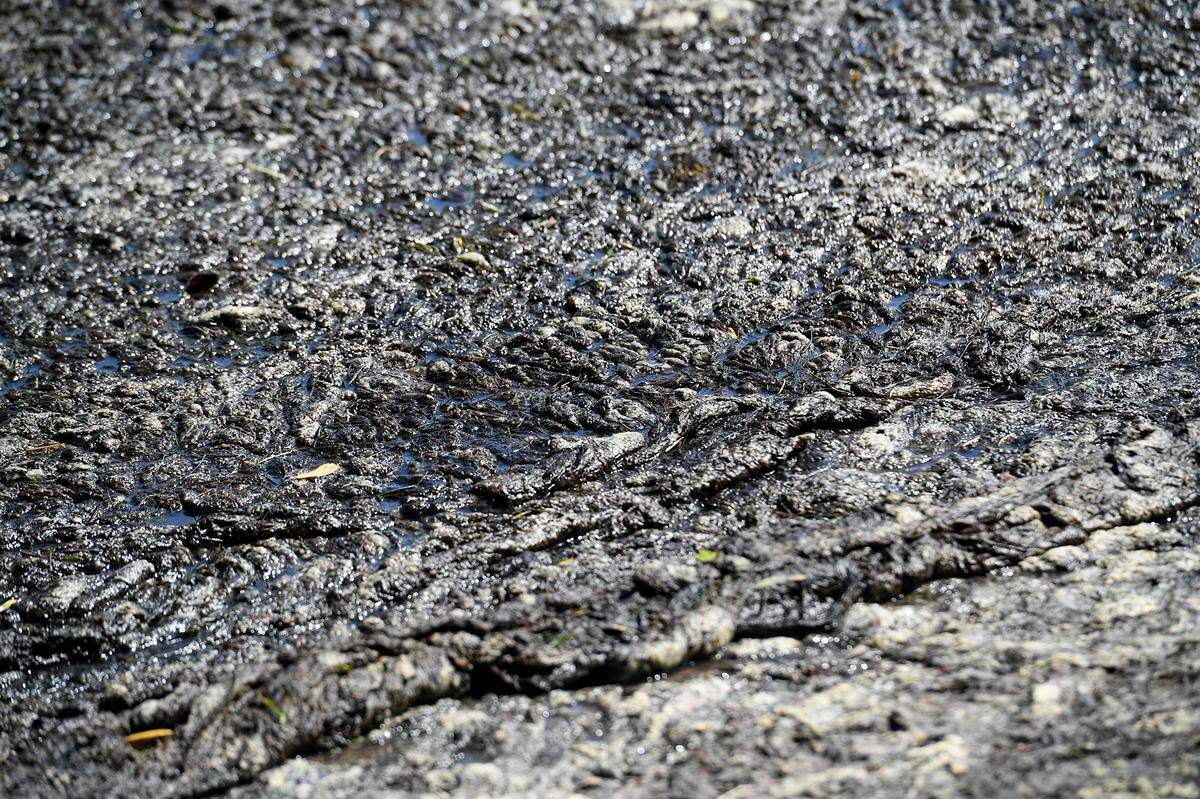
Mats of smelly, potentially toxic algae have forced Manatee County officials to take preventative measures to keep it outside of Robinson Preserve.
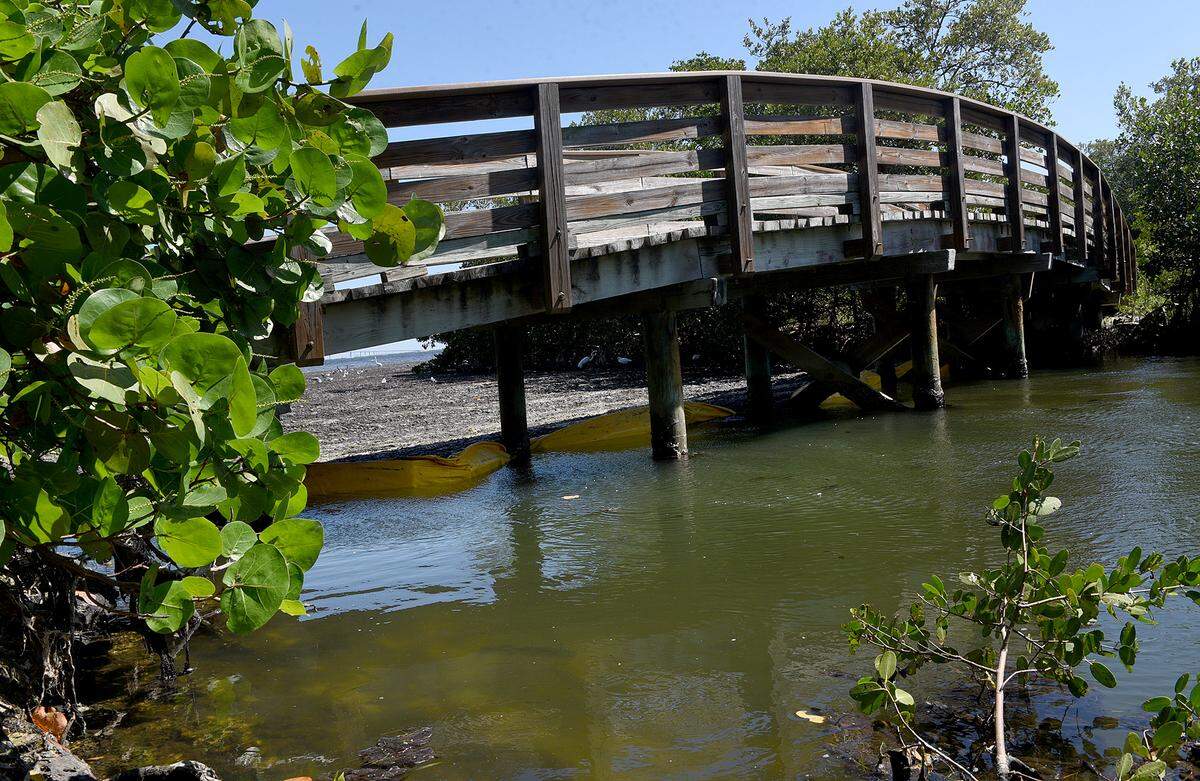
On Thursday, Manatee County park maintenance staff placed barriers in the water to prevent the mats formed by Lyngbya algae from moving into the waters inside the preserve. Lyngbya algae is a blue-green algae that can form in sheets across the water’s surface.
The algae, called “mermaid’s hair” or “gumbo” by some locals, is known to contain toxins that impact human health and marine life. Humans near the algae may experience respiratory irritation. If touched, the algae can also lead to skin irritation, such as rashes, blisters and burning pain.
As it decomposes, the algae can cause fish kills. In a memo sent to the Manatee Board of County Commissioners Friday afternoon, county staff warned of that scenario.
“Often as these mats decompose, they can reduce dissolved oxygen levels in the water to levels detrimental to sea life, often observed as fish kills,” the memo said.
Experts say Lyngbya algae is more common in freshwater but has made appearances in Robinson Preserve over the past two years. In July 2019, staff took similar action with barriers.
“We need to kind of tighten up the way we deal with runoff in the local community,” Charlie Hunsicker, the county’s director of parks and natural resources, said at that time.
The county’s memo said Lyngbya blooms are a common response to rising temperatures and increased nutrient levels in the water.
“Projected temperature increases this century will likely increase the bloom frequency and duration in the future,” the memo said.
Robinson Preserve’s algae issues come more than a month after site operators at the Piney Point former phosphate processing plant were forced to dump 215 million gallons of contaminated water into Tampa Bay. That spilled water was rich in nitrogen and phosphorous, two nutrients that fuel algae organisms.
Shortly after that incident, marine biologists predicted an algae response could take more than three weeks. Several organizations are monitoring water quality in the area. There has been no official determination that the algae is a direct result of the Piney Point leak.
Park staff announced the placement of the barriers Thursday on social media. Some of the paddle trails within the preserve are closed, but others open. Paddlers were seen out on the water on Friday, as well as seagulls resting or walking across the thick Lyngbya algae.
As of Friday afternoon, water quality samples from the Florida Department of Environmental Protection, which monitors blue-green algae blooms in Florida, had not yet taken any samples inside Robinson Preserve.
North of the preserve, there were low levels of Karenia brevis, the algae that produces red tide, detected in lower Tampa Bay as recently as Tuesday, according to the Florida Fish and Wildlife Conservation Commission.
This story was originally published May 7, 2021 at 6:57 PM.