
What is Piney Point? Here’s what to know about the toxic industrial site
A rapidly developing emergency at Piney Point, a former phosphate processing plant in Manatee County, endangers the surrounding area and Tampa Bay with potential flooding and likely contamination.
The site has a long and troubled past leading up to the current crisis, including prior leaks. Locals, officials and environmentalists have suspected a bigger catastrophe was coming for years, but nothing significant was done to prevent it.
Here’s some of the key history and background information about Piney Point and the threat that it poses.
What is Piney Point?
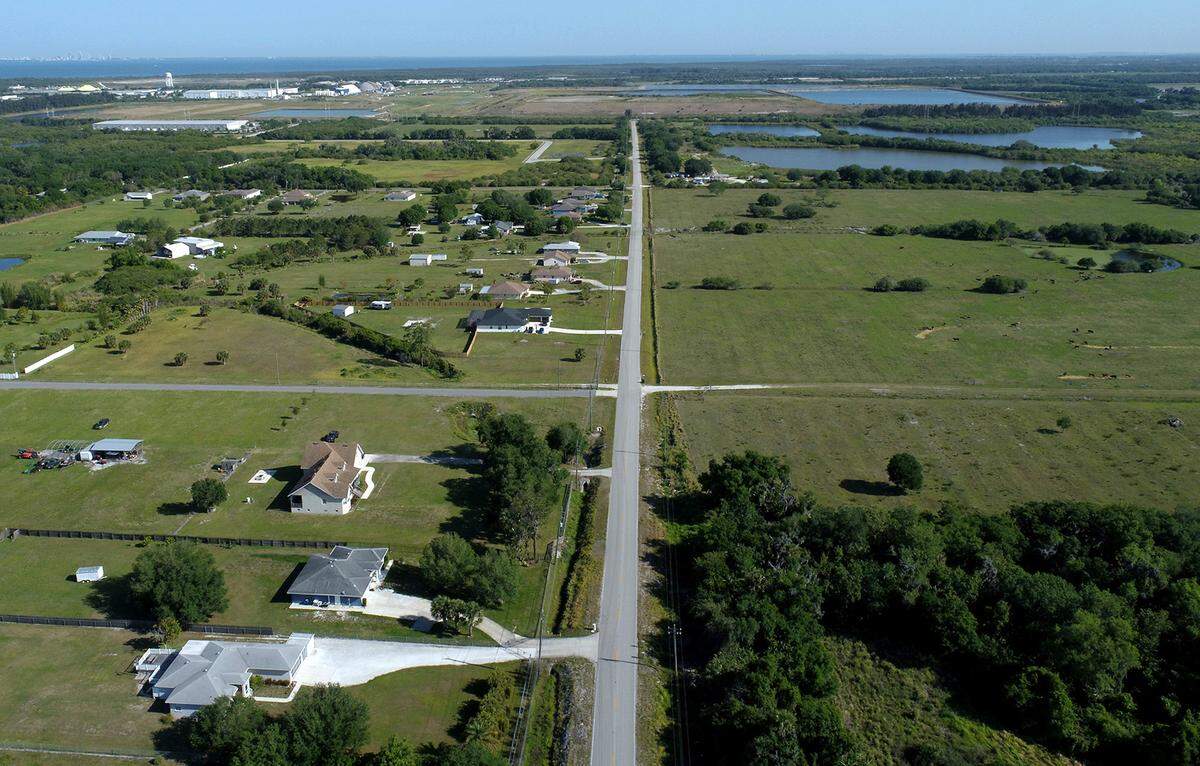
Piney Point is the site of a former phosphate processing plant In Manatee County. Toxic byproducts from phosphate mining are stored there.
Renamed the Eastport Terminal Facility in recent years, it is now an industrial site that houses warehouses and businesses in addition to the storage of phosphate mining byproducts.
Where is Piney Point?
It’s located in northern Manatee County right next to Hillsborough County’s southern border and across from Port Manatee.
How big is Piney Point?
The Piney Point site is on 676 acres of land.
Who owns the site?
The site is currently managed by HRK Holdings, LLC.

What are the hazards of the site?
The site holds large amounts of phosphogypsum, a radioactive byproduct of the phosphate mining process that is toxic to humans and the environment.
The phosphogypsum is stored in stacks (also known as gypsum stacks) covered with a protective liner. The gypsum stacks form a large hill, which is also the highest point in Manatee County. On top of those stacks sit three large reservoirs that are filled with millions of gallons of contaminated process water.
How much water is at the site?
Before the breach discovered on Friday, the largest pond held an estimated 480 million gallons of process water. It was now down to less than 300 million gallons on Tuesday.
The process water is high in excess nutrients.
That untreated water is currently leaking and being pumped into surrounding bodies of water, where excess nutrient contamination could cause harmful algal blooms.
The southernmost and largest pond where the breach is occurring also contains saltwater that was dredged from Port Manatee. The decision to store dredge waste at Piney Point in addition to the phosphate mining byproducts has drawn criticism from environmental activists, who say that it added strain to an already dangerous site.
The water in the leaking pond is not radioactive and meets most water quality standards, according to the Florida Department of Environmental Protection.
What about the gypsum stacks?
It is unclear what state of decay the phosphogypsum stored at Piney Point is in. However, according to EPA, elements within the toxic byproduct eventually degrade to radon, a cancer-causing gas. It remains unclear what the threat to humans and the environment would be if an uncontrolled breach at the site caused the gypsum stacks to collapse — but the release of radioactive and carcinogenic substances into the environment would be possible.
This story was originally published April 6, 2021 at 2:34 PM.