
The sea turtles are back in town. Here's what you need to know
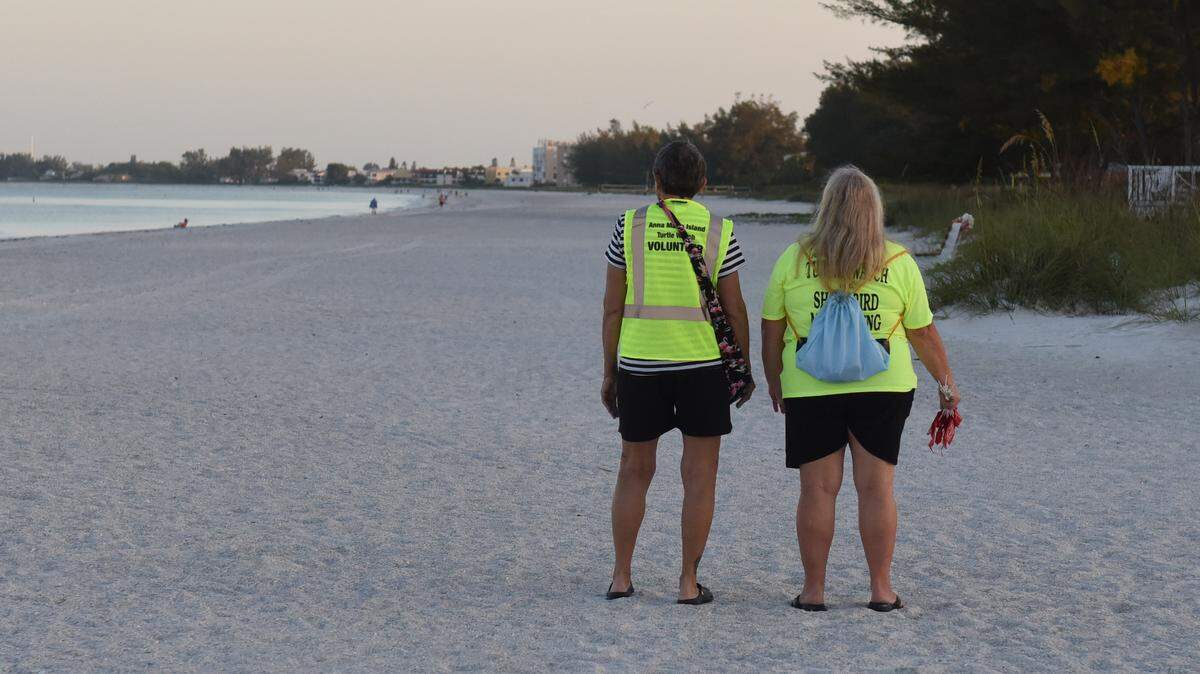
A pink hue lined the Gulf of Mexico horizon just minutes after sunrise. Nesting black skimmers glided above the water, scraping their lower mandible across the smooth surface. A few beachgoers dared to dip their toes into the water on this brisk May morning. Others were there for a purpose.
From May 1 through Oct. 31, dedicated volunteers walk along Anna Maria Island to scan for distinct sea turtle tracks.
So far in the area, two turtle nests have been found on Longboat Key before the official start of the season. But on Wednesday morning, no one had yet made the call to Anna Maria Island Turtle Watch director Suzi Fox that would have signaled their first nest.
It's a job that's seven-days-a-week and requires special training, early-morning wake-ups and no holidays.
First-time volunteer Barbara Riskay got hooked on the watch's educational Turtle Talks, and she even got the nickname "Turtle Talk Barb," Fox said.
"I'm loving it," Riskay said. "I've been very excited to get to do this."
This year, the turtle watch is slightly changing how they do their operations. Fox said volunteers normally verify nests by hand before marking them by carefully scooping sand from the top and noting that there are, in fact, eggs there. It can be a long process. The Florida Fish and Wildlife Conservation Commission is encouraging turtle monitoring groups to avoid verifying nests except if the beach has been renourished within the past three years.
When a sea turtle lays eggs, she creates an air pocket that allows the hatchlings to breath and acts as a protective seal, Fox explained. FWC research scientist Simona Ceriani said the commission suggests groups start verifying nests by eye to "minimize interference with the incubation process."
Melissa Bernhard, senior biologist with Mote Marine Laboratory, said since most of Longboat Key, Siesta Key and Venice have been renourished, volunteers and staff verify these nests by hand as part of the requirements of the beach program.
On Anna Maria Island, the volunteers will likely stick to verifying the ones south of Coquina Beach, since there was a recent renourishment project there.
Who are the people in the bright green shirts?
Volunteers with Anna Maria Island Turtle Watch and Shorebird Monitoring. They begin canvassing the beaches each day of turtle season "as soon as we see our toes," said six-year volunteer Mary Lechleidner. Volunteers walk along the waterline and sandy beach to see if there were any tracks overnight. These are distinguished a smooth line of sand made by the turtle's plastron with divots in the sand from her flippers.
The sea turtles to nest on the island will either be loggerhead or green sea turtles. Larger-than-life leatherback sea turtles have never nested on Anna Maria Island, according to Fox.
If volunteers find a track but no nest, it's likely a false crawl, meaning a female went on the beach but turned around. A nest will be marked with yellow stakes by volunteers, who are allowed to do so under a special wildlife permit.
"If you see them doing something down in the sand, make sure you run fast," Fox said.
Can I leave my chairs on the beach overnight?
No! While you might think it's a good idea to stake your territory on the sand, sea turtles have been known to get caught in beach furniture. This happened with Longboat Key's first sea turtle nest of the season on Friday, according to Longboat Key Turtle Watch, which partners with Mote Marine.
One female became stuck and even brought the chair in the water with her last year. Neither chair nor turtle were in sight, only tracks in the sand were left behind.
On Wednesday morning, turtle watch volunteers placed a tag on at least one set of lounge chairs that remained on the beach overnight. Because it's early in the season, some beachfront property owners may need reminders, Fox said, but code enforcement could be knocking on doors.
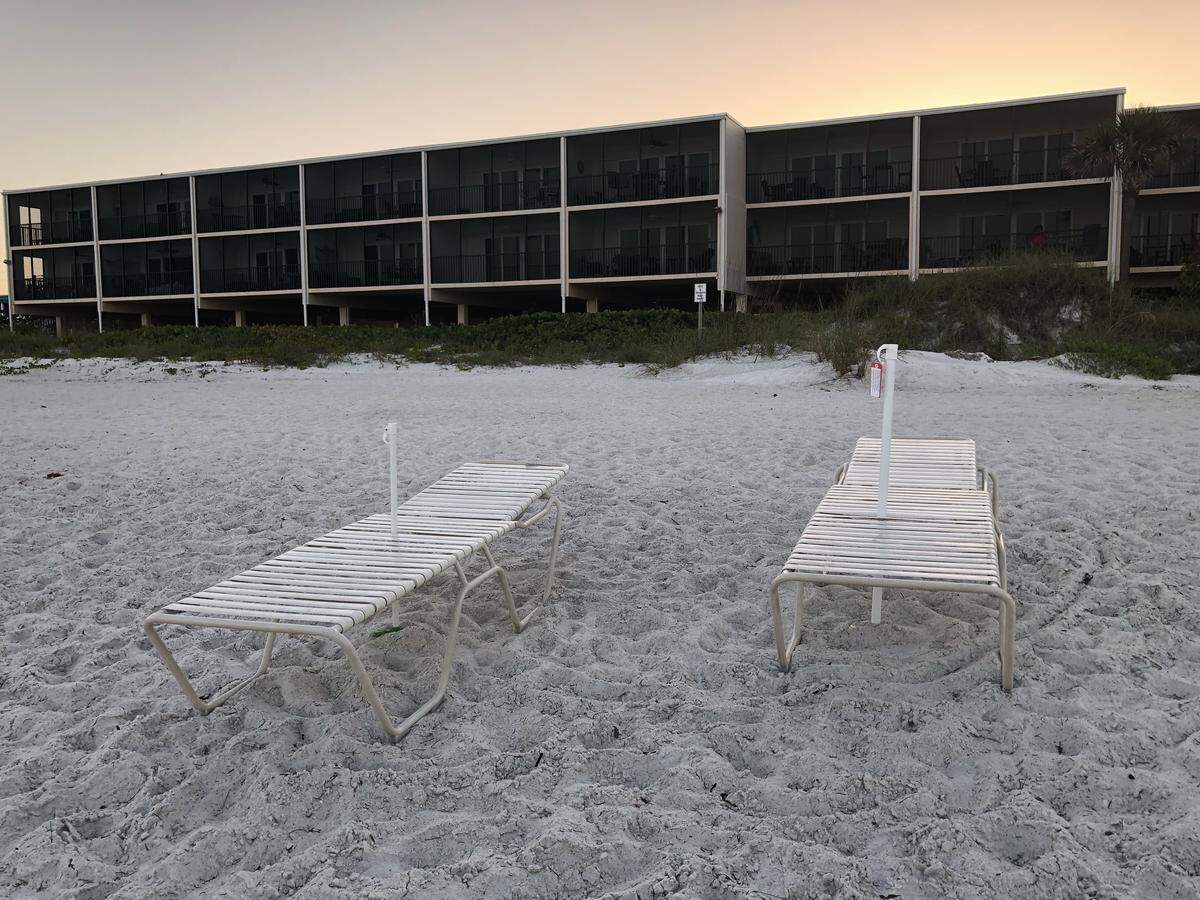
Chairs should remain stacked closest to the dunes or off the beach entirely. A good rule of thumb: if you bring it on the beach with you, take it when you leave.
I'm renting a beachfront property. Do I have to turn my lights off at night?
It depends. The safe answer is yes, because hatchlings use light to guide them to the water once they're ready to emerge from from their nest. Incandescent or fluorescent lighting can distract these young turtles and draw them landward rather than seaward. Beachfront property owners should shield their lights and use turtle friendly bulbs that are low-watt red or amber LEDs.
Beachgoers should be careful about using flashlights or camera flashes on the beach at night, as it also can serve as a distraction.
What do I do if I see a turtle or hatchlings?
Watching sea turtles nest or hatchlings emerge from their nests is safe to do quietly at a distance. But it's illegal to harass sea turtles and their nests, eggs and hatchlings because they are protected by law. This harassment includes touching them, picking them up, possessing them, destroying eggs and nests, killing individuals or trying to encourage them to move a certain way.
If you see a stranded, sick or injured sea turtle in Manatee or Sarasota waters, call Mote Marine Laboratory at 941-988-0212. Outside of these waters, call Florida Fish and Wildlife Conservation Commission at 888-404-3922.
This story was originally published May 2, 2018 at 1:50 PM with the headline "The sea turtles are back in town. Here's what you need to know."