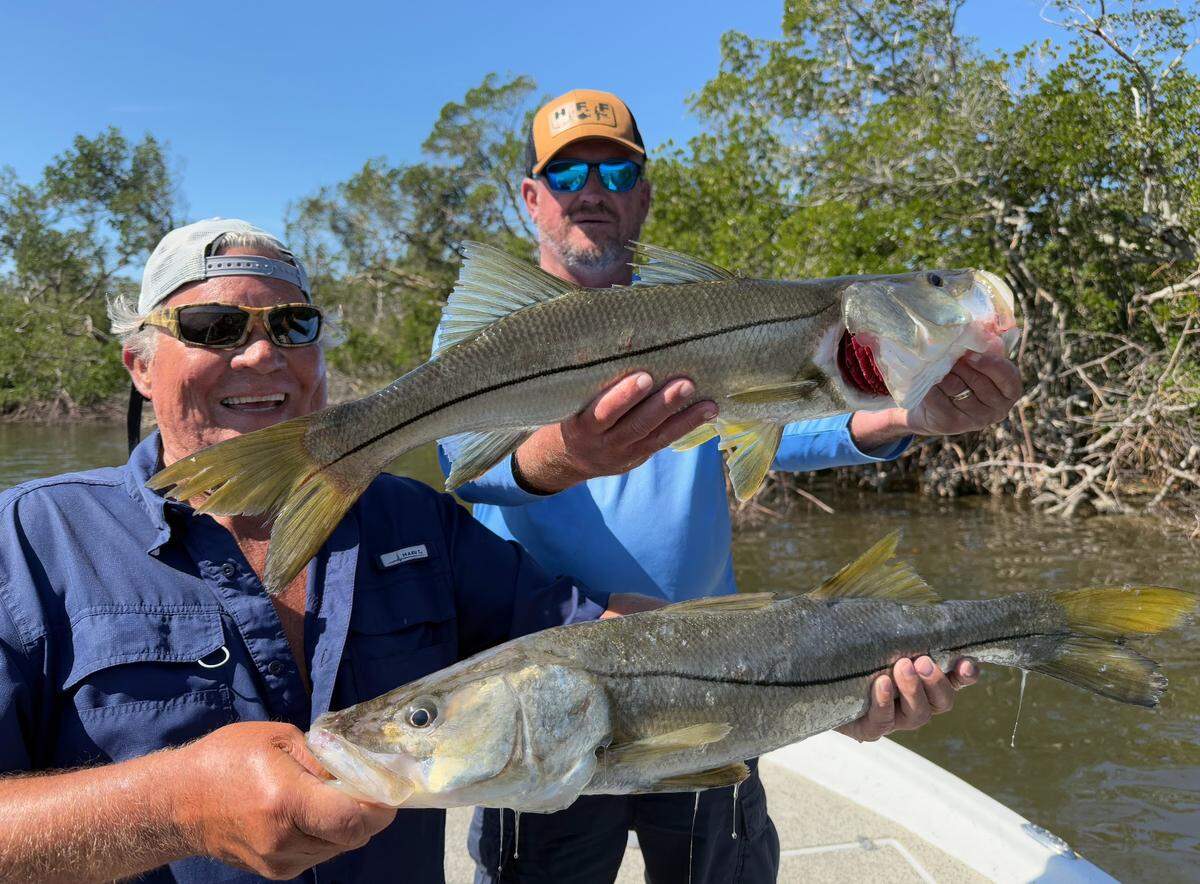
‘Epic days.’ Bradenton-area fishing captain has tips for catching snook around Tampa Bay
In past years, inshore anglers and captains noticed the average size of caught snook was routinely in the 16- to 24-inch range.
They would, of course, catch some bigger linesiders but rarely in the 5-inch slot size range needed to hit the cooler. The small fish, while fun and often willing to eat, were far under the size of 28- to 33-inches needed to keep when the season was open.
Following years of red tide and freezes, snook regulations were tightened up. Numbers of fish seemed down and shorelines were often barren.
All the small fish after recovery were a sign that the stock was and has been rebuilt. Since the 2025 season opened on March 1, captains like Chase Krutzky have noticed this has been one of the best years of his life for averaging bigger fish.
“This year there have been a lot of quality fish,” says Krutzky, who guides anglers around the southern shore of Tampa Bay. “We’ve seen less 16- to 20-inch fish and more 24- to 30-inch fish on average. We’re still getting just as many in total, but they’ve been better average size.”
Since the season opened, Krutzky has had a routine that leads to good days. He begins by heading to the Sunshine Skyway Bridge or channel markers around Tampa Bay and getting a live well full of whitebait.
From there, he picks up his anglers and heads to mangrove-laden shorelines with deep cuts and water movement where he begins to target snook and other inshore species. This has brought home a slot-sized snook on each of his trips.
“Bait has been good, real thick. Good-sized bait too. The fish have been aggressive, eating the heck out of chummers. If you don’t get a bite in longer than 30 seconds, you might as well reel back in and cast again. There are still some fish up in the rivers, but most have made their way out and it’s been feeding time,” Krutzky explained.
What Krutzky and others try to capitalize on this time of year is prefrontal fishing days. When we get a warm southerly wind, it causes water levels to rise and fish to become more aggressive with lower pressure coming. As they leave winter-time hangouts and begin their journey to spring and summertime areas, they stage for a few days or weeks.
The journey makes them hungry, causing some aggressive feeding days. With water temperatures still cool on the flats, bait has not begun to appear in shallow. By bringing it from deeper waters, the snook can’t wait to get their fill. It’s a perfect storm leading to epic days on the flats.
“If I’m out on a four-hour trip we’re getting 30 to 40 snook with a slot-sized or two fish mixed in. Then there’s been some redfish and a lot of nice-sized trout too,” Krutzky said. “A southern wind ahead of a front is the ideal fishing days. It blows more water into the bay. 12- to 15- out of the south with overcast skies is the ideal fishing conditions.”
Krutzky rigs his anglers with a very basic light spinning rod, 20- to 30-pound leader and circle hook with no weight.
“On those days, they can be so aggressive and willing to eat. Get a bait anywhere near them and they’ll find it. Sometimes the colder days you need to get a bait right in front of their face before they’ll eat. It’s going to be good all this month and if we keep getting fronts, there will be some epic days in front of them.”
Captain Chase Krutzky can be reached at (863) 255-2844.