
How a Bradenton-area angler adapted to weather changes to catch hogfish in Florida Gulf
The more I fish and think I know about fishing, the more I’m reminded of just how much I don’t know about fishing.
When fishing for hogfish in November and December, the numbers seemed to be down at our favorite spots. We still had good days, but the consistency just wasn’t there.
After water temperatures dropped in January, the hogfish seemed to thin out even more. I would use a GoPro to get video of spots, not seeing many and the ones I did see were slow-moving, possibly because of the bitter cold. I saw a lot of gag grouper and grunts, but not many mangrove or yellowtail snapper.
As water temperatures warmed up and the weather calmed, I was ready to get back out. This time, instead of beating up old spots, I made a new plan.
If they weren’t in the normal places we fish from 45 to 70 feet of water, maybe they’re deeper. Deeper would mean warmer, cleaner water, which I ventured for on a nice February day with Geoff Szymanski. Normally, we would never do this for hogfish to start a day, but the recent past said it was time for a change.
The first spot we headed for was a big ledge in 85 feet of water. With a boat sitting on it, we decided to do some scouting, finding another ledge close by. The fish were biting, but it was grunt after grunt. A quick GoPro check of the bottom showed more grunts than I wanted to count, making catching anything else difficult.
We explored more, finding another ledge close by. The Lowrance depth finder showed fish higher in the water column which had promise for snapper. Dropping the Power Pole trolling motor, we fished on the bottom with spinning reels, Hogballs and half shrimp, the standard for hogfishing. But the lack of a bite was concerning despite seeing them on the fish finder.
Without giving up hope and having good signs, I sent down the GoPro once again. This time I saw what we were wanting, not a lot of grunts and a pair of hogfish that were interested in the bizarre GoPro setup I sent down. We stayed for a bit and within minutes Szymanski brought up a small female hogfish.
I thought again about what might work. Normally we use half shrimp when the grunts are bad to extend our bait usage longer. Since they weren’t bad on this spot, I tail-hooked a whole live shrimp thinking the bit of extra life might bring attention. It didn’t take long before I was hooked up and I told Szymanski to grab the net.
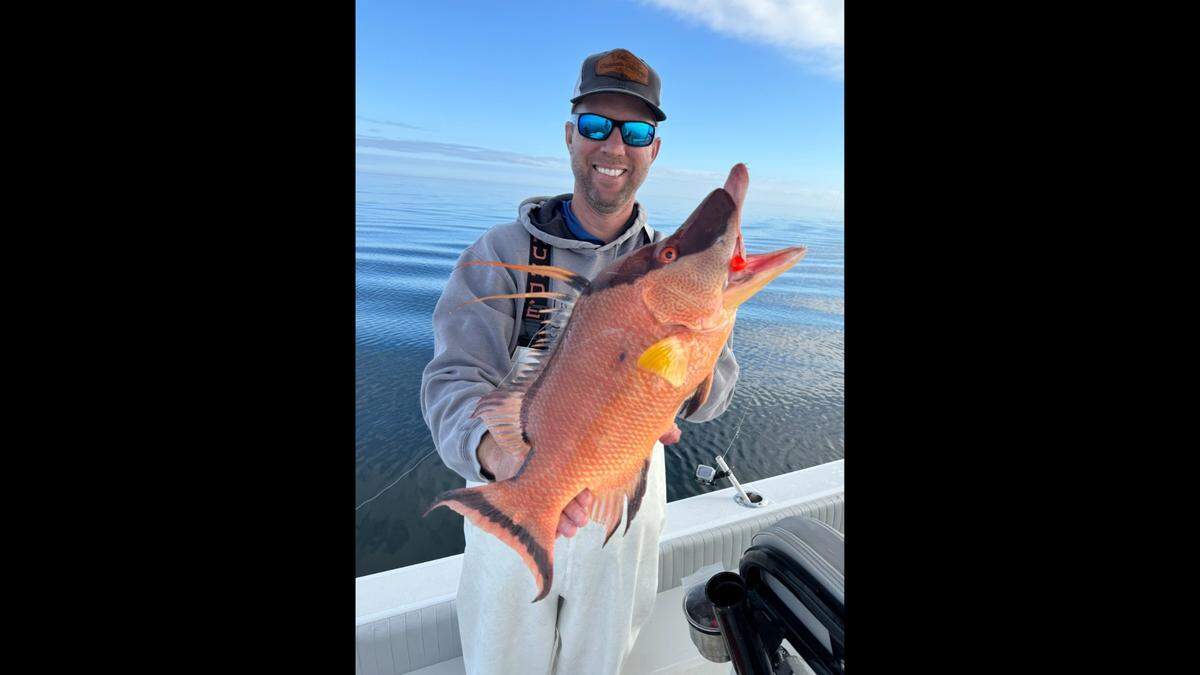
After a short time, I could see a big hogfish below in the beautiful water. At the surface, it was netted and put on ice. The next bait down I repeated and landed my biggest hogfish of the winter, around 24 inches to the fork. We would catch around a dozen on the spot, nearly getting our two-person limit.
The rest of the day we would bounce around picking up red grouper, lane snapper, porgies and a few mangrove snapper. It felt good to make an adjustment and have it pay off.
With such variable weather, every day on the water seems to be different. One day with calm weather could be warm, but the next a strong south wind foggy day ahead of a cold front followed by a cold north wind and bluebird skies.
These varying conditions put fish on the move, and anglers may question what they need to do to find them. But when it all comes together, it’s a rewarding feeling, whether inshore, nearshore, or offshore.
This story was originally published February 23, 2025 at 5:50 AM.