Is it COVID or a cold? Can pills help? Time for a test? What to know about Florida surge
READ MORE
A new COVID surge in Florida
What to know about a new COVID-19 variant, resources for more information, how to protect yourself, how to know if you have just a cold or allergies.
Expand All
You cough or sneeze while waiting in line at the grocery store. The people around you shift away. Some might even give you a dirty look.
This is life in a COVID world as subvariants make their way across the country and as Florida sees a rise in cases again. And you don’t necessarily have to look at the data to notice.
Just ask Art Murphy, the chief financial officer of CMC Group, the company owned by Miami luxury condo developer Ugo Colombo.
Murphy recently contracted COVID-19 despite being vaccinated and twice-boostered. He thinks he was exposed to the virus after attending a graduation in Colorado.
“I’m dealing with three attorneys on one thing — and all three have it,” said Murphy, 57, of Coral Gables, who runs, swims and mountain bikes.
This was Murphy’s first time testing positive. He said he had a mild head cold, no fever or sore throat. And he did not lose his sense of taste or smell, which often is one of the first signs of COVID-19. But he quarantined at home.
“It’s going around,’‘ he said.
Should you wear a mask again? And if you do get sick, how should you treat it? And how exactly does quarantine work?
Here’s a guide to help you understand where we are and what to do:
Is Florida seeing a COVID surge again?
COVID-19 cases are going up again in Florida, with hospitalizations also ticking up, according to a Miami Herald analysis of data from the Centers for Disease Control and Prevention.
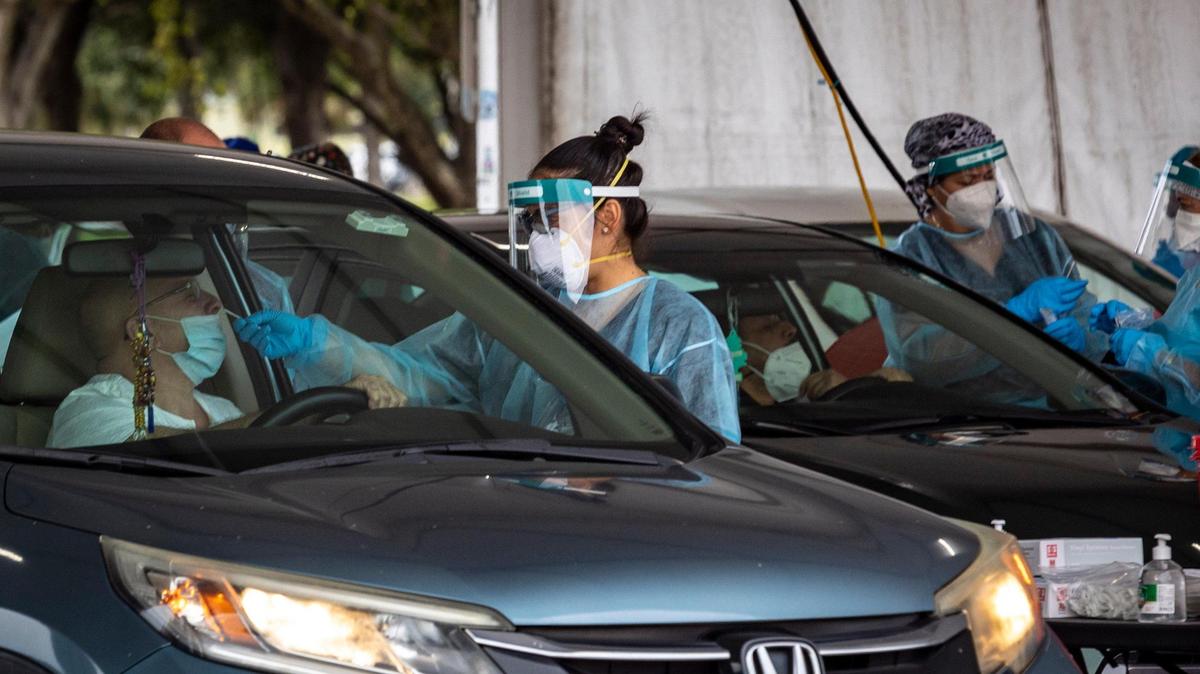
Miami-Dade’s seven-day percent positivity is at 22%, County Mayor Daniella Levine Cava said on Wednesday. For now, it hasn’t reached the levels seen in the winter, when omicron-fueled cases clogged COVID testing lines everywhere. In January, during the omicron surge, the county’s seven-day percent positivity soared to 35% at one point.
The Centers for Disease Control and Prevention has all four South Florida counties — Miami-Dade, Broward, Palm Beach and Monroe — under the high risk for COVID transmission category, and is recommending people wear masks in indoor public spaces again.
Even with the surge in cases, infectious disease epidemiologist Mary Jo Trepka is hopeful that it won’t be like omicron’s winter surge. But the Florida International University professor also notes that the available data doesn’t reflect the whole story.
“It doesn’t really reflect reality. It’s sort of like the tip of the iceberg,” Trepka said. “We’re not seeing everything else going on, we’re not seeing the people who are only testing at home, we’re not seeing the people that are just deciding not to get tested anymore because they’re tired of the pandemic and we’re not seeing people who might be infectious but have extremely mild symptoms.”
READ NEXT: Traveling to Miami, Orlando or another Florida city? How to check the COVID risk level
How do I know if it’s COVID, flu, the common cold or allergies?
Sometimes people get a runny nose. A sore throat. Nasty diarrhea. And they feel really tired.
Is it COVID? The flu? The common cold?
All three have similar symptoms — although losing your sense of taste or smell is more common with COVID — and makes it nearly impossible to tell unless you get tested.
What about COVID vs allergies?
While there are a few similarities, allergies won’t give you fever. If you have itchy and watery eyes, you likely need a Zyrtec or other allergy medication.
If you start to get a cough or other COVID-like symptoms, such as fever, your best bet is to get tested. If you’re curious about the similarities and differences between COVID and the flu, common cold and allergies, the Mayo Clinic has a useful chart online.
Can I still get a COVID vaccine and booster? Is it effective against the new variants?
COVID-19 vaccines are still available at county-run sites and retail pharmacies across South Florida, including Publix, Walmart, Walgreens, Winn-Dixie, Fresco y Más and Navarro.
As for the variants, it’s like alphabet soup. We’ve had alpha, delta and omicron. There are also subvariants. These are all mutated versions of the original strain of SARS-CoV-2, which causes COVID-19.
At the moment, the dominant strain in the U.S. is BA.2.12.1, an omicron subvariant. Two other contagious omicron subvariants, BA.4 and BA.5, are quickly gaining ground, as the Miami Herald has reported.
While the vaccines might not work as well against these variants, it will still offer some protection, Trepka said.
“And that’s why if you’re not vaccinated yet, you are going to definitely get a benefit from being vaccinated,” Trepka said. “If you’re not boosted yet, you’ll get a benefit from being boosted.”
I have symptoms or was exposed. Should I get a COVID test?
You should get tested if you start to feel ill or are exposed to someone with COVID. The CDC recommends getting a test at least five days after having a known or suspected close contact to someone with COVID.
If you’re positive, speak with your doctor to see if you’re eligible for a COVID pill. You should also quarantine and wear a mask if around others.
TIPS:
▪ The federal government is giving out a third round of free at-home test kits. While the kits likely won’t get to you in time if you’re in need of one right now, it’s good to have some in your home for the future. You can request free test kits online at covid.gov/tests.
▪ Miami-Dade County has an online COVID test locator you can use to find a site near you.
If I test positive for COVID, do I have to tell my boss? What about my coworkers, family and friends?
If you test positive for COVID or are exposed to the virus, you may have to tell your boss, especially if you’re working in-person. Your workplace likely has a policy in place to notify other people you were in close contact with that they were exposed.
Plus, you might not feel well enough to work.
While you don’t have to tell your family or friends, you should if they were with you recently. They deserve to know so they can mask up, get tested and take other precautions.
What COVID medications are there?
If you fall ill with COVID, you might be eligible to get Paxlovid or Molnupiravir, antiviral pills that are meant to help certain high-risk COVID patients combat the illness at home. The pills, which are under emergency-use authorization, require a doctor’s prescription and can be fulfilled at select pharmacies including Publix, CVS, Walgreens and Walmart.
And unlike monoclonal antibody treatments, which require injections or IV infusion, Paxlovid and Molnupiravir are oral medications. You swallow them like Tylenol.
READ MORE: Where can you get a COVID pill in Miami and the rest of South Florida? Here’s your list
The FDA says the pills should be taken by eligible patients as soon as possible once they test positive. Treatment should begin within five days of the beginning of symptoms. However, the pills are not an alternative to COVID-19 vaccinations, the FDA says.
Check with your doctor to see if you’re eligible for the pills. Make sure to mention allergies, illnesses and whether you’re taking any medication, including vitamins or herbal products.
Visit the FDA’s website or ask your healthcare provider to learn more about the medications.
Do I have to quarantine if I test positive?
If you were exposed to COVID, have no symptoms and are fully vaccinated, you don’t need to quarantine, although you should wear a mask around others for 10 days, according to the CDC.
If you are not vaccinated, the CDC recommends quarantining for at least five days. After five days, if you have no symptoms, you can end your quarantine but should still wear a mask until Day 10.
If you test positive for COVID or have symptoms, the CDC recommends isolating for at least five days, whether or not you’re vaccinated. If you live with others, isolate from them. This can sometimes be hard, especially in a multi-generational home, but do your best and lock yourself in a room.
If you have to be around others, wear a mask and ask them to wear one, too.
After five days, if you are fever-free for 24 hours (without fever-reducing medication) and your symptoms are improving, you can end isolation, per the CDC. And wear a mask until Day 10.
TIP: Not sure how long you should quarantine? The CDC has an online quarantine and isolation calculator you can use.
Should I wear a mask? What other COVID precautions should I take?
Trepka, the FIU epidemiologist, says now is the time for people to be more cautious due to the region’s rise in cases. She recommends people wear masks in indoor public spaces, especially in crowds. The CDC also recommends people wear masks on public transportation. People should consider their own underlying health, too.
Do you or a family member have a high risk condition? Are you immunocompromised? How old are you? Vaccinated or not vaccinated? Do you work with people who are considered high risk for severe illness?
These are all questions Trepka says people should be thinking about as they decide on whether to wear a mask or follow other precautions, at least, until the surge dies down again.
“It’s like when you’re riding on an airplane and the captain tell you that ‘we’re gonna have some turbulence, so put on your seatbelt,’ “ she said. “And then when things come down, the captain says ‘you can take your seatbelt off now.’ And I think that’s what we’re experiencing now, with COVID.”
READ NEXT: With COVID rising, what are you doing to stay healthy in South Florida? Take our poll
Miami Herald health editor Joan Chrissos contributed to this report.
This story was originally published June 8, 2022 at 5:49 PM with the headline "Is it COVID or a cold? Can pills help? Time for a test? What to know about Florida surge."

.JPG)