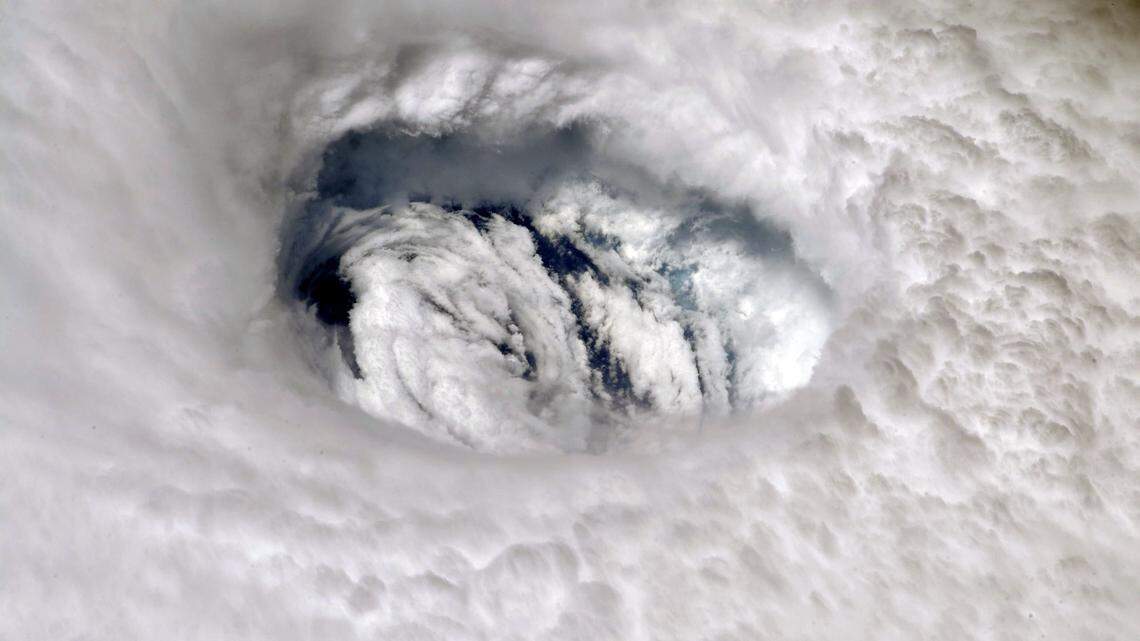
Hey, Curious305: Why do we give names to tropical storms and hurricanes?
READ MORE
Curious305: Your questions and our answers
The Miami Herald has launched Curious305, a community-powered reporting series that solicits questions from readers about Miami-Dade, Broward, the Florida Keys and the Sunshine State. The crowdsourcing project is just one way we’re working to involve you, our readers, in our journalism.
Expand All
Editor’s Note: This article was inspired by a question submitted from Miami Herald reader Rebeca Perdomo through Curious305, our community-powered reporting series that solicits questions from readers about Miami-Dade, Broward, the Florida Keys and the rest of the Sunshine State. Submit your question here or scroll down to fill out our form.
Hey, Curious305: Why do meteorologists name tropical storms and hurricanes?
One of the most fearsome hurricanes to ever strike South Florida is known simply as the Great Miami Hurricane of 1926. For decades afterward, storms were named similarly — based arbitrarily on the damage they did.
“An Atlantic storm that ripped off the mast of a boat named Antje became known as Antje’s hurricane,” the World Meteorological Organization wrote.
In the West Indies, hurricanes were named after the saint’s day on which they made landfall.
“Ivan R. Tannehill describes in his book “Hurricanes” the major tropical storms of recorded history and mentions many hurricanes named after saints. For example, there was “Hurricane Santa Ana” which struck Puerto Rico with exceptional violence on July 26, 1825, and “San Felipe” (the first) and “San Felipe” (the second) which hit Puerto Rico on September 13 in both 1876 and 1928,” the National Hurricane Center wrote.
READ NEXT:Will car insurance cover frozen iguana damage in South Florida? Curious305 investigates
That naming convention may have worked for awhile, but meteorologists eventually became skilled enough to predict when a storm was on its way and needed to label storms before they struck land. They figured out it’s easier to get people to pay attention to a name rather than a number, and names helped differentiate between simultaneous storms.
Starting in 1950, forecasters used military names like Able, Baker and Charlie to name a tropical cyclone that reached a maximum sustained wind speed of at least 35 knots (or 40 mph).
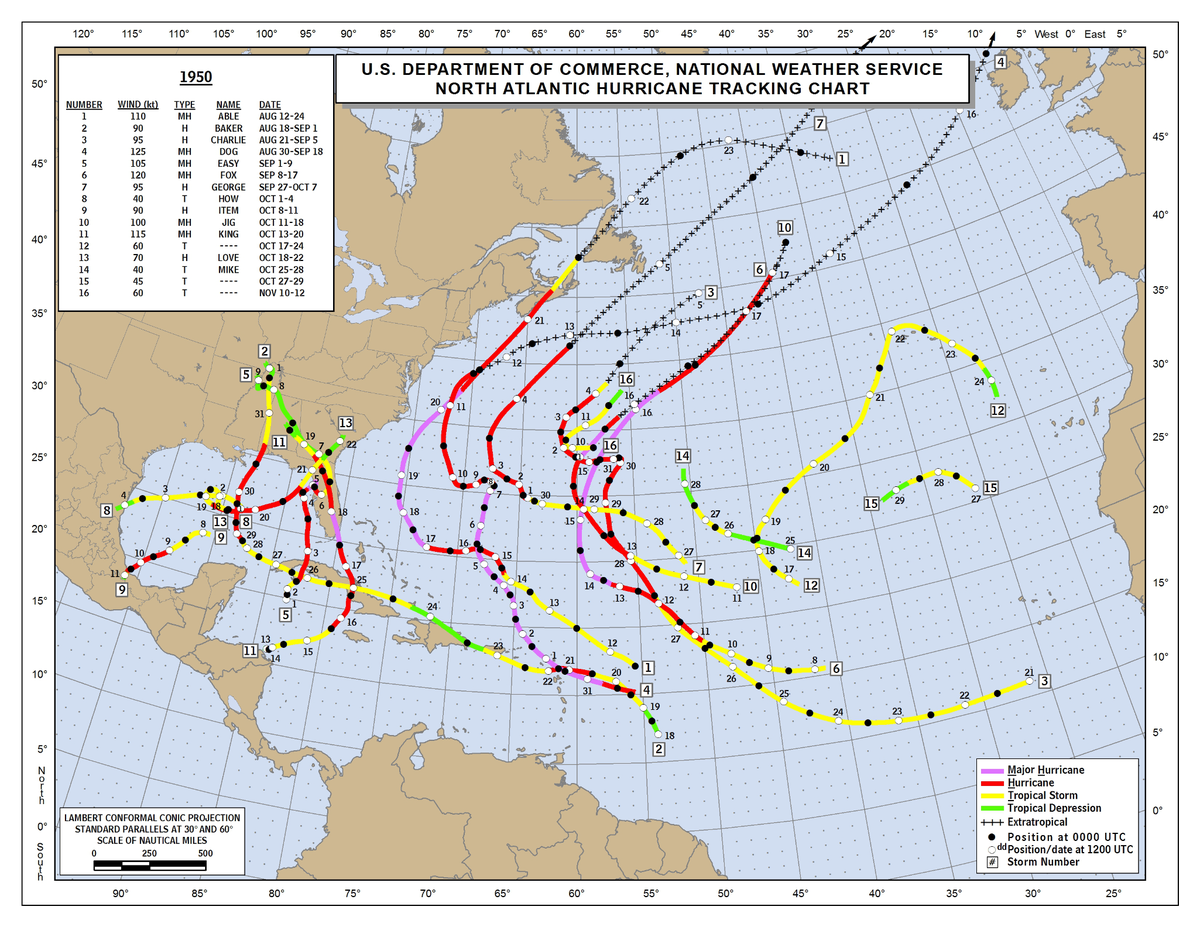
That didn’t last long. In 1953, the U.S. switched to female names only for tropical storms, a practice that stuck around until 1978. By 1979, the lists alternated between male and female names for storms in the Atlantic Ocean and Gulf of Mexico.
Six lists are used in rotation, so the same names come up every few years unless they’re retired. Storm names get retired if they cause tremendous damage or loss of life, and a new name is chosen by an international committee of the WMO. The 2020 names retired were Laura, Eta and Iota.
READ MORE: What those hurricane spaghetti models all over social media actually mean
When did Greek letters come into the picture?
The first time meteorologists ran out of storm names was in 2005. That year was so hectic meteorologists needed a backup list, so they turned to the Greek alphabet.
They got six names deep — all the way to Zeta — before the season finally came to a merciful end.
The next time a hurricane season overstepped its name list was 2020, which saw 30 named storms, nine of which were Greek letters. That will never happen again, because the World Meteorological Organization found the practice distracting and confusing for viewers.
In 2021, the National Hurricane Center began using its normal rotation of 21 storm names plus a backup list of another 21 names.
READ NEXT: How did the Miami Hurricanes get their mascot? Curious305 looks back at UM’s Sebastian
This story was originally published October 8, 2021 at 7:00 AM with the headline "Hey, Curious305: Why do we give names to tropical storms and hurricanes?."