
Scalawags, carpetbaggers and the election of 1876: Part II
When we last left our story, we had set the backdrop for the presidential election of 1876 between Republican candidate Rutherford B. Hayes and Democrat Samuel J. Tilden during the post-Civil War Reconstruction era.
With the political power buildup by the Republicans of Manatee County came the appointment of James F. Bartholf to the position of clerk of court. Now recall that in 1868, the clerk of court was responsible for administering the electoral process within their county. Also recall that in 1868 Manatee County was heavily Democratic. It was only through the political maneuvering of Reconstruction politics that this appointment had come to be.
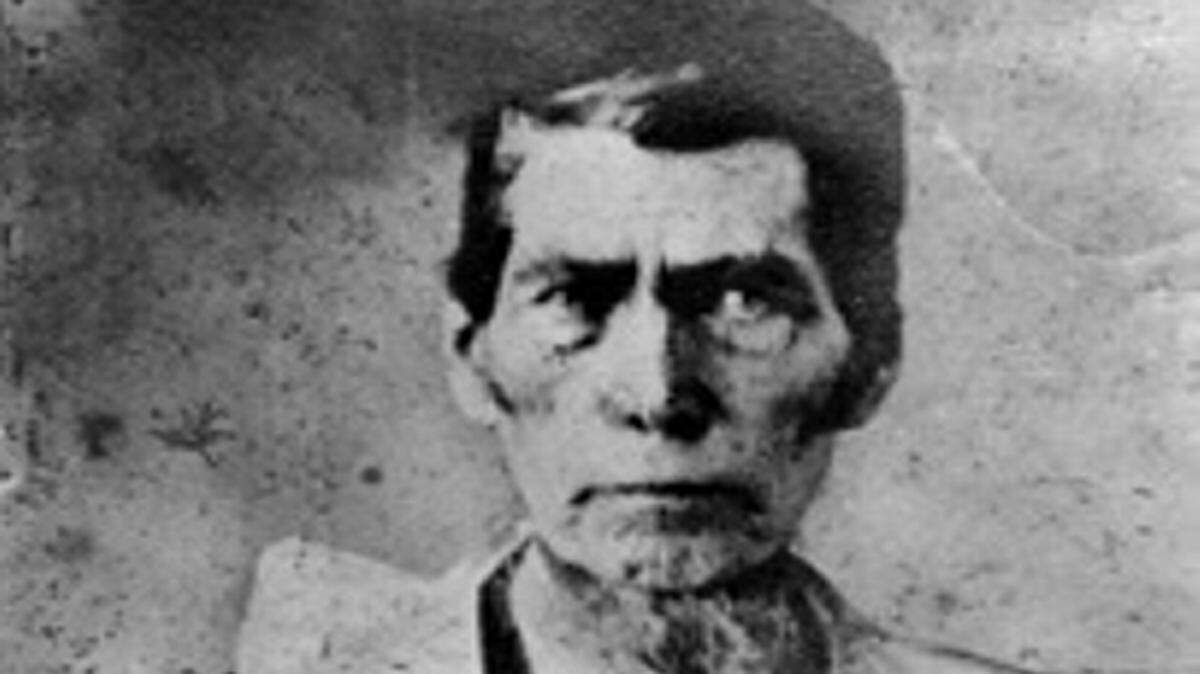
Though meeting the traditional criteria of "carpetbagger," to be fair, Bartholf
is also known for having recommended Democrats he found competent to appointments.
Two of these names you will soon hear again. They are Ziba King, justice of the peace, and Edgar M. Graham, county judge. Regardless, in August of 1876, with the presidential election looming, Bartholf would resign his position as clerk of court for health reasons.
For reasons some have speculated upon, Gov. Marcellus Stearns - also a Republican - upon receipt of the resignation delayed in appointing a successor.
So why does this matter? Well folks, in a presidential election whose candidates and outcome would either strengthen or weaken the Reconstruction Era legislation that Democrats felt was effectively strangling the post-war recovery of the South, it mattered quite a bit.
The reality was that the votes of Manatee County might not count in the election without official certification.
After a few weeks, the governor appointed none other than Andrew Green, son of James D. Green, to the position of clerk of court. However, Andrew had intentions to wait until after the election to become bonded, ensuring there would be no clerk to certify an election in Manatee County.
The Democrats, however would not go down without a fight. Judge Edgar M. Graham drew up ballots and on Nov. 7, 1876, distributed them to Democratic voters.
Meanwhile, James D. Green urged the county's Republican voters not to participate in this bogus "rump" election. Dr. John C. Pelot, chairman of the County Democratic Executive Committee collected the ballots, his intent to take them to the county seat of Pine Level for official certification.
The weather was terrible and the terrain hash on such a long road.
Comes now local hero, Josiah Gates volunteering to make the treacherous journey. After riding all night he arrived at his destination only to be refused by Bartholf citing his previous resignation. Andrew Green, the recent appointee, was conspicuously absent.
Gates, sought higher counsel from Justice of the Peace Ziba King. The two surmised that enough official signatures constituted official certification of the vote.
Although none held the proper authority, a document dated Nov. 13, 1876, was signed by "E.M. Graham, county judge, J.B. Mizell, sheriff, and Z. King, justice of the peace" certifying the ballots. The precious document was carried through the night, and the Myakka Swamp, across the Myakka River to Manatee Village, by Josiah Gates and Ziba King. Though gathered and sent to Tallahassee, the ballots were refused by Republican election officials without a valid certificate from the clerk of Court.
In Tallahassee, there were calls for recounts, refusals and disqualifications from both parties to determine the outcome of Florida's vote. (Sound familiar? Election of 2000?) However, this time around, Florida was not standing alone. There were similar troubles in Louisiana and South Carolina, too.
For the first time since 1858, the Democrats stood to regain the presidency. Both political parties were making accusations of ballot box stuffing and other shenanigans so much so that it required the formation of an Electoral Commission to determine the outcome of the national election. The commission consisted of 15 representatives from Congress and the Supreme Court with an equal number of Democrats and Republicans. It took three weeks until finally Justice Joseph P. Bradley agreed to trade his vote in favor of Hays for Republican concessions, including the removal of Federal troops from southern states, increased funding for southern improvements, and the appointment of a southerner to the cabinet.
In an 8 to 7 vote, Rutherford B. Hayes became President-elect.
So it was that the treacherous midnight ride, creative efforts at certification of the Manatee County vote, and the surrounding strife were all for not.
However, the next time you're tempted to pass on your opportunity to vote because you're frustrated with the offerings, the lines at the polls are too long, you're just too busy to make time, or it's raining, etc., just think - W.W.J.D? (What would Josiah do?).
Get out and vote when your turn rolls around. Regardless of whether you feel outnumbered, we're all lucky to have the chance to be counted.
Phaedra Carter, who works at the Manatee Village Historical Park, enjoys digging into Manatee County's past to learn more about the personalities who settled the community where she was born and raised.
This story was originally published February 16, 2016 at 11:43 PM with the headline "Scalawags, carpetbaggers and the election of 1876: Part II ."