
Scalawags, carpetbaggers and the election of 1876: Part I
Editor's note: First of two parts, Part II appears Wednesday
We are in February of a presidential election year, and I am sure most of us are already in election coverage-overload. However, all the recent antics of the candidates had me wondering if there were any electoral incidents of note from our local history. Well, indeed there is one in particular that even rivals the Bush vs. Gore debacle in 2000. As this subject requires some stage-setting, today's article will be a "to-be-continued" arrangement.
The presidential election of 1876 would see Republican candidate Rutherford B. Hayes taking on Democrat Samuel J. Tilden. We are familiar with Hayes, so we know the outcome of this story before it even begins. Let us take a look at the political climate of the time to set the stage for local happenings, though.
The major political parties were divided on the issues before the Civil War. However, during the War Between the States, the Democratic Party gained much clout in the South, and the Republican Party -- the party of Lincoln -- grew its stronghold north of the Mason-Dixon line.
This election was more than a decade after that awful conflict. As you can imagine, bitterness and partisan loyalties didn't go away, but particularly in the South, where Reconstruction politics were at play. However, the politics which would affect this local drama began as early as 1860.
Shortly after the establishment of Manatee County, the Village of Manatee was named the county seat. Situated on the Manatee River, this tiny hamlet was the most populated spot, but not necessarily the most convenient location for folks in the vast county.
When first established the county stretched more than 5,000 square miles and included areas now known as Hardee, Highlands, Sarasota, DeSoto, Charlotte and Glades counties. The Village of Manatee was almost unanimous in its support of the Confederacy and decidedly Democratic in its political views. But this is not to say that the entire county was sympathetic to the cause. There were others and, just after the war, they might have been described as scalawags.
You may have heard the term used in pop-culture context, but "what is a scalawag" some might ask. Oxford defines a scalawag as 1) A person who behaves badly but in an amusingly mischievous rather than harmful way; a rascal. 2) A Southerner who collaborated with northern Republicans during Reconstruction, often for personal profit. The term was used derisively by Southern Democrats, who opposed Reconstruction legislation."
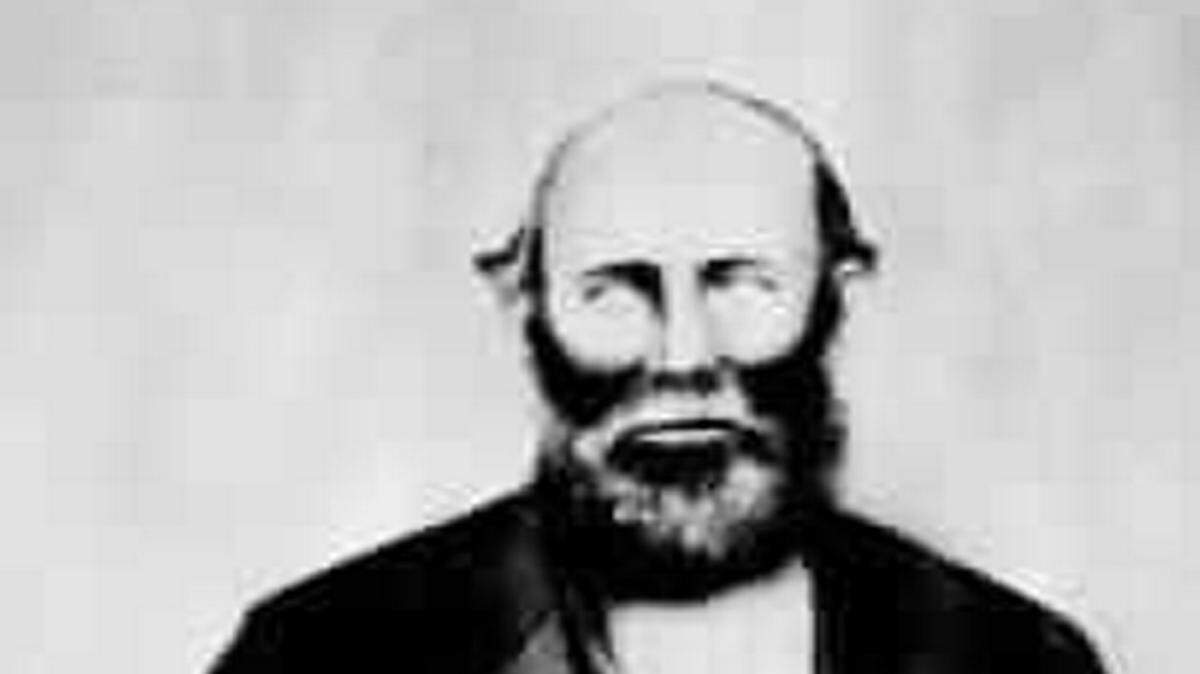
Our most notable, local scalawag was "Cracker Jim" -- a derogatory nickname given to him by the Manatee Villagers. His true identity was James D. Green, a Republican and leader of a group of like-minded cattlemen and farmers in the eastern reaches of the county. Green had fought hard against having the county seat situated in the Village of Manatee back in 1860, when the county's first courthouse was being built. He, and the group he represented, felt that it was not centrally located enough considering the county's expanse. During the war while nearly the entire Village of Manatee labored in support of the Confederacy, Green served as an officer in the Second Florida Calvary, U.S.A. It is no surprise that in 1866 the year after the war, Green and his east-county contingent sought to move the county seat to Pine Level, 10 miles west of Arcadia.
Green also served as Manatee County's representative to the State Assembly for five years, and became well known in Republican circles as his power reached statewide. Many key public officials who are elected by popular vote today, such as clerks of court, sheriffs, and judges, in 1867 came to their office by appointment. They also held multiple duties, which today are held by separate officials. For example, the clerk of court was responsible for administering the electoral process within the county. Green was able to influence quite a few appointments that were made to bolster Republican influence, despite the Democratic majority of Manatee County voters.
In 1868, with support from fellow Republicans E.E. Mizell and James T. Magbee, of eastern Manatee County, Green arranged the appointment of James F. Bartholf as clerk of court. Bartholf was a former teacher and Union veteran from New York, who moved here after the war searching for financial opportunity. In these parts, he was probably described as a carpetbagger.
Again, some of you inquiring, "what is a carpetbagger." Well, aside from being my father's C.B. handle back in the 1970s -- which he used in a very tongue-in-cheek manner when he moved here from Akron, Ohio -- this was a pretty nasty label to affix to someone in 1867. Merriam-Webster defines a carpetbagger as 1) a Northerner in the South after the American Civil War usually seeking private gain under the reconstruction governments 2) outsider; especially a nonresident or new resident who seeks private gain from an area often by meddling in its business or politics."
Can you smell trouble brewing for this election, yet?
Phaedra Carter, who works at Manatee Village Historical Park, enjoys digging into Manatee County's past to learn more about the personalities who settled the community where she was born and raised.
This story was originally published February 15, 2016 at 11:27 PM with the headline "Scalawags, carpetbaggers and the election of 1876: Part I ."