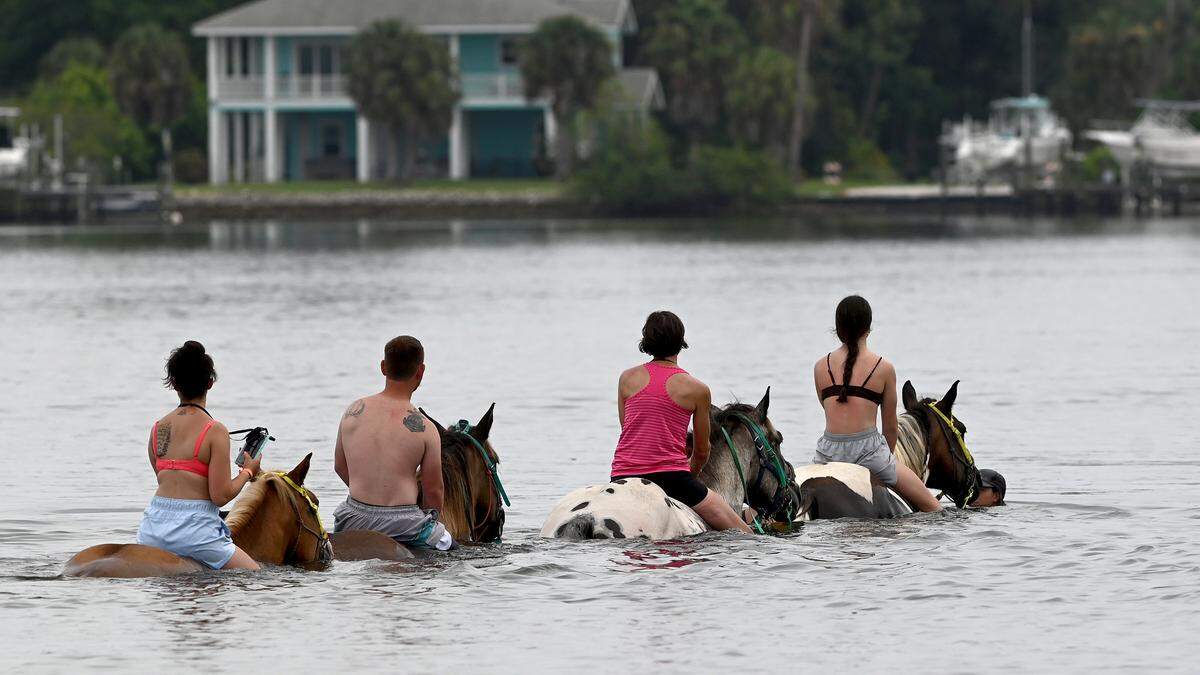
Does horse poop pollute Bradenton’s Palma Sola Bay? What new study results show
New genetic test results by local environmental groups show that horses are one of the contributing factors to Palma Sola Bay’s water quality issues.
But the results, which also identify birds as a source of bacteria, leave more questions to be answered as Bradenton officials weigh whether to regulate horse rides.
The Sarasota Bay Estuary Program, in collaboration with Suncoast Waterkeeper, conducted the research over the past two months to get a better understanding of what could be contributing to continuously elevated levels of fecal bacteria in Palma Sola Bay.
However, despite growing debate on social media about horses’ role in the problem, the data showed the horse DNA was detectable, but not quantifiable. This means horse DNA was found in the water samples, but not at a high enough level to determine what percentage of the bacteria came from horses.
“There was genetic material there, but getting to how much, and how much of an issue it is, is not within the scope of this pilot study,” said Ryan Gandy, the SBEP’s executive director.
Gandy called the research a “preliminary study,” and provided some information that was relayed to local stakeholders, including the Bradenton City Council, which has discussed the causeway’s water quality issues over the past several years.
The two-month study also included about a month span where horseback riding companies voluntarily paused rides along the causeway, as one company owner said they continue to cooperate and clean up the bay.
The Florida Department of Health uses fecal indicator bacteria, like enterococci bacteria, to determine if it’s safe to swim in bodies of water. High levels of enterococci bacteria that is ingested by swimmers or enters the skin through a cut can cause diseases or rashes, according to the FDOH.
New research provided limited insights
The need for the study originated from community concern about Palma Sola Bay’s continuously elevated fecal bacteria readings. Suncoast Waterkeeper conducts weekly sampling at various sites around Sarasota Bay to test for enterococci bacteria, a commonly used fecal indicator bacteria.
Only two weeks in October and November were “safe to swim” in Palma Sola Bay, according to Suncoast Waterkeeper’s sampling.
However, enterococci bacteria is not specific to humans — or even animals — and Suncoast Waterkeeper’s weekly sampling doesn’t determine possible sources. That’s why the group collaborated with the SBEP for the more advanced genetic source sampling.
On Tuesday, the SBEP published a summary of the findings, saying genetic material from birds and horses was detected during the sampling period, but the study could not determine how much each source contributed.
“The data stated what we already knew,” Suncoast Waterkeeper Executive Director Abbey Tyrna said. “Horses are part of the issue, but they’re not the only issue. It seems like birds are also a seasonal issue.”
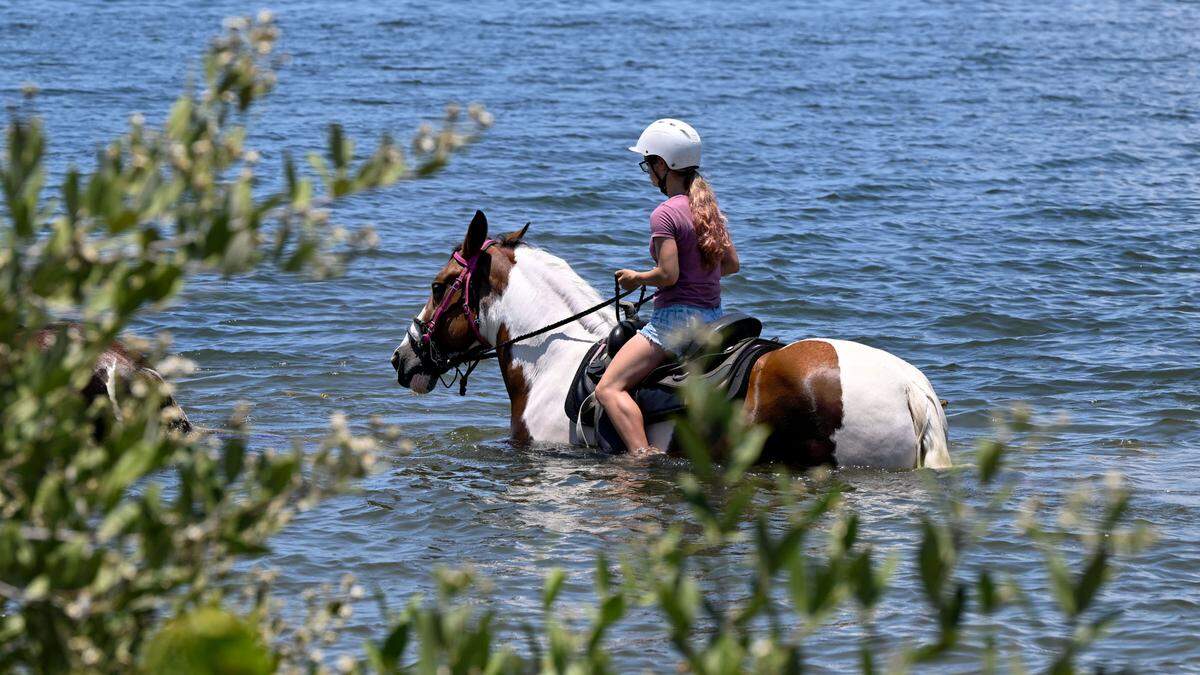
Despite the horseback riding companies vacating the causeway for a month, the samples continued to show hits for horse DNA.
“That can be the result of multiple things — the residence time of the bacteria in the water, its ability to feed on other organic substances in there,” Gandy said.
In a Nov. 7 blog post, Dave Tomasko, SBEP’s former executive director, also noted that no results detected human DNA as a source of bacteria.
“That certainly doesn’t mean that sewage overflows are not a big deal — they are,” the post states. “But it does mean that high levels of fecal indicator bacteria do not necessarily mean that an inadequate sewage system or failed septic tank systems are at fault.”
While the study answered some questions, Gandy said it also raised new ones.
“It was really a limited pilot study to better understand the potential sources of fecal bacteria levels in Palma Sola Bay,” Gandy said.
The study only looked at four bacteria sources — humans, horses, birds and general bacteria. But since those were the focus of the water samples, the laboratory was not looking for genetic material from other sources that could be contributing to the problems.
“We chose to just focus on those four, because those are the ones that were of major concern,” Gandy said. “So the study is not all-encompassing like you would do with a full-blown, expensive microbial source tracking study.”
According to Gandy, things like decomposing seagrass, dog poop, manatee feces and fish excrement were not accounted for in the study, but could be contributing to the fecal bacteria problems.
“The study provided good, valuable insight, but it’s only an initial step at looking at those and understanding what fecal sources are coming into Palma Sola Bay, or are already in Palma Sola Bay,” Gandy said.
Horseback riding company works on cleanup
Carmen Hanson, owner of C Ponies Horseback Riding, said she sees the results as positive because horse bacteria was not detected in a large-enough amount to be quantified.
“We’re very happy with the results,” Hanson said. “We’ve never thought that it was the horses.”
She added that she hopes local officials and environmental organizations continue to look at other potential sources and not have tunnel vision on the horses.
“It’s not the horses, it’s just nature,” Hanson said.
C Ponies was one of the horseback riding companies that voluntarily left the Palma Sola Causeway for a month for part of the study. Horseback rides returned to the causeway at the start of October.
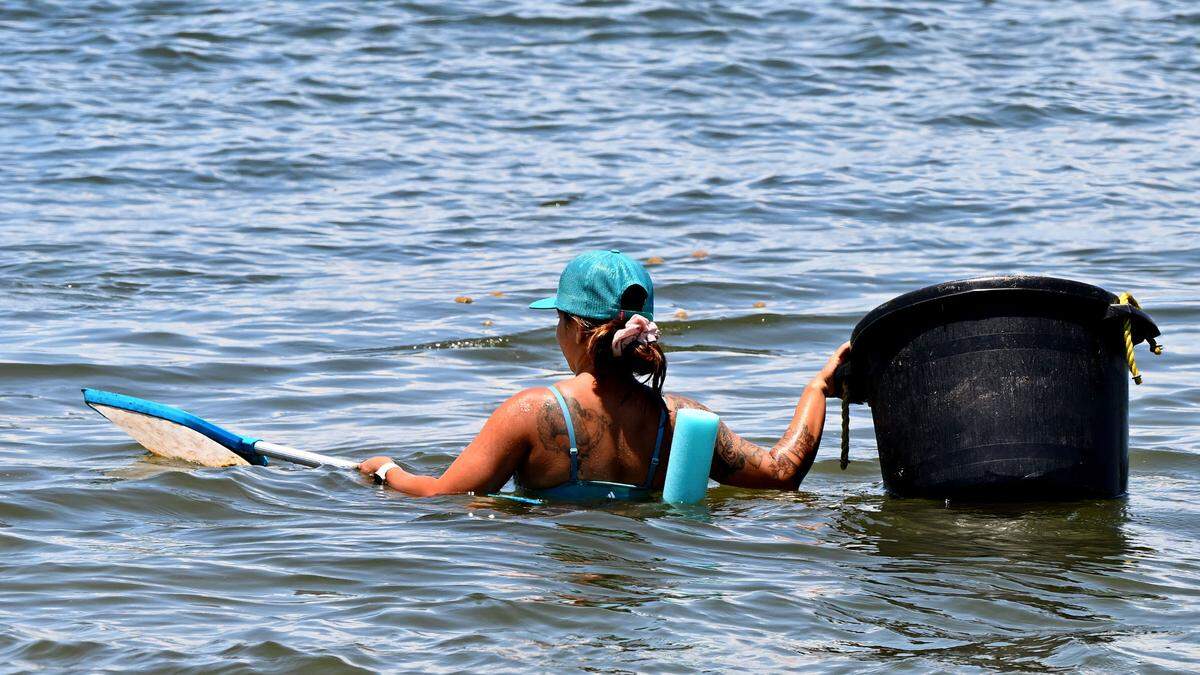
According to Hanson, she’s invested nearly $4,000 in boats to increase the company’s cleaning process on the causeway. She said her staff also cleans the beaches before and after horseback rides, and collects any horse poop in the water with nets.
“We’re still doing 100% of what we can to keep our bay clean. We are for keeping the bay clean,” Hanson said.
Gandy also acknowledged that C Ponies and other vendors are doing their part to mitigate impacts.
“The vendors that are there operating are taking steps to mitigate, basically collecting the horse waste to reduce that load,” Gandy said. “So even though we detected at a very low, non-quantifiable level, there are efforts to reduce that load even further from the operations that are there.”
What’s next for Palma Sola Bay problem
Following the study’s completion, Tyrna sent a letter to the Bradenton City Council and Mayor Gene Brown to explain the findings and reiterate Suncoast Waterkeeper’s suggestions — warning signage around the causeway and a permit system for horseback riding vendors.
Gandy said it’s up to the municipalities to determine if they’d like to take the next step, which could mean a more advanced study that would be a “costly, time-consuming process.”
The SBEP is a non-regulatory organization, meaning it doesn’t direct municipalities.
However, Tyrna said she believes the data from this study was sufficient to back Suncoast Waterkeeper’s suggestions.
“We don’t think that any more money needs to be spent to look at the sources,” Tyrna said.
Brown confirmed he received Suncoast Waterkeeper’s letter, and would meet with scientific consultants on Tuesday to talk about the findings.
“Public safety is important to us,” Brown said. “We’re going to keep trying to evaluate the facts.”