
Are wetland changes illegal? Manatee sets up showdown with Florida officials
As Manatee County leaders were poised for a final vote to restore local wetland protections, state officials shocked them with a last-minute opposition.
Florida agencies get to review Comprehensive Plan amendments made by county governments. During the months-long process to bring back Manatee County’s wetland buffers, state agencies did not express any concerns, county staff said.
But as the final vote to restore the wetland buffers neared, the county received a sudden slew of emails from Florida officials.
In what appeared to be a coordinated effort, four state agencies used similar language to describe concerns about the wetland buffers and question whether Manatee County could legally reinstate them.
Manatee County commissioners expressed outrage at the state’s opposition. The move to bring back wetland protections has broad public support in Manatee County — so much that commission candidates successfully campaigned on the issue in the 2024 election.
“This is ridiculous,” said Commissioner George Kruse, who accused developers of “working with (their) friends” in Tallahassee to “weaponize” state agencies and oppose Manatee County’s plans.
“Nothing we’re doing is wrong,” Kruse said. “All we’re doing is putting back something that was there.”
But with state agencies arguing that Manatee County would be violating the law with a vote to restore the buffers, commissioners said they were left with no other choice but to delay the vote.
Florida makes surprise move
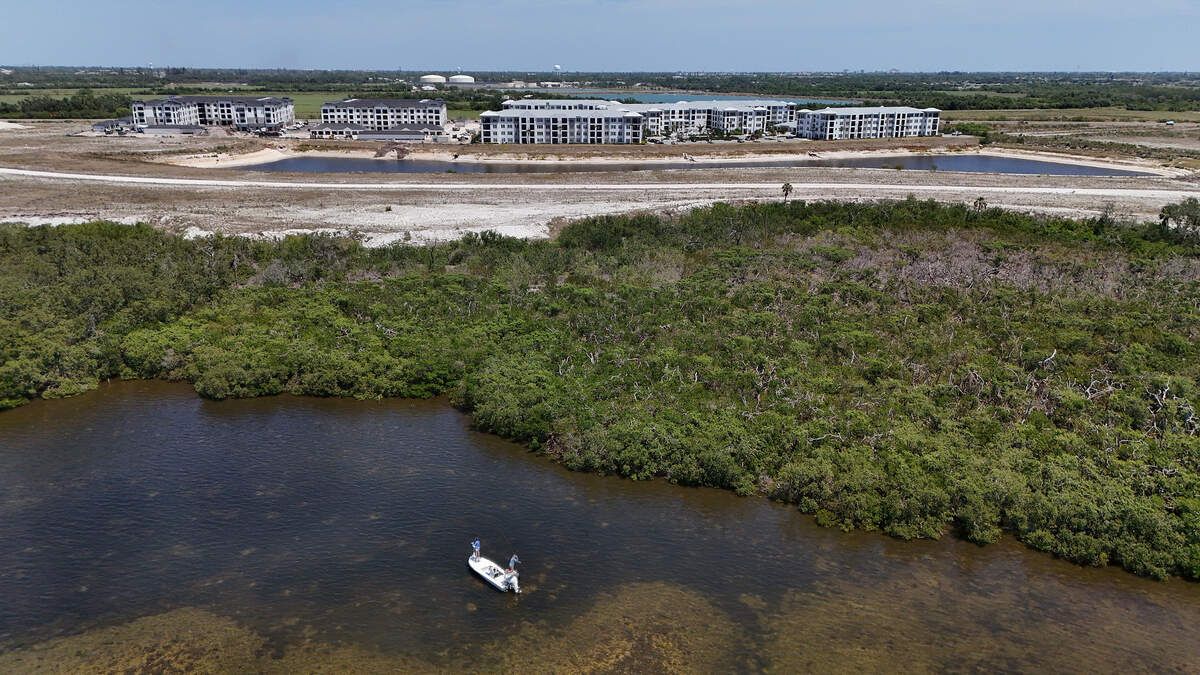
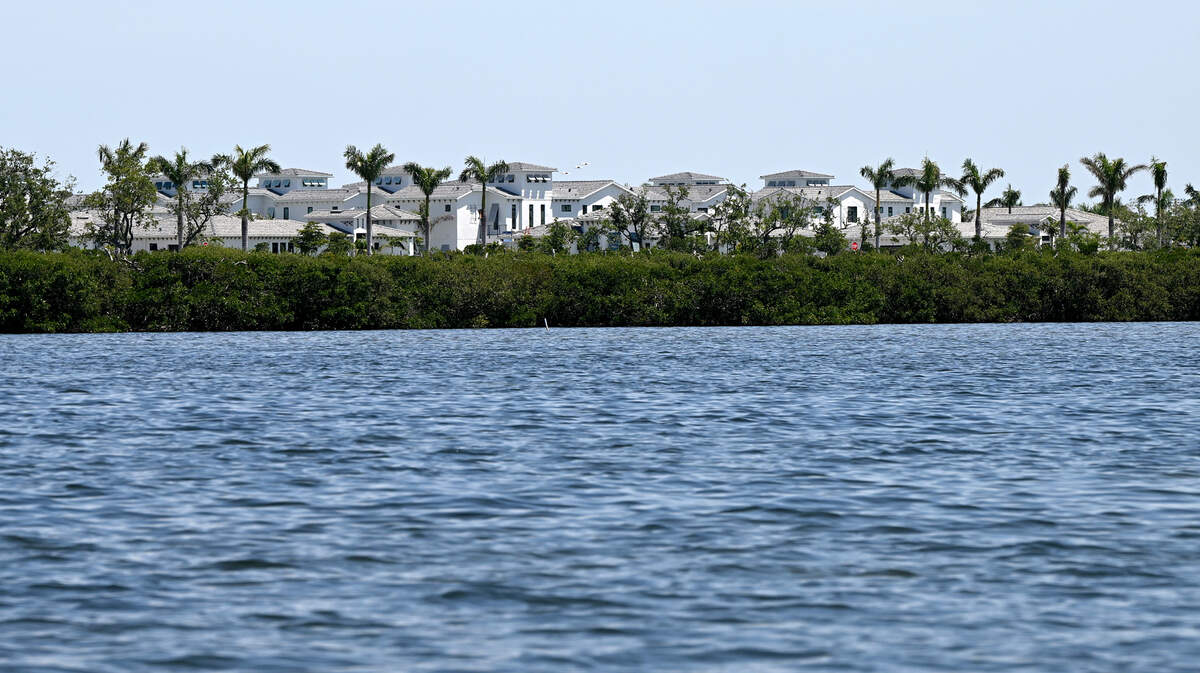
Manatee County’s wetland buffer rules had been part of the county’s Comprehensive Plan since 1989. They were designed to shield environmentally sensitive areas from pollution and protect water quality, wildlife and economic resources.
Scientists refer to wetlands as the “kidneys of the environment” for their ability to filter nutrients that contribute to harmful algal blooms and other water quality problems.
The county’s rules went above and beyond Florida law to protect wetlands by mandating larger buffers of 30 to 50 feet and requiring builders to take extra steps to blunt the effects of development on the environment.
Scientific research supports the idea that the benefits of wetland buffers increase with size.
But in 2023, a local developer-interest group appealed to county officials to get rid of those rules in a series of behind-the-scenes exchanges, the Bradenton Herald previously reported. Officials voted to do so. The group, formerly known as the Manatee-Sarasota Building Industry Association, has since changed its name to the Suncoast Builders Association.
The vote to remove the wetland protections outraged many residents and may have had an impact on last year’s local election results.
Two commissioners who voted for removing the protections, Kevin Van Ostenbridge and Raymond Turner, were voted out. Kruse, who cast the lone vote for keeping the wetland protections in 2023, kept his seat.
The three new commissioners who were voted in — Carol Ann Felts, Tal Siddique and Bob McCann — all campaigned on restoring the wetland protections. And sitting commissioners — Jason Bearden, Amanda Ballard and Mike Rahn — have reversed course after initially voting to reduce wetland buffers.
State agencies point to Senate Bill 250
Now, state agencies claim that restoring the wetland buffers would violate a law passed in 2023.
The Florida Department of Environmental Protection, Southwest Florida Water Management District, Florida Department of Transportation and Florida Department of Commerce recently sent emails to Manatee County citing portions of the law, staff said.
The Florida Fish and Wildlife Conservation Commission was the only agency that found no issues with the rule change.
One state agency, the Department of Commerce, said the law makes Manatee County’s attempt to restore wetland buffers “null and void,” staff said.
Known as Senate Bill 250, the law prohibits 10 counties that were impacted by Hurricane Ian from creating “more restrictive or burdensome” development rules until October 2026. Some of those counties received funding in the bill to help with hurricane recovery efforts, but Manatee was not one of them.
Kruse argued that it was an unfair exchange.
“Senate Bill 250 is at best unconstitutional, at worst illegal. It was an insanely bad bill,” Kruse said. “It’s a bill that says, if your area was destroyed by a hurricane, you can’t build it back better so it doesn’t get destroyed again. That’s asinine. Even for the people who had strings attached to get money to repair themselves.”
“SB 250 was for hurricane disaster relief,” McCann said. “How can you say getting rid of wetlands ... has anything to do with disaster relief?”
“It’s all a front,” Bearden said. “This is a matter where a majority of this board needs to come together and stay strong.”
Manatee County’s entire state legislative delegation supported the bill in 2023.
At Thursday’s Land Use Meeting, Manatee commissioners said they feared legal action if they voted to restore the wetland buffers against the state’s guidance. Kruse argued that such a move could even allow Gov. Ron DeSantis to remove board members from their seats and appoint commissioners with more developer-friendly attitudes.
Manatee County leaders react to state opposition
“Actually, this is ... crazy,” McCann said. “All we asked for was ... to put back what we had before, which was fine with every one of those agencies up there. If this is truly the free state of Florida, let’s make it the free state of Florida and give the people what they want.”
“I came in with a clear mandate to deliver on this ... I was not voted in to listen to unelected bureaucrats ... give me permission to do my damn job,” Siddique said. “Unequivocally, I will do what the voters want me to do.”
But Siddique argued that the board needs to focus on winning “the broader war” over the wetland protections, and other commissioners agreed.
“We’re just going to have to put ourselves on that hill to die,” Felts said.
The state’s opposition also appeared to sway the only board member who had still opposed restoring the wetland buffers.
“Do we need to have the buffers? Yes. Do we need to defend the buffers? Yes,” Rahn said. “I’ve probably lived here longer than anybody on this board has. We need to do what’s right.”
What happens next?
Commissioners voted 6-0 to delay the vote to a future meeting, with Ballard absent.
“It’s a tough pill to swallow, but it’s the best pill right now,” Rahn said.
Manatee County staff said they will attempt to resolve state agencies’ concerns so that plans to restore the buffers can move forward.
In the meantime, Kruse argued that the board can take a hard line approach and deny development proposals that fail to include wetland buffers beyond the state minimum.
“If you come in front of us and say you want 25-foot buffers (or) minimum 15-foot buffers, you’re going to get denied,” Kruse said. “Because that’s what this board wants.”
In the event that Manatee County has to wait until Senate Bill 250’s expiration in October 2026 to restore the wetland buffers, Kruse said commissioners could use the time to consider mandating even bigger buffers.
“If we do not get these buffers back, soon ... I’m going to propose 100-foot buffers,” Kruse said. “In the interim, this board can proactively fix them ourselves, even if Tallahassee won’t let us.”
Several Florida counties require wetland buffers of over 50 feet. In 2023, Orange County passed one of the strongest sets of rules in the state, which require wetland buffers of at least 100 feet for most development projects.
This story was originally published May 13, 2025 at 5:50 AM.