Bradenton will expand the Riverwalk. First, they’re uncovering history’s ‘hidden treasures’
There’s history buried beneath the land city officials want to use for the eastern extension of the Riverwalk, and a group of archaeologists are working to preserve it for future generations.
Reflections of Manatee, a local historical group, invited the public Monday to join them for a tour of the excavation site at the Manatee Mineral Springs Park in the 1300 block of Fourth Avenue East. Organizers say they’ve already found a treasure trove of priceless artifacts left behind in the African-American settlement of Angola in the early 19th century.
MOre than 100 visitors took part in the tour Monday morning for a “phenomenal” showing that highlighted the community’s interest in history.
“For stories like this in the community, it’s so easy to go unnoticed, but people love archaeology. It brings out the kid in all of us. Not just the memories of digging through dirt but the stories you can tell with what you find,” said Sherry Svekis, vice president of Reflections of Manatee.
The city of Bradenton funded the five-week excavation project with a $100,000 grant in December. According to Svekis, the dig has already produced more than 25 boxes of artifacts.
Some of those boxes are bound to include relics from Jason Brown’s ancestors. Brown, an archaeologist who learned about the excavation through social media, is a verified descendant of Angolan settlers.
“I’m here today because they stood up for freedom. With everything they possibly could, they stood up to freedom and they refused to being subjected as a slave. That mentality to be free and live in your own terms exists in me today,” Brown explained.
Armed with shovels, buckets and sifters, the excavation team turned the park into a research site carved into mounds of dirt and strategically placed indentations. The project comes about six months before the city is slated to break ground on the Riverwalk expansion.
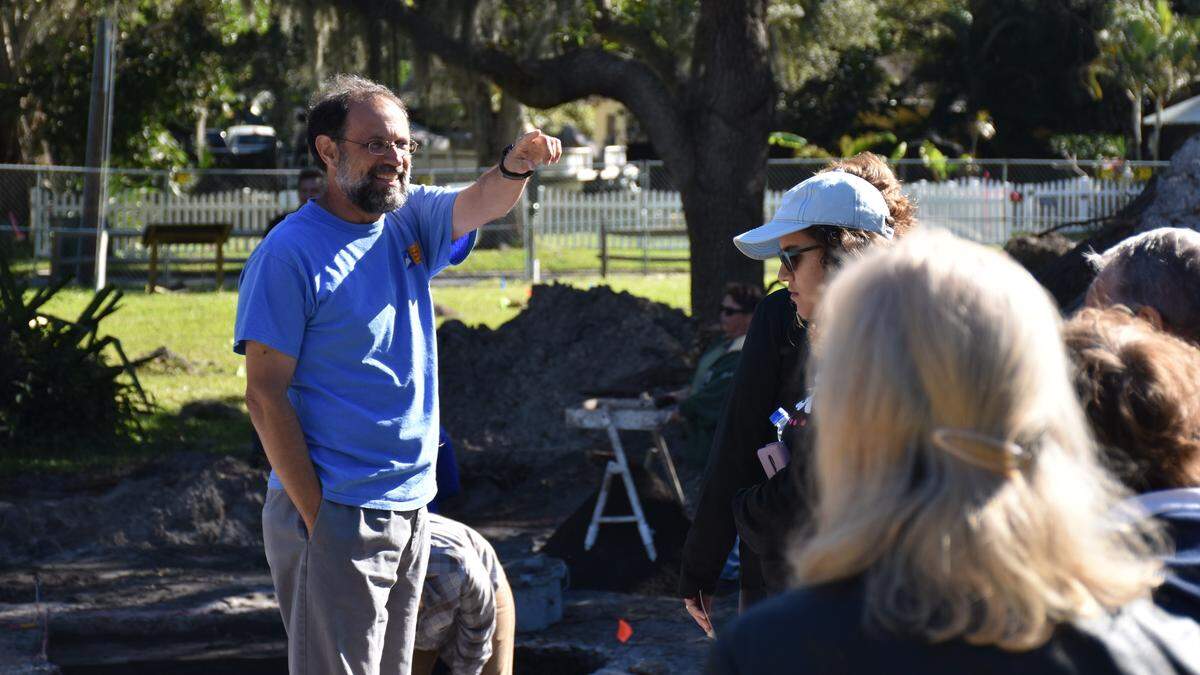
“It was an empty field, but it turned out to have a tremendous amount of information in it,” said Uzi Baram, director of the New College of Florida Archaeology Lab and the lead archaeologist on the site.
Baram’s team has two weeks of digging left before the excavation is complete. As a tour guide, he told guests he could only speculate at how the discovered items were used in day-to-day life. The real research comes when anthropologists study them in the lab over the next six months.
Some of the historic remnants are trivial — marbles, buttons and plate fragments — but each one is a new piece in the puzzle historians use to understand what life was like for the freed slaves who called the area home.
“They’re such simple objects, but they reveal things about the lifestyle of a freedom-seeking community,” Baram pointed out.
Archaeologists worked the site as tour guides led small groups around the area. Some artifacts were buried deep below more recent soil, Baram noted, but crews worked gently to make sure items stayed intact. One guest, Peggy Donoho, described what it was like to lend a hand and participate in the discovery process.
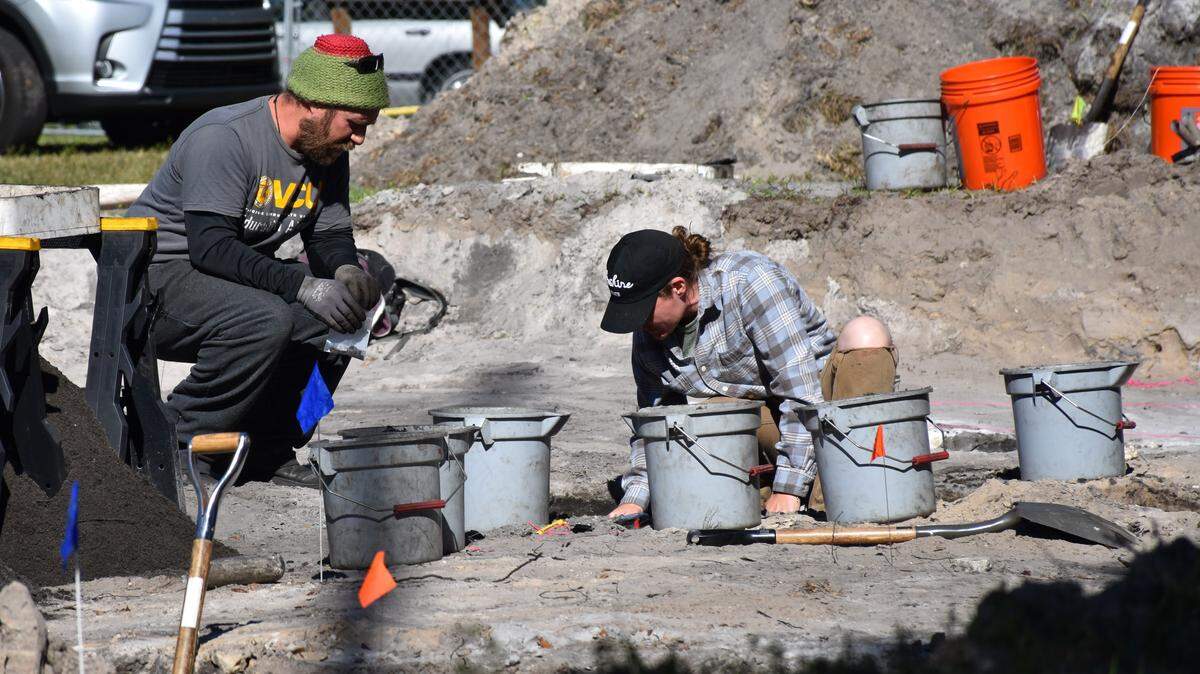
“It feels like a glob and then you wash it to see that a treasure has been exposed. That’s really what this is — finding hidden treasures,” said Donoho.
Once New College researchers finish analyzing the items, they’ll be sent back to Reflections of Manatee and put on display at the visitor center, Baram said.
“It’s great to be able to find these things, and it plays nicely into the expansion. My goal is to have everything be connected and keep the past in the forefront,” said Bradenton Councilman Gene Brown, who attended the tour.
Anyone interested in helping with the excavation process or volunteering with Reflections of Manatee can call (941) 779-4480 or visit www.ReflectionsOfManatee.org.
This story was originally published January 21, 2020 at 5:00 AM.