
There’s more red tide in Manatee, FWC says. Tropical Storm Gordon could be to blame
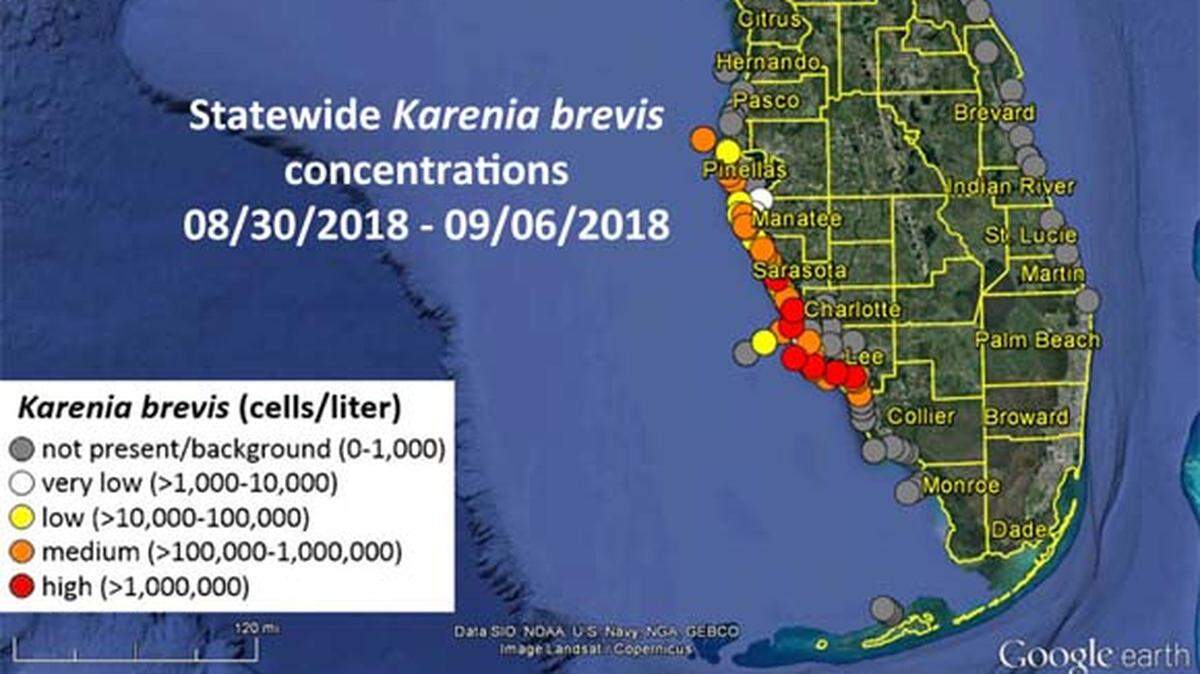
Following a week of lower red tide concentrations, the Florida Fish and Wildlife Conservation Commission says levels are on the rise again.
In a report released Friday, officials said Manatee County’s reported concentration of the Karenia brevis red tide organism are between 5 and 25 percent higher than last week. Last week, the agency said conditions had improved by more than 25 percent.
Background to medium concentrations of the red tide algae bloom have been found in 13 samples off Manatee shores, the FWC said. In Sarasota and Manatee, experts detected traces of Trichodesmium, a cyanobacterium that scientists believe could merge with K. brevis to form a “brown tide” was detected 10 miles offshore.
Officials say Tropical Storm Gordon likely created surface currents that shifted the red tide bloom in a northwestern direction.
In Sarasota, red tide levels are between 5 and 25 percent lower than last week. Meanwhile, the Florida Department of Health in Sarasota County issud a no-swim advisory at Caspersen Beach and Bird Key Park Beach due to high levels of enterococcus bacteria.
Red tide continues to be a nuisance for environmental, economic and recreational reasons along Florida’s Gulf Coast. Scientists say they’re not sure when the algae will dissipate, but blooms typically hit their peaks in September or October.
This story was originally published September 7, 2018 at 6:04 PM.