
A history of Manatee Memorial Hospital, from concept to community asset
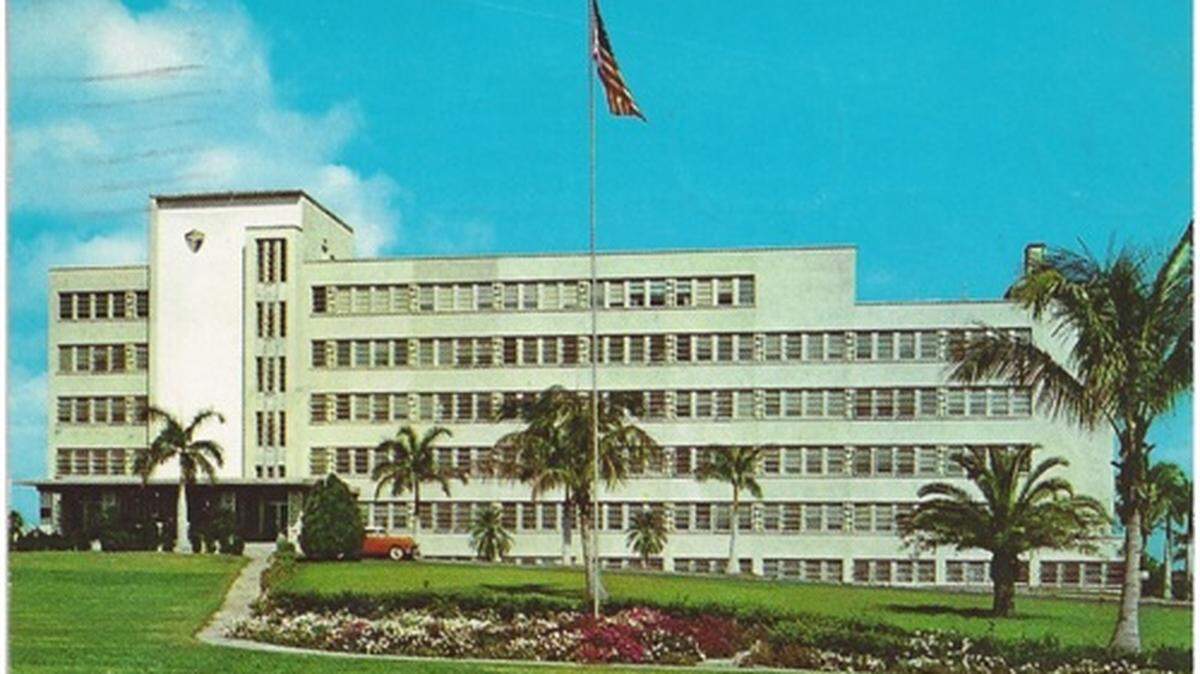
EDITOR'S NOTE: This is the third of a series of articles on the history of Manatee Memorial Hospital. Part 1 and Part 2 can be read on Bradenton.com.
The cost of covering the unpaid and uncollected hospital bills of the poor and under-insured has dogged Manatee County commissioners and Manatee Memorial administrators for decades.
The issue is something that I’m very passionate about and feel that Manatee County deserves a funding source to maintain a sustainable health care environment.
The issue first came to light even before MMH opened. The Bradenton Herald reported this on July 14,1952, in a report to county commissioners: Bert W. Hendrickson, who, along with his very activist wife, Blanche Hendrickson, engineered the decisive political tidal wave and massive popular support to raise money for the original Manatee Veterans Hospital.
That support, he stated, “will be necessary to make it the success is should be. We must always remember that what we are doing is for the good of all …”
“Hendrickson pointed out that it would cost approximately $83,000 a year to provide the free services at the hospital as required by law.”
Commissioners supplied a welfare fund for those indigent cases. Federal law and the hospital’s legislative charter required MMH to provide medical care to anyone in need, regardless of ability to pay. The issue of the cost of medical care for the underprivileged didn’t boil over until much later.
In September 1969, Manatee County held a public hearing on budgeting indigent care funds for the 1969-1970 fiscal year. At the time, the tentative budget proposal forecast a decrease of almost two mills in the property tax rate while the county still stood to gain almost $840,000 in revenue.
Pleas from obstetricians for a financial program to contribute to the nearly 300 indigent maternity cases annually highlighted the county’s medical deficit. Only four obstetricians who were willing to treat indigent patients remained in the entire county, but that number then dwindled to two that month.
The remaining two obstetricians — Drs. Harold Sutton and Albert Simkus — told commissioners that other physicians eliminated indigent maternity care from their practices over low indigent care reimbursement rates, telling the county the cost of services was too high. Doctors providing maternity services to indigent mothers only wanted to receive about $175 for their service, something for the 300patients a year that the doctors get nothing.
That was $50 to $75 less from the usual full charge of $225 to $250. One county commissioner, Dan McClure, expressed reticence that paying obstetricians more would set precedent on payments to other physicians treating indigents. Doctors disagreed.
A Herald editorial that September, under the headline “Who pays for Charity,”raised more questions than answers while noting the “charity load” would be an estimated $400,000 that fiscal year and the county only pays a portion of those bills incurred by “welfare clients.” Other patients had to cover the difference.
The editorial ended this way: After noting “society as a whole absorbs the cost”equal to one mill, “It would be quite an addition to put upon the tax bills.Yet it is a still-larger burden to put upon the bill-paying sick. Sooner or later, the load will have to be shifted to broader shoulders.”
That same month, September 1969, trustees raised the daily room rate by $4 to $15 per patient, though none of that increase was blamed on indigent care. Both Social Security and retirement matching funds, a cut in Medicaid reduction and a salary hike for staff took the bulk of the fault.
In a statement that confirmed MMH’s paying patients were picking up part of the cost of health care for the poor, Bentley Lang, the current hospital administrator. told commissioners: “We are one of the few county hospitals where the county doesn’t pick up the total indigent care.” The hospital, he stated, has to absorb the loss, thus the extra $4 a day room charge.
Two months later, the Bradenton Herald’s “Action Line” column, aimed at answering questions from the community, responded to a question about the rising cost of hospital care. The reply about rates climbing “6 to 8 percent every year” — lower than the national average — cited the rising operating costs to $70 a day, with a pro-rated charge of $6.96 for utilities, $5.52 for food and special diets and nursing care for $18.42 among the expenses.
The column also stated this after listing the costs: “… plus the admitted ‘overcharge’ of $10 a day to cover unpaid welfare care for indigent patients.”
By1972, the Manatee County Health Department was operating clinics for indigents in Rubonia, Samoset and Tallevast. In April of that year during a work session on indigent care, Lang reported that Manatee Memorial logged a financial loss of $500,000 in uncollected charges, 5 percent of hospital operating funds.
Soon thereafter, the Manatee County Comprehensive Health Planning Council instructed its medical committee on indigent care to devise a “model” program for delivering health care to the disadvantaged.
During the three-hour meeting, several ideas were discussed by the committee’s chair, Dr. S.J. Catolino: establish a clinic staffed by volunteers with limited hours; a public health clinic staffed by salaried physicians paid with government grants; full-time care by salaried, private doctors under a corporate design; and still others. Catolino also stated economic considerations were a must: “We must decide which plan will give us the most care for our money.”
As county commissioners worked on the 1973-74 budget,Manatee Memorial requested an additional $350,000 in welfare funds to partially offset indigent care losses since the hospital had been absorbing $600,000 annually. The county only had been contributing $95,000 to that cost, but kicked that up to $200,000 that fiscal year.
Ina July 1977 report to the Local Government Study Commission, Manatee Memorial, then under a “severe” financial crunch, floated the idea of establishing a special taxing district to collect revenue for capital expenditures. Lang told the commission the county needed a new system to cope with the cost of treating the poor.
A hospital audit of the 1975-1976 budget put the cost of health care for the poor at $700,000 with the county paying $200,000 toward that. The MMH administrator asked the county to reimburse the hospital that $500,000 but he got nowhere. The remaining loss was split among paying patients, and hospital officials said that should change — possibly dividing that cost among all county taxpayers.
Several weeks later in that July, the health subcommittee recommended that some type of outpatient clinic for the county’s welfare and poor residents patients be built in a central location, thus creating a standard of care lacking with both the hospital emergency room and county health department splitting indigent care.
The panel’s report noted that 30 percent of the hospital’s patients receive some 40 surgical procedures that could be performed on an outpatient basis, saving MMH the cost of overnight hospitalization. Plus, the panel proposed the creation of a Health Maintenance Organization to manage indigent care and payment of their bills.
Today, Manatee County is still debating how to take care of the underserved and uninsured. The issue will continue to inhibit our community from growing and attracting new businesses.
Many communities throughout Florida and the U.S. invest in their healthcare industry and promote the job creation and innovation that the industry brings to a community.
We should learn from other communities and seek best practices and not look to reduce our payments to our providers as a solution.
Kevin DiLallo, CEO of Manatee Healthcare System, has been a Fellow of the American College of Healthcare Executives for more than 25 years and has a passion for providing health care to his community. Email him at Kevin.DiLallo@uhsinc.com.
This story was originally published July 3, 2018 at 1:29 PM.