
Cuba will allow Cuban-born to arrive on Carnival cruise ship
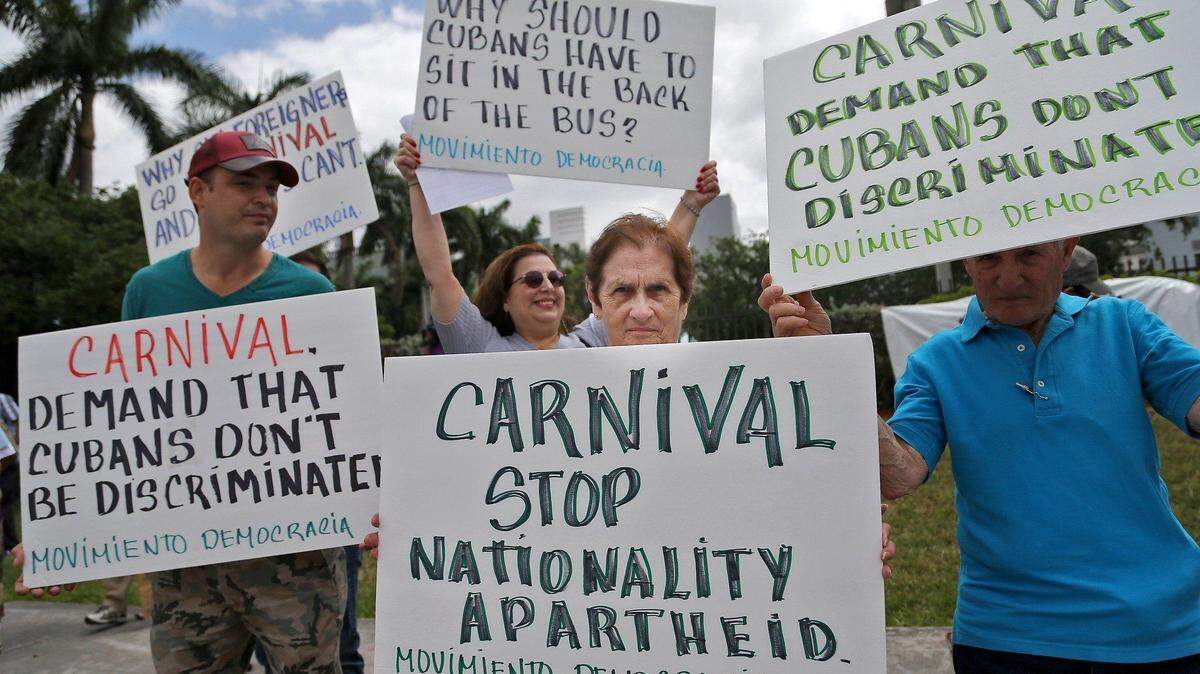
Cuba is easing a long-standing ban on Cuban-born people returning to the island by sea, clearing the way for Carnival Corp. to launch a Miami-to-Havana route -- the subject of a national controversy when the company declined to sell tickets to Cuban-born Americans.
Cuba made the announcement via Granma, the official voice of its government.
Carnival Corp. said it has been working closely with the Cuban government to reach an agreement that would allow the Doral-based company to take travelers to Cuba in the same way air charters currently do, according to a release issued Friday morning. Cuban-born Americans have been the primary travelers to Cuba by air.
The change marks the first time in decades that Cuban-born individuals will be able to travel to the island by sea. On March 21, Carnival Corp.'s new Fathom brand became the first U.S. company to gain approval to sail to the island in more than 50 years.
"We made history in March, and we are a part of making history again," said Arnold Donald, CEO of Carnival Corp. "Today's development will impact countless lives in the future, now that they have the opportunity to travel to Cuba by sea."
According to the new regulations, Cuban citizens, regardless of immigration status, can enter and exit the country as passengers and crew on merchant ships and cruise ships. The new policy goes into effect Tuesday.
The Granma also reported that at a later date, Cuban citizens will be allowed to enter and exit the island, regardless of immigration status, as passengers or crew on recreational boats, such as yachts.
But when Carnival first earned approval, the cruise company declined to sell tickets to Cuban-born Americans, in accordance with Cuban law. After controversy sparked by a Miami Herald column argued Carnival Corp. was discriminating against Cuban-born Americans, the cruise company changed course.
Government officials, including Secretary of State John Kerry and Miami-Dade Mayor Carlos Gimenez lashed out against Carnival Corp., one of the county's largest private employers, for the policy.
Two lawsuits were filed in federal court in Miami last week, a class-action suit and a civil suit, by Cuban-born Americans who attempted to book and were denied tickets on Fathom. The lawsuits alleged that the cruise line was violating the Civil Rights Act of 1964 by following a policy that discriminates against a class of Americans on a place of public accommodation for transient guests -- a cruise ship.
Donald said in a media call Friday that the cruise company had been working to reach an agreement with the Cuban government since the beginning of their discussions. But, Carnival worried that the uproar from local and national leaders would affect negotiations on the policy.
"The noise that was generated a few weeks ago, frankly we were concerned it would disrupt the process," Donald said. "But the reality was that we got it done."
Early this week, when it became clear Cuba may change its regulation, Fathom started selling tickets to Cuban-born Americans, easing a threat by Miami-Dade to block the company from having access to its terminals at the county-owned PortMiami.
Fathom parent Carnival Corp., the world's largest cruise company, said it would delay its inaugural visit to Cuba on May 1 until the Cuban government changed its Cold War-age policy.
This story was originally published April 22, 2016 at 11:47 PM with the headline "Cuba will allow Cuban-born to arrive on Carnival cruise ship ."