
What is phosphate?
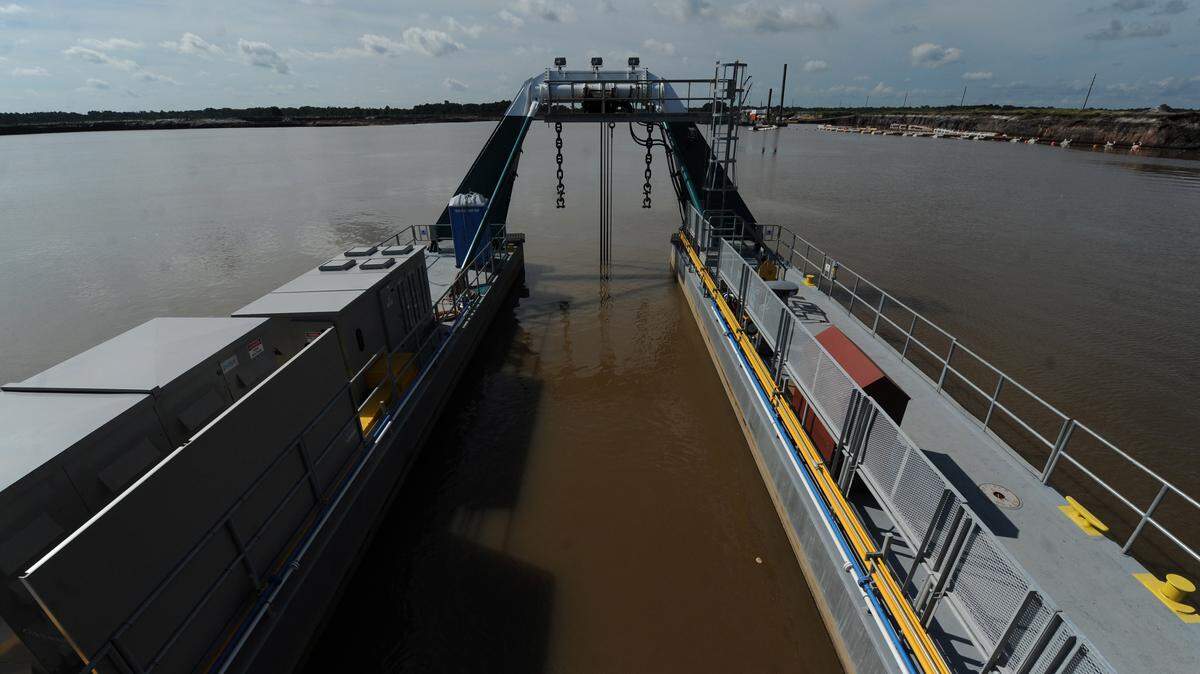
DUETTE -- At its Wingate Creek and Four Corners mines in Manatee County, Mosaic is digging phosphate rock out of the earth for use as the primary component in the agricultural fertilizers it manufactures.
Rich in an essential plant nutrient, phosphorous, the rock lies beneath the surface in deposits throughout central Florida. Left behind when sea water receded from Florida about 15 million years ago, much of the phosphate collected is in a formation known as the Bone Valley. The 1.3-million acre formation stretches between modern-day Polk, Hillsborough, Desoto and Manatee counties.
Florida is now home to 27 phosphate mines covering more than 491,900 acres, according to the Florida Department of Environmental Protection.
Making its fertilizers requires numerous steps. For example, at the Wingate Creek Mine, the rock is pulled out of the ground by a barge that grinds and sucks it out of the bottom of a man-made lake. The phosphate is then separated from the sand and rock.
From there, the phosphate is trucked to Mosaic's New Wales processing plant in Mulberry. Sulfuric acid is used to strip the phosphorous from the rock. The resulting product, phosphoric acid, is a component in Mosaic fertilizers. The waste byproduct, known as phosphogypsum, is piled into vast mounds called "stacks."
Up to 70 percent of American farmers buy fertilizers made from Mosaic phosphate, according to the company's website. According to U.S. Department of Energy, Florida supplies 25 percent of world and 75 percent of U.S. demand for phosphate
The phosphate industry has a long history in the state, but industry experts say it won't be here forever. Since getting its start in Alachua County in 1883, phosphate operations have fully exploited many mines north of Manatee County. Mosaic and other phosphate companies started moving their operations south in the 1990s.
Even so, modern phosphate mining operations, including Wingate, are as big as they've ever been. Jackie Barron, a public affairs manager for Mosaic's Wingate mine, said Wingate produces about 1.5 million tons of phosphate rock every year. That's 300,000 tons more than the entire industry produced during its first 20 years in Florida, according to a history written by the Mulberry Phosphate Museum.
The Four Corners mine is even bigger, extracting 6 million tons annually.
State officials expect the resource to last at least another 70 years, although advances in mining methods could lengthen the industry's lifespan.
"It's a finite resource," Barron said.
Barron said new mining techniques will allow Mosaic to remove more phosphate than ever, stretching the industry's longevity and profitability in Florida.
Critics of the phosphate industry, including Nokomis-based environmental group ManaSota-88, say Mosaic and other phosphate companies are depleting that resource. Once it is gone, U.S. phosphate companies will have to look elsewhere to mine phosphate. Mosaic is already pursuing mining operations in other areas of the world, including Saudi Arabia.
Matt M. Johnson, Herald business reporter, can be reached at 941-745-7027 or on Twitter@MattAtBradenton.
This story was originally published January 2, 2016 at 12:00 AM with the headline "What is phosphate? ."