
Healthy Earth: Sustainable Seafood System team works on industry-changing project
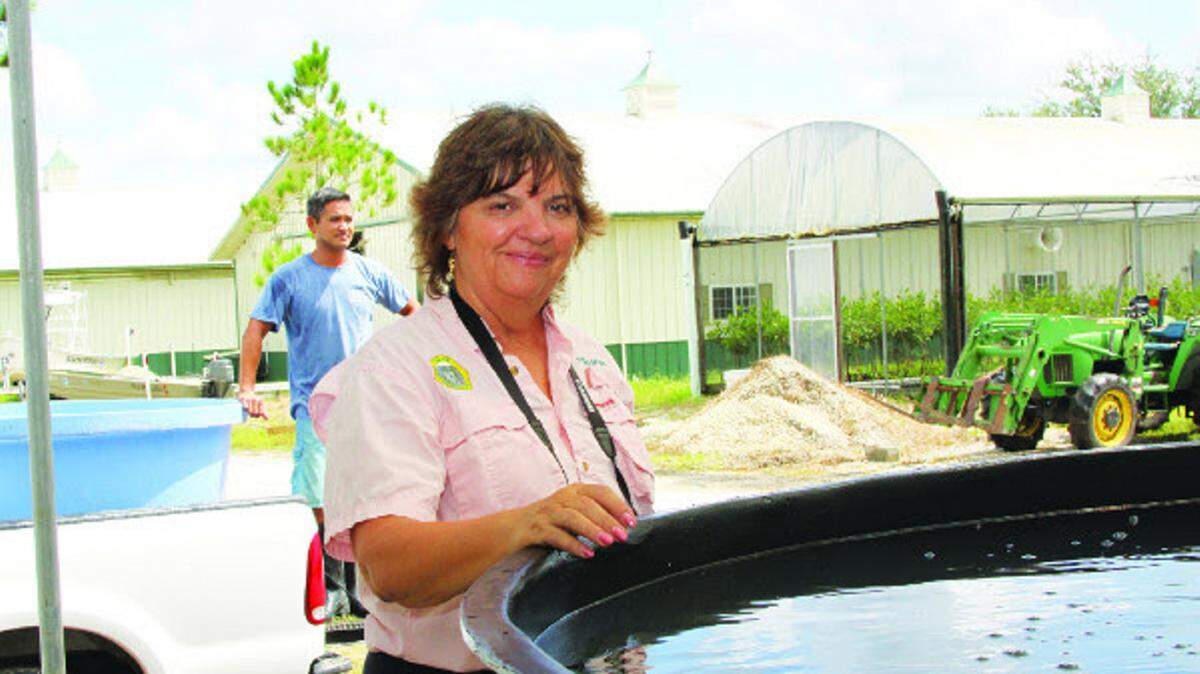
MANATEE -- Before winning a grant from the Gulf Coast Community Foundation, CEO Chris Cogan of Sarasota's Healthy Earth, and his team planned to revitalize the Gulf Coast's fishing industry. They also plan to change the industry's view on mullet.
An extra $400,000 will help with the $10 million project.
Winning the Gulf Coast Community Foundation Innovation Challenge was the first of many steps for the Healthy Earth-Gulf Coast: Sustainable Seafood System team. Of more than 40 submissions, the Healthy Earth proposal secured $25,000 for a prototype. A few months later, it won the challenge and is working out the logistics of the remaining $375,000 in grant funds.
Mark Pritchett, president and CEO of the Gulf Coast Community Foundation, said divvying up grant funds with the Sustainable Seafood System team is "not atypical of what we do." The Gulf Coast Community Foundation began providing grants to community projects in 1995.
"It'll be Michael Crosby
of Mote and Jeff Sedacca (president of the Shrimp and Aquaculture Division of the National Fish and Seafood Inc.) and myself and maybe one or two other people who will sit down and look at the entire project and what we need to focus on," Pritchett said. "Obviously, this is a much bigger project than just what our money will provide. It's a lot of moving parts and pieces."
The biggest obstacle in distributing the grant funds involves coordinating schedules and meeting, Pritchett said.
The Sustainable Seafood System team members come from Seven Holdings, the Directorite of Fisheries and Aquaculture, University of South Florida, Chiles Restaurant Group and Mote Marine Laboratory, among other organizations. The goal is to combine knowledge and add value to the Gulf Coast fishing industry while increasing wages for fishermen and creating jobs.
Using the whole mullet
The project aims to use parts of mullet now underused or discarded. The multifaceted endeavor includes research through Mote Marine Laboratory and construction of a fish-processing plant.
"We're doing all the due diligence to get to the next level and really make a change," said Seth Cripe, founder of Anna Maria Fish Co. The company, recently acquired by Seven Holdings under the Healthy Earth name, sells bottarga, the sun-cured roe of gray-striped mullet. The delicacy is often made overseas.
Years ago, Cripe said he had an epiphany when he realized his fishermen friends back home were getting the short end of the stick.
"My friends would complain about mullet prices being down and not getting paid anything, and I didn't think much of it," Cripe said. "Nobody thought about what mullet did or where it went to overseas. There was always a negative perception of the fish down here. Nobody would really eat roe except for old-timers back in the day."
Cripe said he went to dinner at The French Laundry, an upscale restaurant north of Napa, Calif., and a dish on the menu lit the light bulb.
"One course came out, and they brought this gold piece of fish roe and shaved it over a dish, and they said it was an Italian delicacy," he said.
He asked how much The French Laundry paid for roe and soon was launching a company to sell the product to U.S. chefs more cheaply.
"That's essentially why I started the fish company in the beginning. Instead of selling raw roe for $10 per pound overseas, we can produce it here and sell it for more here," Cripe said. "We can pay fishermen more money and add value. It's sort of branding it and keeping it all here in the community."
The mullet-processing plant will produce fish oil, feed and other products from fish remnants after the roe is extracted.
A processing plant site has not yet been chosen but Cogan is seriously looking now after winning the grant. One is in Cortez. The plant should create about 30 full-time jobs, Cogan said, with the possibility for 30 or more part-time and seasonal positions.
Cogan said interviewing local fishermen to hear their concerns is another part of the project. Interviews will be conducted in small groups "so they can really express their viewpoints and concerns and we can ask more specific questions," Cogan said.
Fish feed and fish meal
Another piece of the project comes from Mote Marine Laboratory, where Cogan said Healthy Earth conducts research on an ongoing basis.
"We're just scratching the surface with what we're doing with community research and our partnership with Mote," Cogan said.
For example, Mote's scientists are looking into mullet products as fish feed or an additive to fish meal.
Healthy Earth acquired Mote's sturgeon operation and, if mullet fish feed is a success, it could add up to "tremendous savings" for Healthy Earth and other businesses.
"We spend about half a million a year on fish meal," Cogan said. "If you can save about 20 or 25 percent of that, you're looking at $100,000."
Though it's taken time, Cripe said the Healthy Earth: Sustainable Seafood System project is what he and partner Ed Chiles had in mind all along.
"It's been great because essentially we're going to continue to build the business we've already started and that mission is creating value-added products to fish that were sold as bait to crabbers and making more bottarga and branding it Florida Gulf Coast bottarga."
The project will extend beyond the reaches of the Gulf Coast Community Foundation grant in the future, Chiles hopes.
"We have 270,000 acres of shellfish-approved waters in this state," Chiles said. "And we're doing 1 percent of the aquaculture industry and that's not right. You're talking about center-of-the-plate protein and how we're going to feed growing demand in the world."
Janelle O'Dea, Herald business reporter, can be reached at 941-745-7095. Follow her on Twitter@jayohday.
This story was originally published November 29, 2015 at 12:00 AM with the headline "Healthy Earth: Sustainable Seafood System team works on industry-changing project ."