
Thanksgiving turkeys cost more than ever after bird flu wipeout
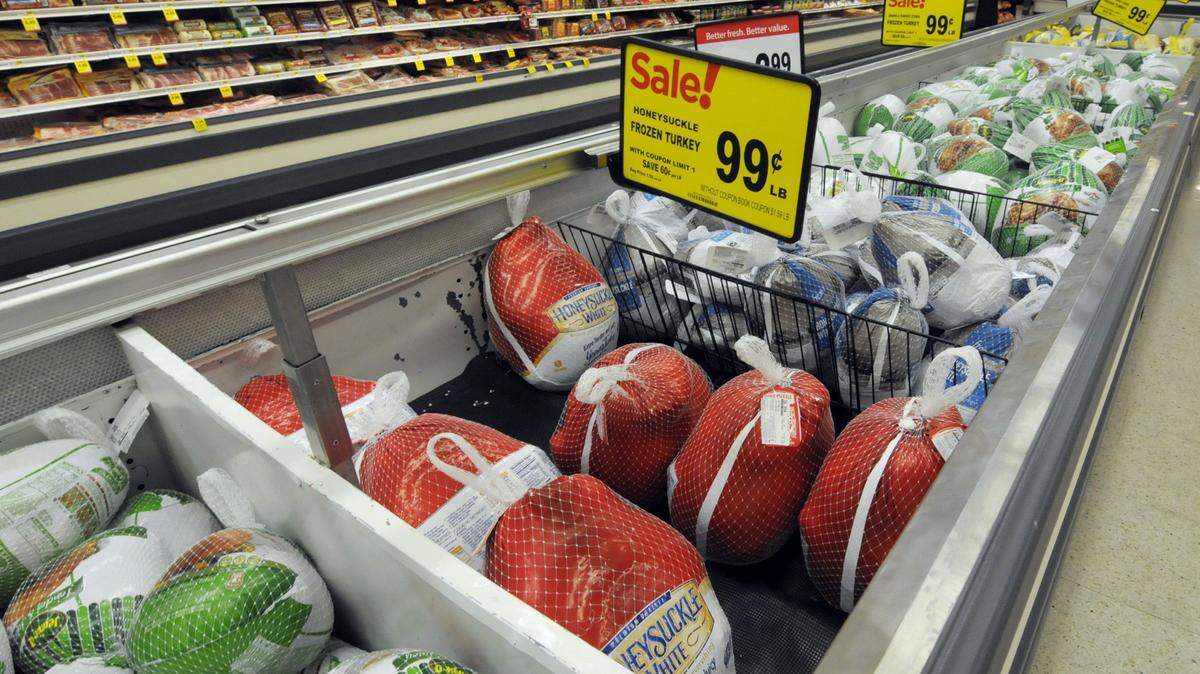
To make sure all 15 of the Busch's Fresh Food Market stores had enough turkeys over 22 pounds to sell for Thanksgiving this month, meat buyer John Taormina began ordering in January.
He didn't end up with a single one of the big birds, which last year accounted for more than a third of what the Michigan company sold for the holiday.
The worst-ever U.S. outbreak of avian influenza destroyed almost 8 million turkeys earlier this year, and those that remain are smaller than normal.
That's boosting wholesale costs for grocers to a record, and consumer prices are the highest ever for this time of year. Americans will eat about 49 million turkeys for Thanksgiving holiday meals on Nov. 26, or roughly one of every five that will be consumed all year.
"The larger-sized birds will be difficult to get this year," Taormina said, adding that the biggest available at his upscale stores will be 20 pounds to 22 pounds, which is big enough to feed about 15 people. Turkey is "center-of-the-plate for this holiday, so typically families get together and they're looking for the bigger-sized" birds,
he said.
Some turkey farmers haven't recovered from a six-month outbreak that ended in June, and many were forced to sell birds earlier than normal and at smaller sizes, said Russ Whitman, vice president at commodity researcher Urner Barry in Bayville, N.J. Production fell to a five-year low, and the September weight decline for turkeys was the biggest for that month in four decades, U.S. Department of Agriculture data show.
Other seasonal staples like cranberries and potatoes probably won't be more expensive than last year, according to Corinne Alexander, an agricultural economist at Purdue University in West Lafayette, Ind.
Lower electricity and natural-gas prices also will help keep costs in check for cooking a Thanksgiving meal this year, she said.
This story was originally published November 12, 2015 at 12:00 AM with the headline "Thanksgiving turkeys cost more than ever after bird flu wipeout ."