
Yellen plan to run labor market hot evokes high-pressure '70s era
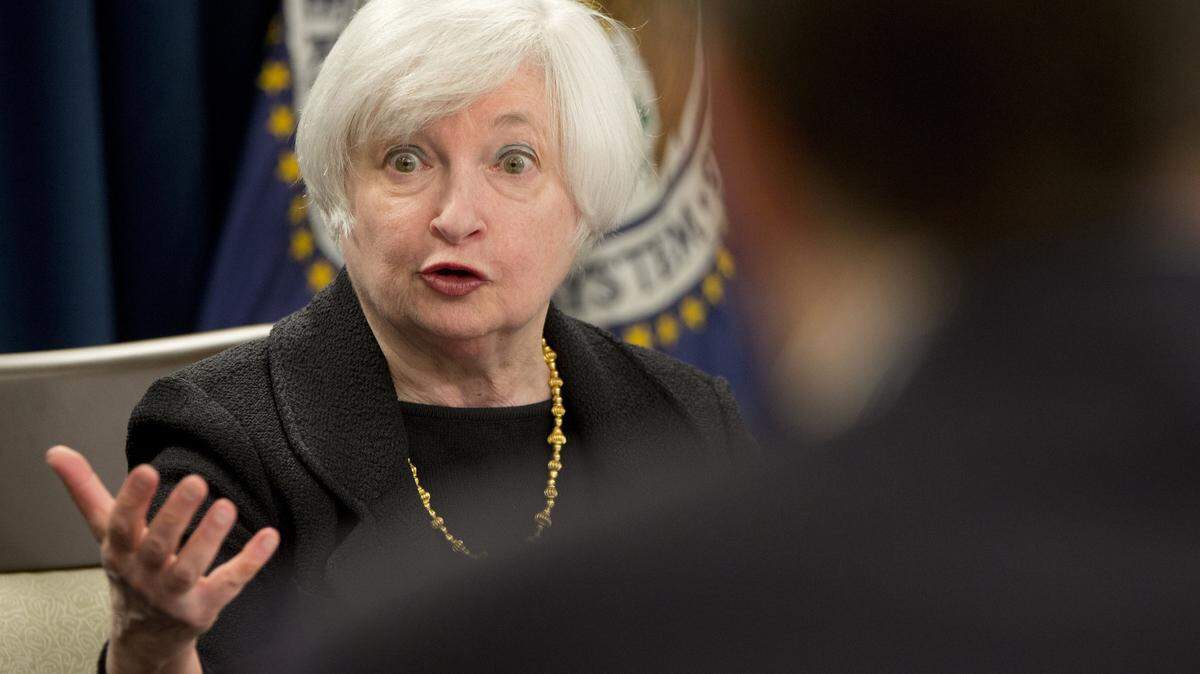
WASHINGTON -- Janet Yellen is pursuing a monetary policy with echoes from an era of bell-bottom jeans and New York Knicks' basketball championships. And that's got some economists worried.
In an unorthodox move, the Fed chair has signaled her intention to keep interest rates low enough to temporarily push unemployment modestly below its long-run natural rate. She described in a speech last month how a tight job market could entice discouraged workers back into the labor force, expand full-time employment, boost wages and possibly enhance efficiency.
"It's OK to run what I would refer to as a high-pressure economy right now," John Williams, who took over from Yellen as president of the San Francisco Fed in 2011, told reporters on Oct. 1. "That will help to get inflation back to 2 percent faster, which is important."
Critics such as former Fed official Athanasios Orphanides say that's the sort of policy the interest-rate setting Federal Open Market Committee followed in the 1960s and 1970s -- with disastrous results. Inflation back then eventually surged to double-digit levels, exacerbated by a quadrupling in oil prices following the Arab oil embargo, as wages took off after the Fed allowed unemployment to fall to a low of 3.4 percent in 1968.
Gains in payrolls decelerat
ed over the past two months as a global slowdown and financial-market turmoil hit the U.S. economy. The jobless rate, though, held steady as a contraction in the labor force offset a drop in employment. At 5.1 percent, it is just above the 4.9 percent that Fed officials reckon is equivalent to full employment, according to the median estimate of their assessments released on Sept. 17.
At first glance, worries about stepped-up inflation seem misplaced. Measured by the Fed's favorite gauge, prices were up a mere 0.3 percent in August from a year earlier, well below the central bank's 2 percent goal.
Yet as Yellen herself has noted, policymakers have to be forward-looking because changes in interest rates affect the economy with a lag that can last for years.
And that's where Orphanides sees reason to worry. He says there's a danger that inflation -- and more importantly, inflation expectations -- will become unmoored if the Fed fosters an overheated economy for the next couple of years.
That's particularly a threat if unemployment falls further than the Fed expects because the labor force and full-time employment opportunities don't expand as much as Yellen hopes. In that case, even some central bank officials may start to question her strategy.
Policy makers see the jobless rate dropping to 4.8 percent in the fourth quarter of next year, then holding there through 2018, according to their median projection.
"I'm alarmed that the Federal Reserve sees its job as finding everybody a job in the economy," said Orphanides, a former governor of the Central Bank of Cyprus who is now a professor at the Massachusetts Institute of Technology in Cambridge. "That is what is creating long-term risks."
The late Arthur Okun -- an economist whom Yellen has openly admired -- made the case for policymakers encouraging a high-pressure economy in a Brookings Institution paper in 1973, saying it would be good for workers and the U.S. as a whole.
Echoing Okun's arguments, Yellen said in the Sept. 24 speech in Amherst, Mass., that "a period of especially plentiful employment opportunities and strong hiring" might be needed to attract discouraged workers back into the labor force and convince companies to turn part-time jobs into full-time ones.
While many economists support Yellen's strategy -- it "is a risk worth taking," Northwestern University professor Robert Gordon said -- others are not so sure.
Charles Plosser, who served as head of the Philadelphia Fed for nine years before stepping down in March, voiced misgivings about Yellen's focus on boosting labor-force participation and full-time work.
"I know of no good economic theory" that says the central bank can tackle those issues, he said. The Fed "is setting up expectations it can't meet. That could undermine its credibility," he added.
Even the San Francisco Fed's Williams suggested to reporters last week that there were limits to how long the Fed should run a high-pressure economy. While he's "totally cool" with doing that now, he said he wouldn't support allowing unemployment to "stay in the mid-4s or low-4s, for a long time," assuming a natural rate of about 5 percent.
"I don't think it would be good," he said.
This story was originally published October 7, 2015 at 10:44 PM with the headline "Yellen plan to run labor market hot evokes high-pressure '70s era ."