
Look West for winners in Trans-Pac deal
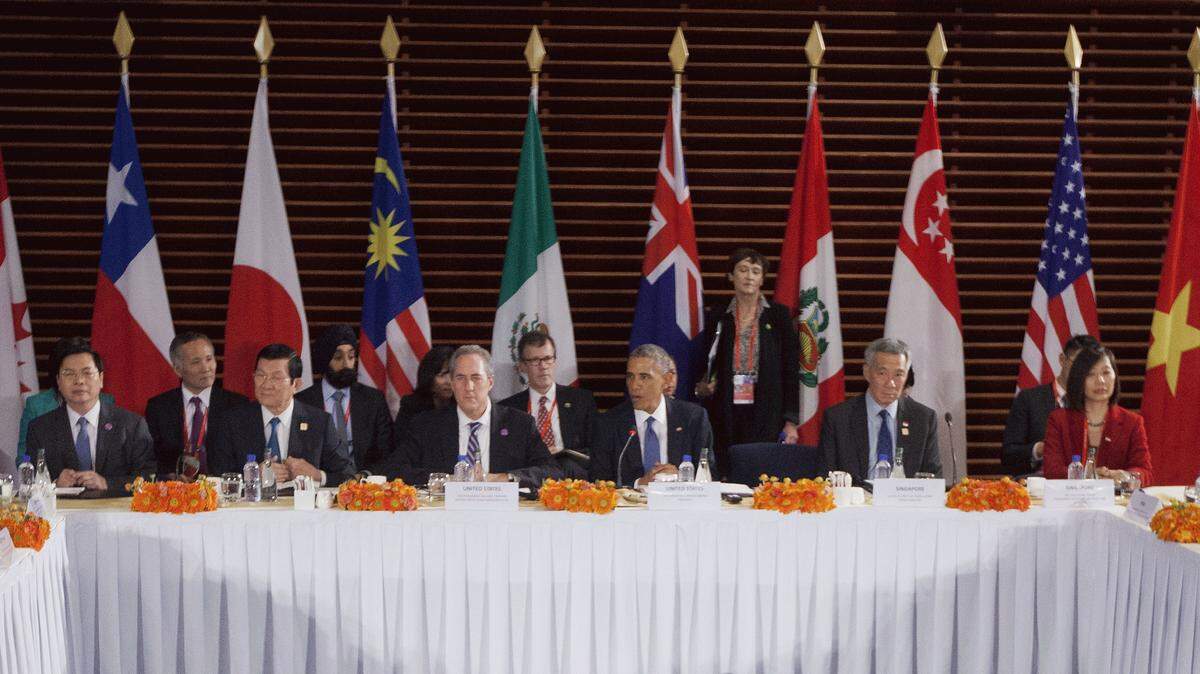
WASHINGTON -- The successful conclusion of a 12-nation agreement to free up trade across the Pacific region will significantly boost trade and transportation along the U.S. West Coast and also could spread other benefits across the country.
The immediate trade benefits are likely to fall largely on the West Coast because of geography and existing rail and port connections. But the agreement has broader importance because it encompasses countries that together account for about 40 percent of the global economy.
"When more than 95 percent of our potential customers live outside our borders, we can't let countries like China write the rules of the global economy," President Barack Obama said in a statement shortly after the deal was concluded in Atlanta. "We should write those rules, opening new markets to American products while setting high standards for protecting workers and preserving our environment."
What the president meant is this: the deal does not include China. As such, it broadens U.S. commercial influence in China's neighborhood by lowering tariffs and reducing barriers to trade with Australia, Brunei, Canada, Chile, Japan, Malaysia, Mexico, New Zealand, Peru, Singapore and Vietnam.
The United States already has trade pacts with several of these countries, including Canada and Mexico. But the new deal layers on new economic openings and in some cases new protections. It also commits signatories to an annual meeting where they'll review alleged currency manipulation that provides a home field advantage to their exporters.
Many of the partners are developed nations, but the deal includes Vietnam, which is firmly in the developing world and must quickly come up to very high standards.
The deal has stronger labor and environmental safeguards than past trade agreements, and gives the U.S. Congress and the public a long review period before the president can sign the deal. It is novel in that it's not designed as a
members-only club, rather one that's accessible to other countries if they wish to join and play by the same rules.
"The open architecture is part of the design," said Scott Miller, who heads international business programs for the think tank Center for Strategic and International Studies.
It's "more than a trade deal," said Miller, because it comes amid the Obama administration's pivot to Asia, a promise to remain engaged in order to prevent China from forging complete hegemony in its back yard. It imposes U.S. business standards and norms on signatories, in hopes that it will raise China's standards too.
"It strengthens our credibility," he said. "Concluding it successfully is really a signal of the ongoing commitment of the United States to the Asia-Pacific (region)."
Under the terms of the authority given to Obama over the summer, Congress has 90 days to oppose the trade deal after he submits it. If there is no vote to reject it, he signs it into law in 90 days. The entire text of the deal must be available for public review for 60 days.
Obama can hold off on submitting the deal, even leaving it to his successor to pass it through Congress if he so chooses.
The deal faces opposition from many Democrats, and some Republicans. Dairy state lawmakers want greater access for U.S. products. Auto state lawmakers worry Japan may not have yielded enough in concessions.
"While the details are still emerging, unfortunately I am afraid this deal appears to fall woefully short," said Sen. Orrin Hatch, R-Utah, chairman of the Senate Finance Committee.
Trade is a hot-button issue in the current presidential campaign. Democratic candidates have expressed concern and even Republicans, who've been ardent supporters of free-trade deals, are showing pause. GOP frontrunner Donald Trump has blasted free-trade deals negotiated by Republican administrations as putting American companies at a competitive disadvantage to Mexico and China.
The 12 signatory countries have agreed to work more closely on economic issues, including the sensitive topic of exchange rates. Critics contend that China and other Asian nations have kept their currencies unfairly low against the U.S. dollar to gain a competitive advantage over U.S. goods and services.
This story was originally published October 5, 2015 at 11:53 PM with the headline "Look West for winners in Trans-Pac deal ."