
Mosaic won extension of its mining permit. Here’s what it means for Manatee County
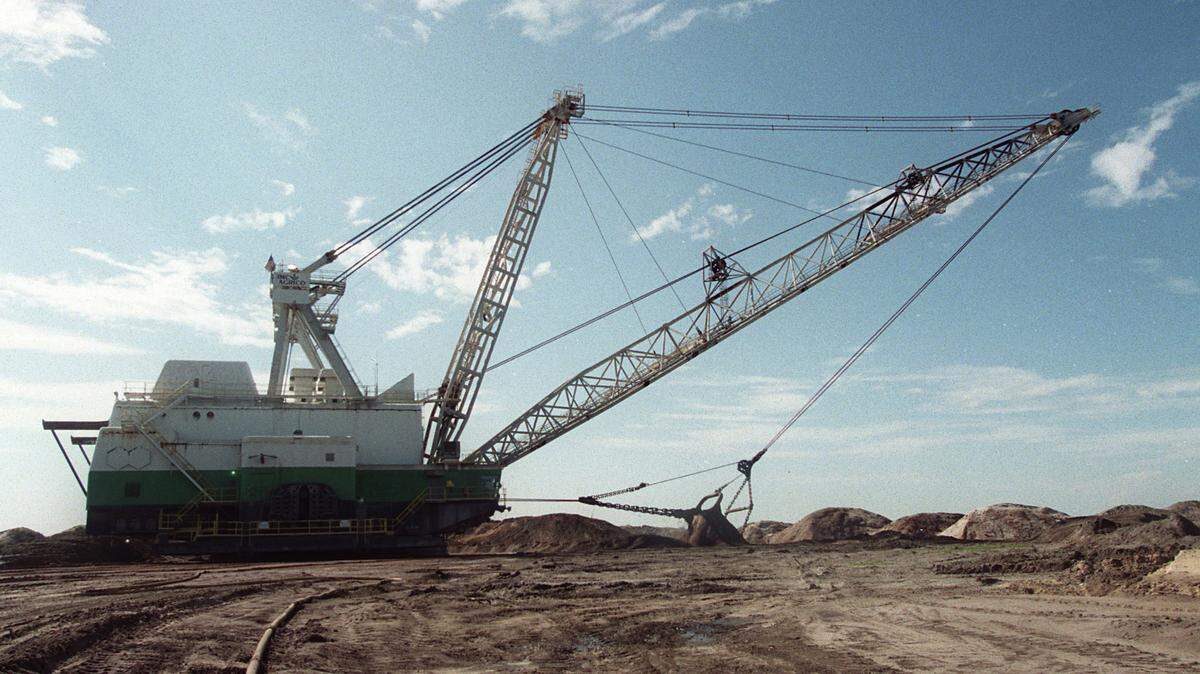
Since the 1960s, mining companies have been hauling phosphate out of the ground in northeast Manatee.
Over the objections of protestors, several neighbors and environmental groups, the Mosaic Company recently received a five-year extension from the Manatee County Commission for its mining operation.
The extension allows Mosaic to continue operations at the Southeast Tract, Wingate East Mine and Wingate Creek Mine, said Jackie Barron, public affairs manager for the phosphate giant.
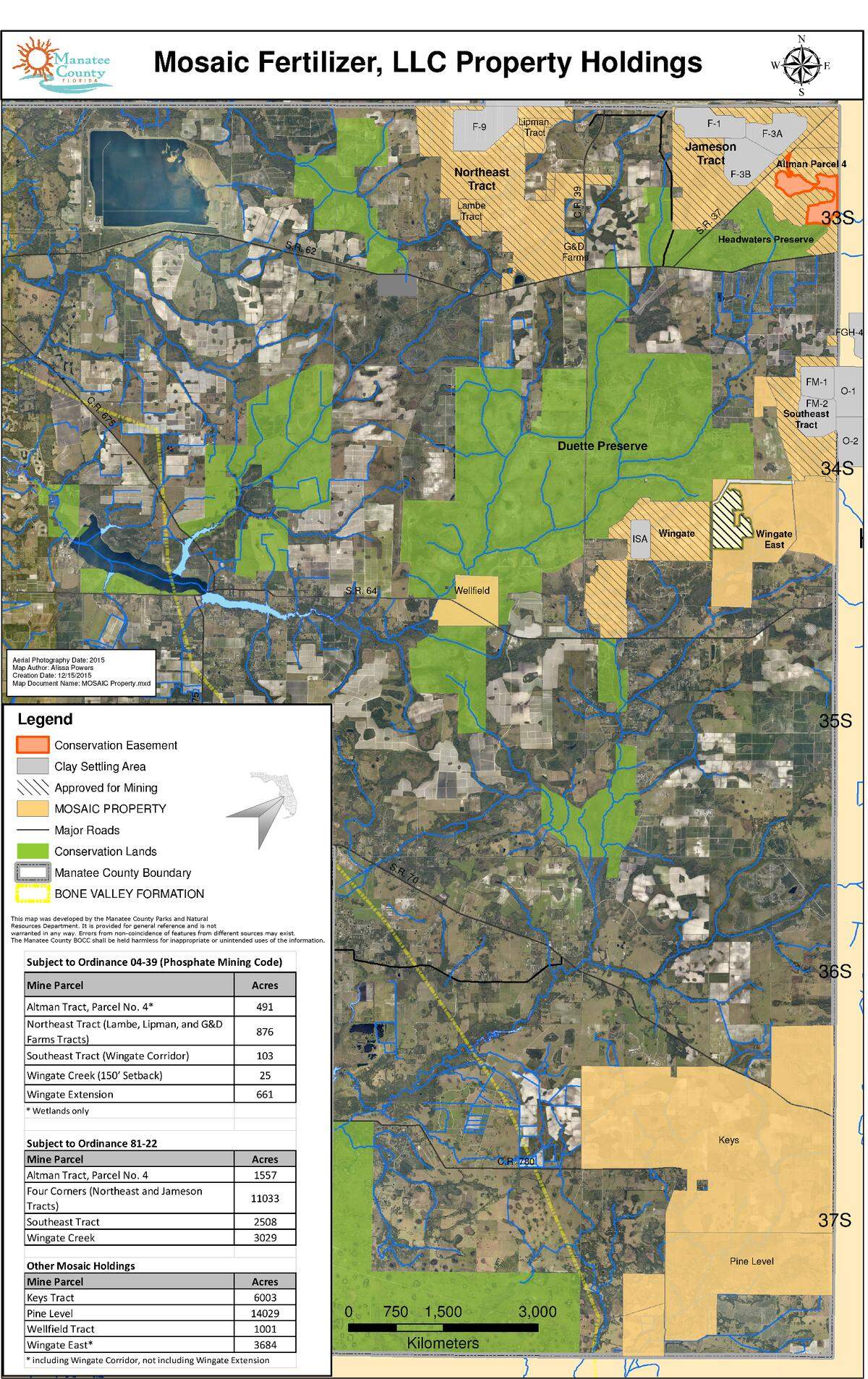
The extension is the final step Mosaic needed to begin mining the 4,441-acre Wingate East property, to continue its existing mining operation at the 4,029-acre Wingate Creek property, and to use the Southeast Tract as a settling area.
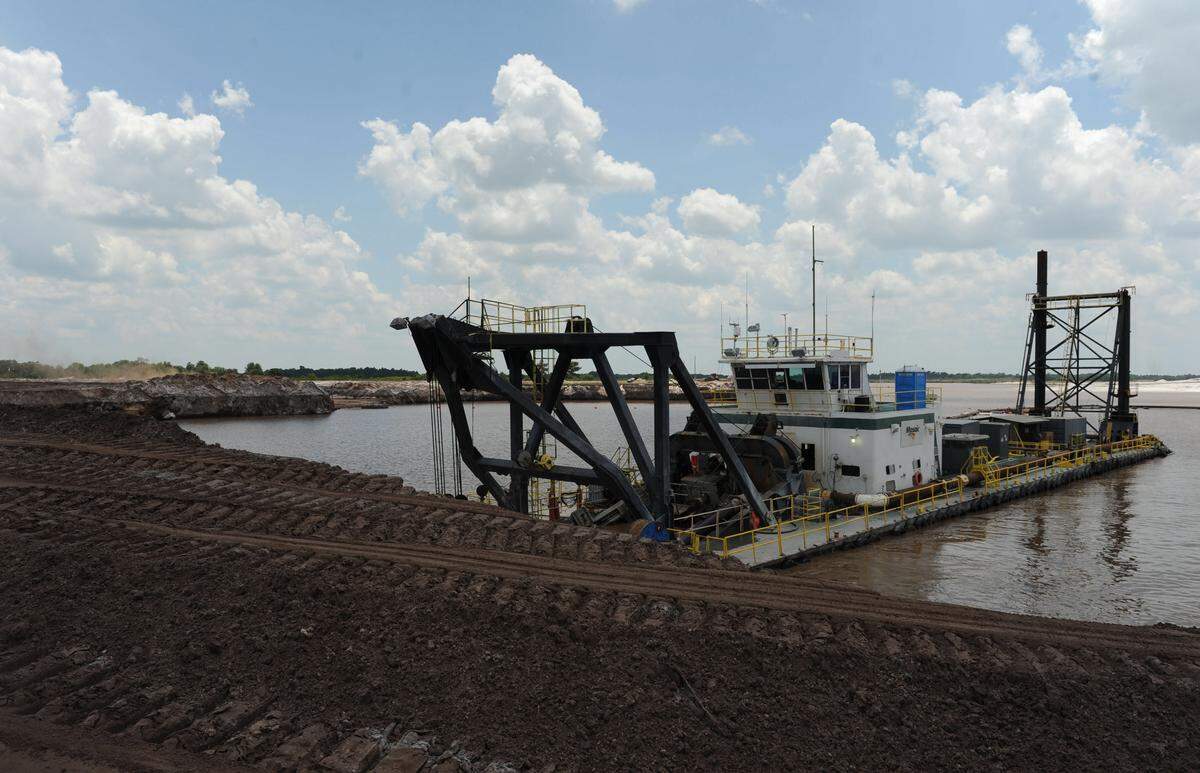
Once Mosaic’s giant excavators scoop up earth from the Wingate properties, the phosphate is separated from the sand and the clay. The clay is deposited at the Southeast Tract.
“For the mine to keep going you need the clay settling areas in the Southeast Tract,” Barron said.
The Bone Valley, a mineral belt running through Manatee, Hillsborough, Polk, and Hardee counties, is one of the most productive phosphate areas in the United States and the world.
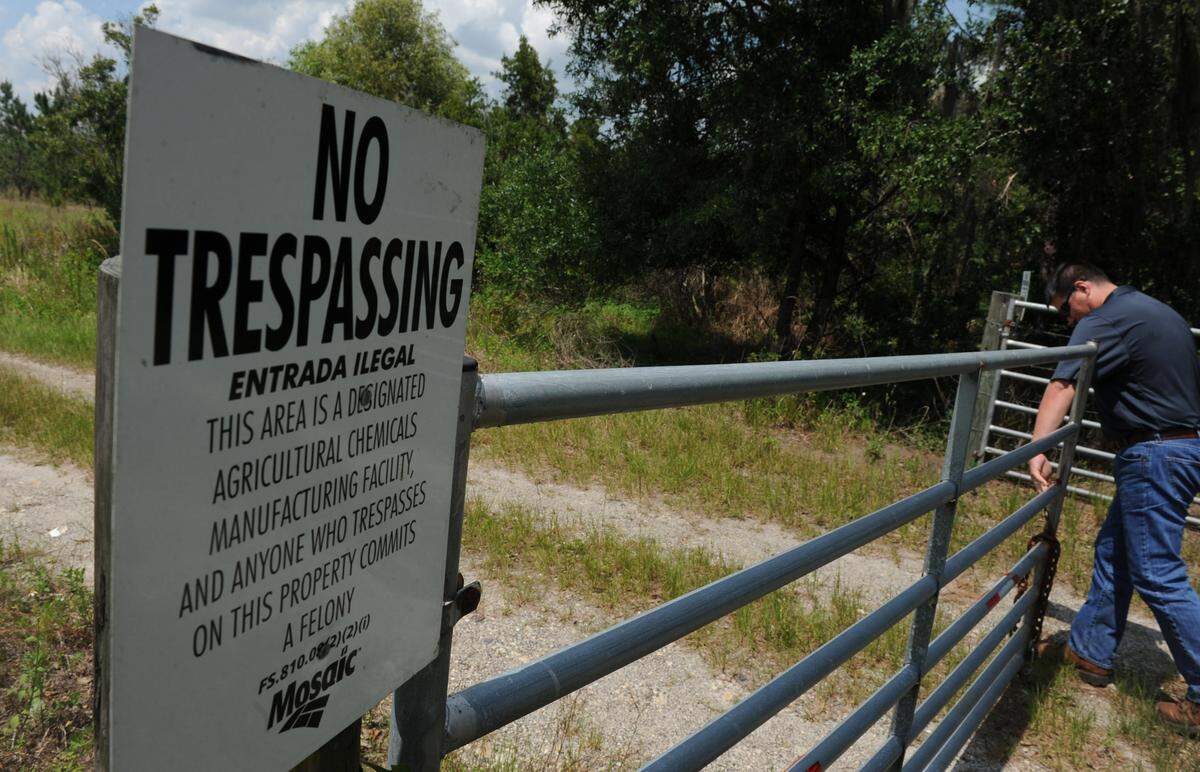
Even so, Andy Mele of Suncoast Waterkeeper, said his concern is that phosphate mining in Manatee County exists at all.
“It’s fully permitted and blessed by everyone with the possible exception of the U.S. Army Corps of Engineers and two adjacent property owners who have filed lawsuits,” Mele said.
The mission of Suncoast Waterkeeper is to protect and restore the Florida Suncoast’s waterways through enforcement, fieldwork, advocacy, and environmental education.
Mele would like to see Manatee County enact an ordinance similar to Sarasota County’s that makes phosphate mining virtually impossible.
Given precedent, ordinances already on the books, mining’s traditional standing in the community, and economics, that’s not likely to happen.
Glenn Compton, chairman of the environmental watchdog group Manasota 88, agrees that mining is unlikely to go away.
“It’s an extremely valuable and rare resource,” he said.
But he also believes Manatee County granted Mosaic a favor with the five-year extension without receiving anything in return.
For instance, Manatee County could have required Mosaic to use better, more modern reclamation technology, Compton said.
Mosaic is expected to continue operations at Wingate East until 2034 and at Southeast Tract and Wingate Creek until 2037. Reclamation is projected to be completed for all three sites in 2042.
Wingate, Wingate Creek and the Southeast Tract are all south of State Road 62 and to the south and east of Duette Preserve. Mosaic is also mining the Northeast Tract, Jameson Tract and Altman Tract, all located north of State Road 62 and extending to the Hillsborough County Line.
Mining is scheduled to be completed at the Four Corners, the area north of State Road 62, by December 2021. Reclamation should be completed by Dec. 31, 2032, said Alissa Powers, county environmental program manager.
Mosaic has its processing plant at the Jameson Tract, making it the last land to be reclaimed.
To date, Mosaic has reclaimed 7,259 acres of land it has mined in Manatee County, Barron said.
Looking to the future of phosphate mining in Manatee County, Compton says it’s difficult to predict what markets will do.
“There is no guarantee that Mosaic will be around in 2042,” Compton said.
Beker Industries, one of the companies that formerly mined Bone Valley, left the phosphate business through bankruptcy.
Reclamation of the Northeast Manatee phosphate property could become the responsibility of taxpayers, Compton said.
Mele worries that Mosaic’s property will grow beyond its current boundaries.
“If Mosaic continues to acquire property, there is nothing to stop them in the foreseeable future,” Mele said.
Mosaic has extensive holdings south of State Road 70 — 20,042 acres in the Keys and Pine Level tracts — but has submitted no applications to the county for rezone or master mining plan.
In fact, Mosaic still has not prospected Keys and Pine Level for phosphate, Barron said.
Requiring Mosaic to periodically request extension of its operating permit is one way that the county ensures bonding is in place for reclamation, said Rob Brown, Manatee County’s environmental protection division manager.
“There are no new lands involved. It just identifies the scope of the operation for the next five years,” Brown said. “It gives us a planning horizon. We don’t want to give it open ended to them. We think five years is a good term to make sure they stay on schedule and bonding is in place.”
The area mined by phosphate companies has sometimes grown, and sometimes contracted, Brown said.
While the geography remains the same for northeast Manatee, the ownership shifts over time. What is now Mosaic’s Wingate East mine was formerly the Texaco tract, owned by the petroleum giant, Brown said.
Manatee County purchased a majority of Duette Preserve from three phosphate companies. Voters approved the acquisitions in 1984 and 1986 to protect the Lake Manatee reservoir and watershed.
At 21,000 acres, Duette Preserve is the largest in Manatee County.
“Most of what is Duette Preserve was never mined. A lot of that land was acquired during a bankruptcy,” Brown said.
Mosaic, the world’s largest manufacturer of phosphate-based chemical fertilizers, has more staying power than most of the previous mining companies in Manatee County.
In 2017, Mosaic paid Manatee County $2.3 million in tangible and real property taxes and $1.7 million in severance taxes for phosphate taken out of the ground.
Wingate East has about 125 full-time employees earning about $12.9 million a year. The average miner earns about $80,000 to $87,000 a year, including overtime, Barron said.
Beyond its immediate business function, Mosaic also takes an active role in the Manatee community. Benefiting from its financial support are a wide range of organizations, including the 1914 Myakka City School House, State College of Florida Manatee-Sarasota, Duette Fire Station and Bunker Hill Community Park, and school bus drivers who received gift cards for length of service and safe driving, among others.
Duette community activist Betty Glassburn says she appreciates Mosaic for its support of the Mighty 4-H Club of Duette and the historic Duette one-room school house, where phosphate workers recently completed the installation of new landscaping and irrigation.
“As far as I am concerned they are very good neighbors,” Glassburn said.
Lenora and Larry Woodham of Bunker Hill Vineyard and Winery have a different view.
“I think all the reclamation should be completed before any new permits are issued,” Larry Woodham said.
When Mosaic cranks up its dredges and other machinery, wildlife flees, and some of it overruns his property, Woodham said.
In addition, even though Mosaic contributes to the economic lifeblood of the community, Woodham said he sees little benefit from it.
Much of Bunker Hill Road that runs past his vineyard remains unpaved.
“We get the animals they run off their land. We get absolutely nothing else,” he said.