
Alan Dell commentary | Major League Baseball's new slide rule is safe play for Pittsburgh Pirates
The Pittsburgh Pirates ranked second in Major League Baseball last year in turning double plays with 177, an average of 1.09 per game.
Unfortunately only one will be remembered.
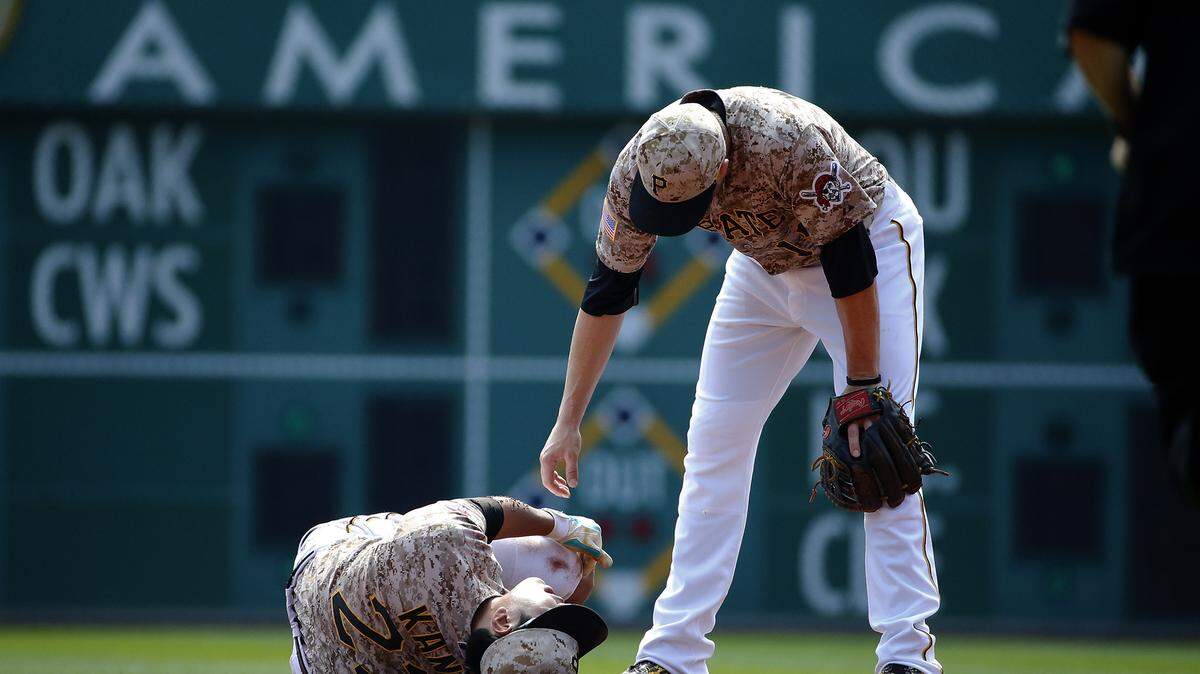
The image of rookie shortstop Jung Ho Kang getting splattered as he completed a double play and wound up with a broken left leg as Chicago Cubs baserunner Chris Coughlin tried to take him out is etched in the mind of every Pirate fan.
Kang was lost for the rest of the season, and Coughlin was exonerated in the mythical Court of Baseball Justice.
"That's a good baseball play, it's been going on for the last 100 years. There was no intent by anybody," Cubs manager Joe Maddon said.
Joe is right, and he is a stand-up guy, but maybe it won't being going on for 101 years, and that might not be bad.
A new sliding rule will be in effect this year. Most seem to like it, some don't.
When you break it down, the new slide rule will protect middle infielders more.
It's also a money rule. Teams invest a lot in shortstops and need to protect them the way NFL owners protect quarterbacks.
Pittsburgh general manager Neal Huntington says a lot of input went into the new rule, including that from the players union.
There will be some mistakes and umpire interpretations that will send fans through the
roof, but Huntington likes it citing the rule that changed how runners could slide into catchers.
"As you look back I don't think there was a catcher or a position player who lost time due to a concussion in a collision at the plate. The rule did what it needed to do," Huntington says.
He doesn't think the slide rule will increase double plays and thus reduce scoring, which major league baseball is trying to increase.
"I think double plays that were going to be turned are going to be turned and those that were not are not going to be turned," Huntington says. "We might be supersensitive because we lost two shortstops for an extended period of time on plays that had controversial slides."
Baseball owners want their guys to play hard, but they want them to play the game the right way and believe the new rule will do it.
Chase Utley's dirty slide in last year's playoffs that broke the leg of Mets shortstop Ruben Tejada notwithstanding there are a number of players who want to keep the old rule. They say that turning a double play is the most athletic play in the game of baseball and why rob those who have that skill from taking advantage of it.
It's up to middle infielders to protect themselves and teams can retaliate if they choose, they argue.
But baseball is catching up with football and basketball.
It wasn't that long ago when Pat Riley's New York Knicks were the thugs of Broadway, a physical team that made driving into the lane a ride at your own risk endeavor.
If the NBA hadn't changed their contact rules you can bet Steph Curry would not be lighting up the scoreboard for 30 points per game.
There is nothing more acrobatic in baseball then watching a second baseman and shortstop leap over an incoming runner to turn a double play.
But it's one thing to slide hard and another to take out a defenseless fielder.
Now a slide to break up a double play will have to include a bona fide attempt to reach and remain on the base. Contact with the fielder is permissible, but the runner cannot change his path to initiate contact or engage in a roll block.
Plays are subject to review and if it is determined that the runner did not engage in a bona fide slide attempts, the runner and batter can be called out.
On the flip side, the neighborhood rule, which gave fielders benefit of the doubt on whether they touched second on a double play, are reviewable.
Huntington said a stricter interpretation of that rule that contributed to fielder's playing closer to the bag last season, which resulted in more fielders becoming susceptible to injury.
The fielder with the ball must make contact with the base, which brings him closer to the base and more in harm's way then when the so-called neighborhood rule was in effect.
Baseball officials say the new rule on sliding will protect the fielders even if they have to stay closer to the bag, but there is a differing opinion on that.
"It will be interesting. Early on in the home plate slide rule there were some controversial calls. Changes bring about challenges," Huntington said.
Alan Dell, Herald sports columnist/writer, can be reached at 941-745-7056. Follow him on Twitter @ADellSports.
This story was originally published February 28, 2016 at 12:02 AM with the headline "Alan Dell commentary | Major League Baseball's new slide rule is safe play for Pittsburgh Pirates ."