
Commentary | Manatee County's Ray Bellamy's signing changed the course of history for college football
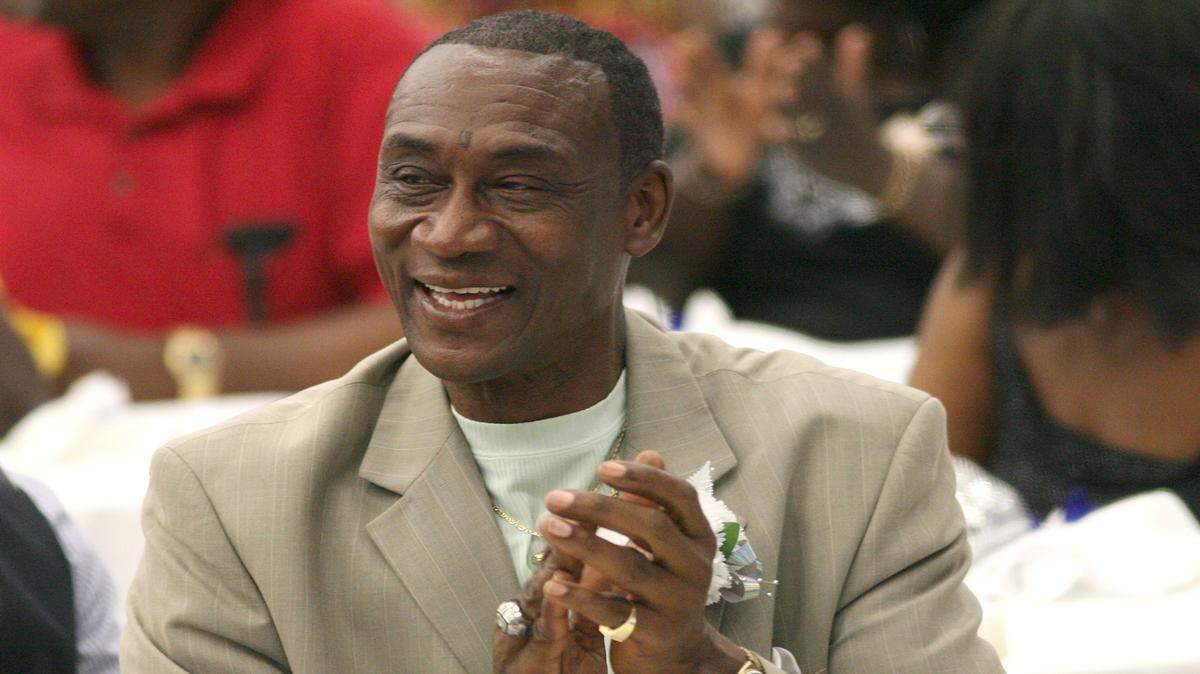
Ray Bellamy proved to be a man of his word. But it was 1961, and he didn't realize the barriers he was going to break down in creating opportunities for black athletes in Manatee County and throughout the country.
It will be on display this Wednesday for National Signing Day, athough most of the kids who sign letters of intent probably don't know that Bellamy opened the door for them.
But Bellamy's day will live in infamy. In 1966, he signed with the University of Miami to become the first black football player to sign with a major college program in the Southeast, the last area of the country that was holding on to segregation.
He opened the doors for the Manatee County greats who would follow; guys like Tommie Frazier, Willie Taggart, Peter Warrick and three defensive backs who were first- round NFL draft choices in the 2000s in Fabian Washington, Mike Jenkins and Dominick Rodger-Cromartie.
Bellamy, who turns 67 in February, prefers to stay in the background.
"This has never been about Ray Bellamy. It's about others and the people who had a vision," he said. "I think Ray Bellamy was a vehicle. I don't think of me as this guy who did this. All kinds of people had their hand in the pie."
Three of those were the late Dr. Henry King Stanford, the University of Miami president at the time who demanded the school sign a black football player. There was Ed Dick, a local white guy who went over to segregated Lincoln High to find a player, and Eddie Shannon, the Lincoln head football
coach who is going strong though his 90th birthday passed a few years ago.
Dick was a mission similar to what Branch Rickey did when he signed Jackie Robinson to the Brooklyn Dodgers and changed the course of history.
Dick needed to find a great athlete who was academically strong and could handle the backlash he would encounter.
"Ray had the grades, was president of the student council and the size and speed to be a great receiver. He was 6-5 with huge soft hands and could catch anything," Dick recalled.
Bellamy had to endure a lot off the field. The FBI had people sleeping outside his room because of the death threats he received. But he would rather talk about the future and the good that has happened.
"Fifty years and it shows we far we have come," Bellamy said. "I want to thank the University of Miami. They were the first school (in the South) to embrace the black athlete. I want to thank the people that make up the Bradenton, Palmetto and Sarasota communities because I needed their support and I got it. I say that because of Calvin Patterson."
In 1968, Patterson signed with Florida State to become the school's first black athlete. A student at Miami Palmetto High, he never played a down of varsity football at FSU and took his own life in 1972 in what authorities said was a suicide.
"I used to talk with Calvin on the phone. People don't understand how important it is to feel that you are welcome and are supported," Bellamy said. "I am no crystal ball expert, but I feel that was the problem with Calvin. He didn't get the support he needed. For some reason it eluded him and he probably needed it more than I did. He will never be forgotten in my mind."
People will never realize how good the football players at Lincoln were when Bellamy played. Eugene Hart and Willie Lee Jones, both deceased, may have been the best football players to come out of Manatee County.
"I know Tommie Frazier and Peter Warrick. They were great players, but I don't know if we would've had a spot for them," Bellamy said.
Hart ran for more than 9,000 yards at Lincoln and is still considered by many the fastest running back this county has produced. Jones was a linebacker. Henry Lawrence, who won three Super Bowls with the Raiders and played at Lincoln before going to Manatee, said Jones was the most talented linebacker he faced.
But it's the off the field stuff Bellamy has embraced more than anything.
"I am sure proud of the black athlete and I am so proud of our country and the people that allowed this to happen and supported it knowing it was the right thing to do. That is what is important," Bellamy said.
Bellamy went on to become the first African-American student body president at Miami. His career, which seemed destined for the NFL, was cut short by a car accident that had him hospitalized for three months.
But he is OK with it all. Bellamy has two degrees and a masters in college student personnel. He was inducted into the University of Miami Hall of Fame in 1972.
"We have grown as a country; as a community and as a people and that's what I like about the whole idea," Bellamy said. "Right now, it's probably better than it has ever been as it relates to people having a fair chance to make a roster college football program and to play."
Alan Dell, Herald sports writer, can be reached at 941-745-7056. Follow him on Twitter at @ADellSports.
This story was originally published January 30, 2016 at 11:57 PM with the headline "Commentary | Manatee County's Ray Bellamy's signing changed the course of history for college football ."