
‘What is that?’ How a local fisherman reeled in a rare snapper in the Gulf of Mexico
In the Gulf of Mexico, there are a variety of shallow-water snapper species frequently caught by anglers.
Mangrove, lane, red, vermillion and yellowtail are the most common along Florida’s west coast. Mutton, cubera and silk snapper are occasionally brought back from deepwater trips or by anglers who target them specifically.
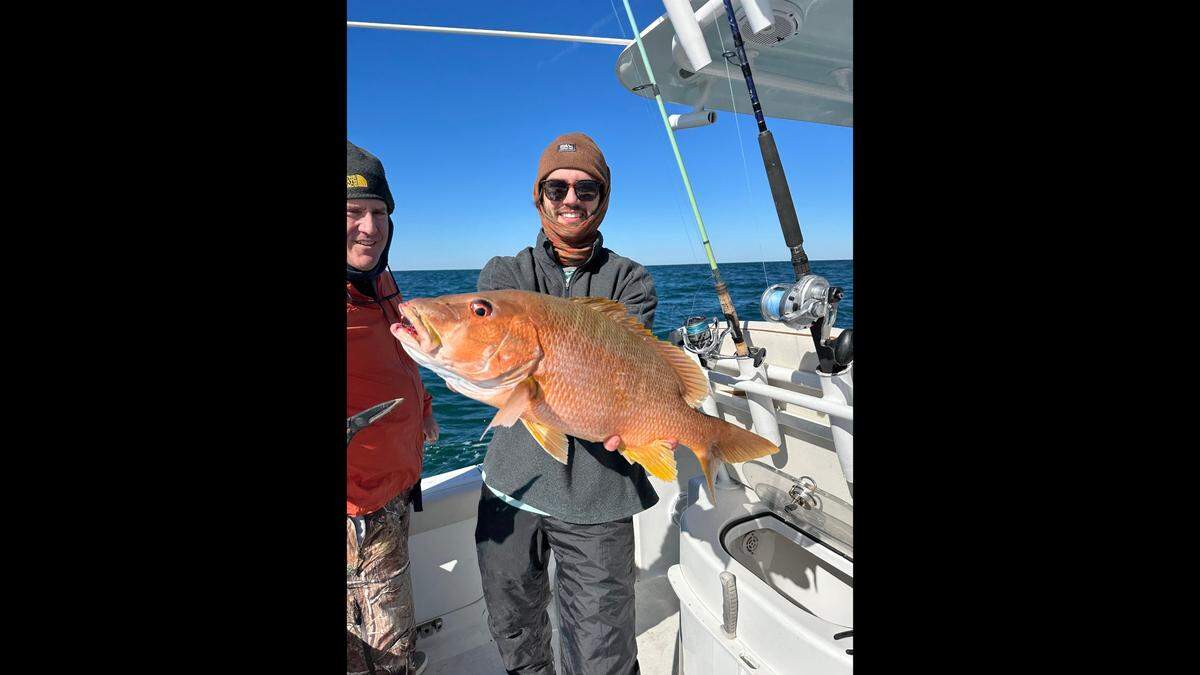
When angler Jamie Brown and his son Will landed an unrecognized snapper species, they didn’t realize just how rare it was to be caught on the west coast of Florida.
“I just got into offshore fishing about three years ago,” said Jamie Brown, who typically fished inshore before then. “The bug bit me, like bad. I prefer the mystery of bottom fishing, using the sonar and seeing what’s down there and deciding if I want to stop. It’s more like hunting.”
When he and Will headed west of Tampa Bay after New Year’s, their original goal was to get to deeper water to fish for red grouper, but sporty seas and a seasick guest kept them a bit shallower than they wanted.
“It was the only window to get out. We started targeting hogfish and got three keepers at the first spot in 50 feet. That bite slowed down, so we moved a mile, just a little deeper to about 55 feet where we found a nice ledge with about a 5-foot drop,” Brown described.
“We set up on top of the ledge and got into a nice bite. I have a feeling our baits were drifting under the ledge and the current was opposite the wind, which made it confusing. We hooked some nice gags and they were breaking us off. That’s when Will switched to a big conventional and dropped a whole squid. That was trucked instantly.”
Brown typically uses light tackle, 4000- to 6000-size spinning reels, and was overpowered by the fish below who made their way into the ledge. With bigger tackle, Will fought his fish to the surface where it received confused looks from the crew.
“We were looking at it going, ‘That’s not right. What is that?’ Almost like some sort of hybrid mangrove. The fins were yellow and it had a bit of redness like a mangrove with a teardrop under the eye. Will said he thought it was a dog snapper. He pulled out the fish rules app and said that’s 100% a dog snapper. It was 26 inches.”
Scattered around the tropical waters of the Gulf, southern Atlantic and Caribbean, dog snapper tend to be solitary and not highly populated in any single area. Their breeding grounds are said to be off Jamaica to the northeastern Caribbean and down to Brazil. Record sizes are in the mid-20 pounds.
Brown said he wasn’t aware of just how rare it was until he talked with friends and posted it on a Facebook fishing group where it has received nearly 300 likes.
“My buddy Travis Redder I had invited but he couldn’t go. I sent him the picture and he instantly called me and said, ‘What is that?’ I told him it’s a dog snapper. He said, ‘You need to post that to the Tampa Offshore Fishing page. They’ll go crazy on that fish.’ He was the reason I found out just how rare it was.”
This story was originally published January 12, 2025 at 5:50 AM.