
Florida ends catch-and-release rule for snook and redfish. Here are the new limits
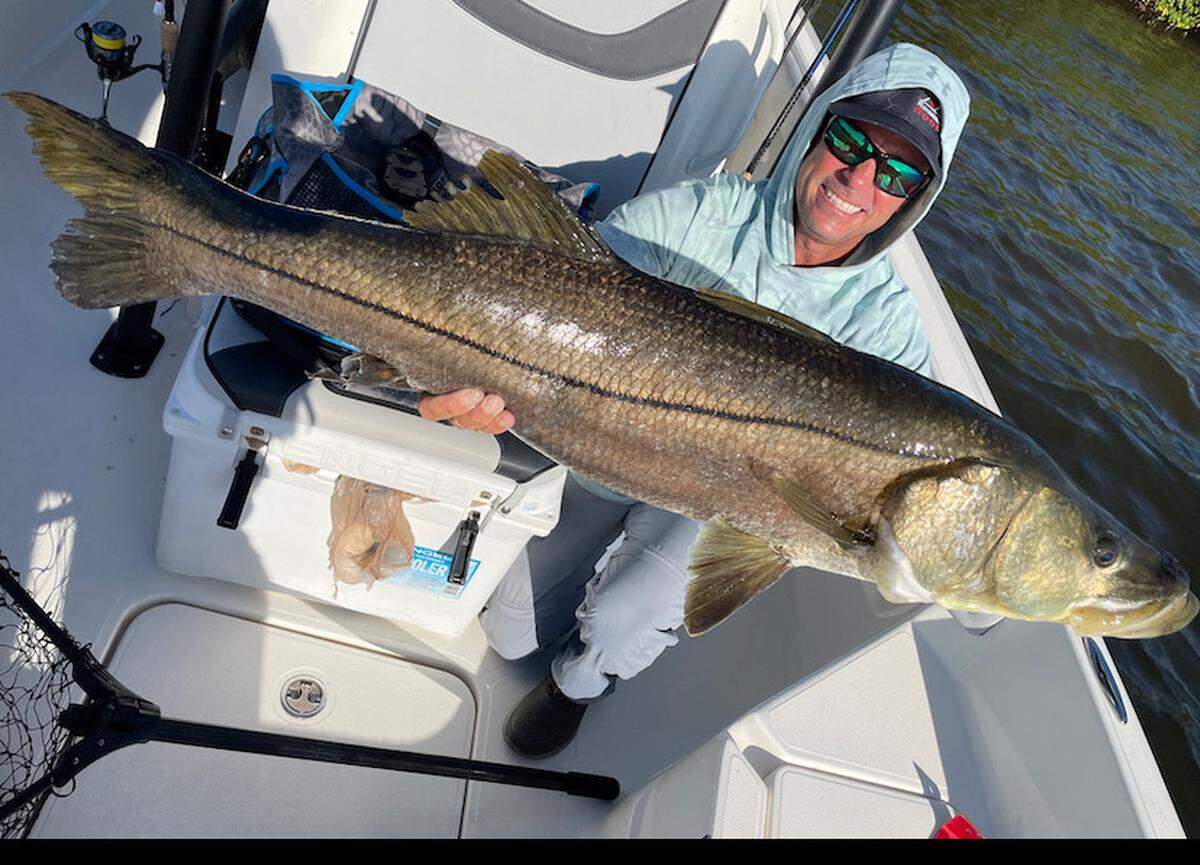
Southwest Florida anglers can once again take home limited amounts of snook and redfish as a temporary ban on keeping the sport fish came to an end Thursday, Aug. 31.
Spotted seatrout harvest, which was recently not banned but limited, also goes back to normal rules Thursday, Sept. 1.
The Florida Fish and Wildlife Conservation Commission announced the change this week; it covers waters from Pasco County south through Hillsborough, Pinellas, Manatee, Sarasota, Charlotte, Lee, and through Gordon Pass in Collier County.
In 2018, a “catch-and-release only” rule was put in place and then extended several times to help fish populations recover from major die-offs due to red tide.
The harmful algal bloom severely impacted Florida’s coastline, including Sarasota Bay and Tampa Bay, from 2017-19, killing thousands of tons of marine life.
Last June, the rules were lifted in the northern half of Manatee County and Tampa Bay. But the relief for saltwater fishing enthusiasts was short-lived.
In July 2021, wildlife officials reimposed the catch-and-release only policy as another major red tide event struck the region. Regional water quality scientists believe that the 2021 bloom was greatly intensified by the emergency release of contaminated wastewater from the Piney Point phosphate plant in Manatee County.
Harvest eventually reopened in Tampa Bay and the northern half of Manatee last fall.
But this will be the first time since 2018 that anglers will be able to keep snook and redfish (also known as red drum) caught in waters farther south — from State Road 64 in Bradenton south through Gordon Pass in Collier County. An exception is the Charlotte Harbor area, where snook will remain catch-and-release only through Dec. 1, 2022.
FWC cites the severity and length of red tide in the area and resulting seagrass loss as the reason for the extension.
“Redfish, snook and trout are important fisheries in southwest Florida,” FWC executive director Eric Sutton said in a news release Wednesday. “The Commission has made significant changes to our process in setting regulations for these species including habitat conditions. Charlotte Harbor was the epicenter of the prolonged red tide and has experienced habitat impacts. We would like to spend more time evaluating these variables.”
Anglers should also be aware of new rules on redfish harvest that go into effect on Thursday, including a reduction in the limit of fish per person and per vessel.
Here’s a look at the new and returning rules in Southwest Florida, effective Sept. 1:
Open year-round
The off-the-water transport limit has been reduced from six to four fish per person
In Tampa Bay, Sarasota Bay, Charlotte Harbor and Southwest regions, a two fish vessel limit
In Tampa Bay, Sarasota Bay, Charlotte Harbor, Southwest regions, a one fish bag limit per day
- Open Sept. 1 through Nov. 30 and March 1 through April 30 in Gulf of Mexico region (closed through Dec. 1 in Charlotte Harbor region, from Venice Municipal Airport south to Vanderbilt Beach Road in Collier County)
No commercial harvest or sale of snook permitted
One fish bag limit per day
- Open year-round
- Three fish bag limit per day
Six-fish recreational vessel limit in waters from S.R. 64 in Manatee County through Gordon Pass in Collier County has been lifted; regular vessel limits resume
For more fishing rules, visit FWC’s website at myfwc.com/fishing/saltwater/recreational or download the “Fish Rules” phone app.
This story was originally published September 1, 2022 at 5:51 PM.