
Jon Chapman's Outdoors: You can learn a lot about fishing from a camera
You can learn a lot about fishing from a camera
One of the most helpful items in my arsenal is my GoPro Hero 2. The now 4-year-old camera is a tool that has allowed me to inspect offshore fishing spots in ways I've never thought possible. I have discovered its usefulness is unmatched as I gain confidence in the fact that I will not lose it while I send it on its way to film what lies below.
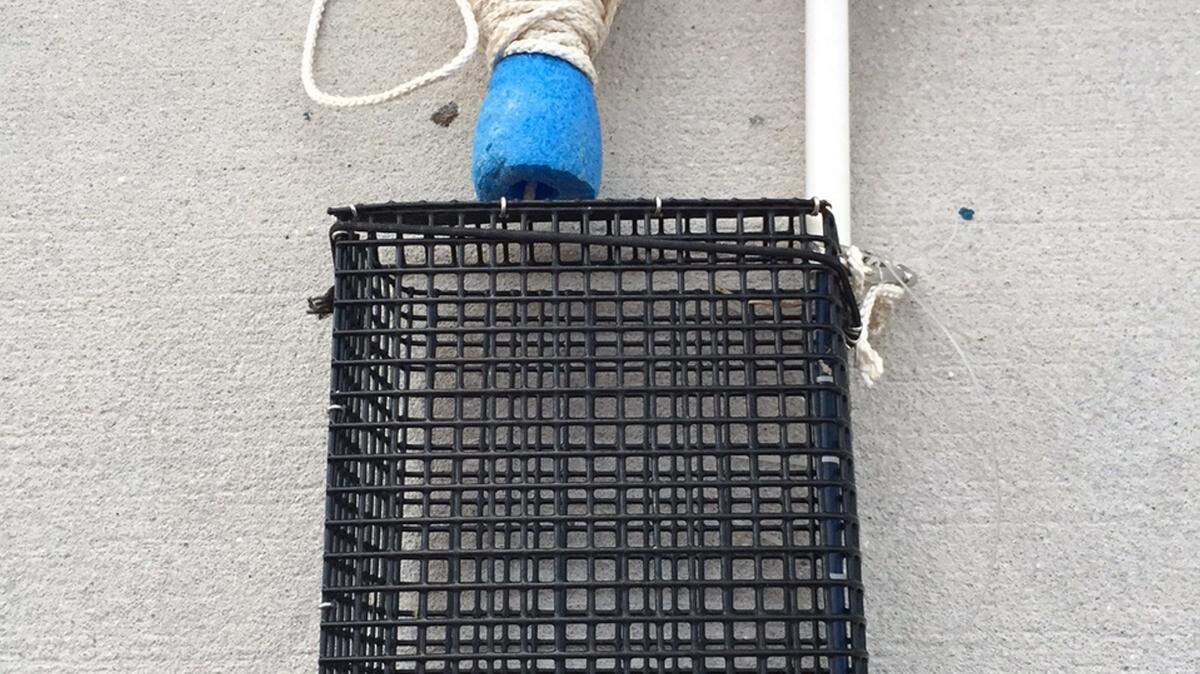
To do this, I've made a custom rigging that allows me to send the GoPro down to record video while fishing. The rigging consists of a 1/4-inch rope threaded through a PVC pipe. The rope is tied to a carabiner at the other end. With the carabiner, I can attach it to a chum cage that I can fill with chum or lead weight to get it to the bottom. At the top of the PVC tube, I have a piece of fun noodle that allows the camera to stay upright. The camera is finally attached with GoPro's handlebar mount that is on the PVC, allowing me to angle it however I please.
In the hundreds of hours I've recorded while fishing offshore, I've been able to understand how certain spots look on the bottom versus how they look on a depth finder, what structure I'm fishing, how fish act on the spots, and what I should be able to target at each spot.
I believe the GoPro offers me a different viewpoint than what a diver will see. Fish will act differently when the threat of a diver is in the water. Here is what I've learned in my studies that has helped me understand how certain gamefish act.
Mangrove snapper are everywhere. They love to patrol areas, actively swimming about 5 feet off the bottom. They love to inspect, from the camera and cage itself to almost every bait that falls to the bottom. Big mangrove snapper tend to stay higher in the water column, so if they are your target I suggest using items that will slowly drop your bait down such as lighter weights or jig heads. Scamp grouper act very similar to mangrove snapper.
Red snapper are bullies. They are extremely aggressive and love to come into chum lines and clear everything out. They are also willing to swim off structure to eat when they sense food.
Gag grouper are the opposite of red snapper. They hang back away from chum lines and don't like the sight of the chum cage, slowly cruising around. Gags are willing to leave a spot if they feel threatened. They love to stay together as they inspect their potential meals, and tend to not care much for smaller offerings.
Red grouper are lazy and don't scare easily. They are most likely being territorial, but will eat nearly anything dropped in front of them without thinking twice. They also seem to live anywhere and everywhere.
Hogfish are also very camera curious. They will swim up to it, wondering what this new item is. The few times I've seen them eat bait, it really needs to sit right on the bottom in sand. They do not actively search for anything. They also love to stay in groups as they lazily swim around spots.
Perhaps the most important thing I've learned of all, is that some spots have fish but they don't want to eat. For whatever the reason may be that day, just because fish are there does not mean there will be action. In that case, be ready to move onto the next spot.
This story was originally published December 19, 2015 at 12:00 AM with the headline "Jon Chapman's Outdoors: You can learn a lot about fishing from a camera ."