
Commercial fisherman changes tactics to keep boat full amid evolving landscape
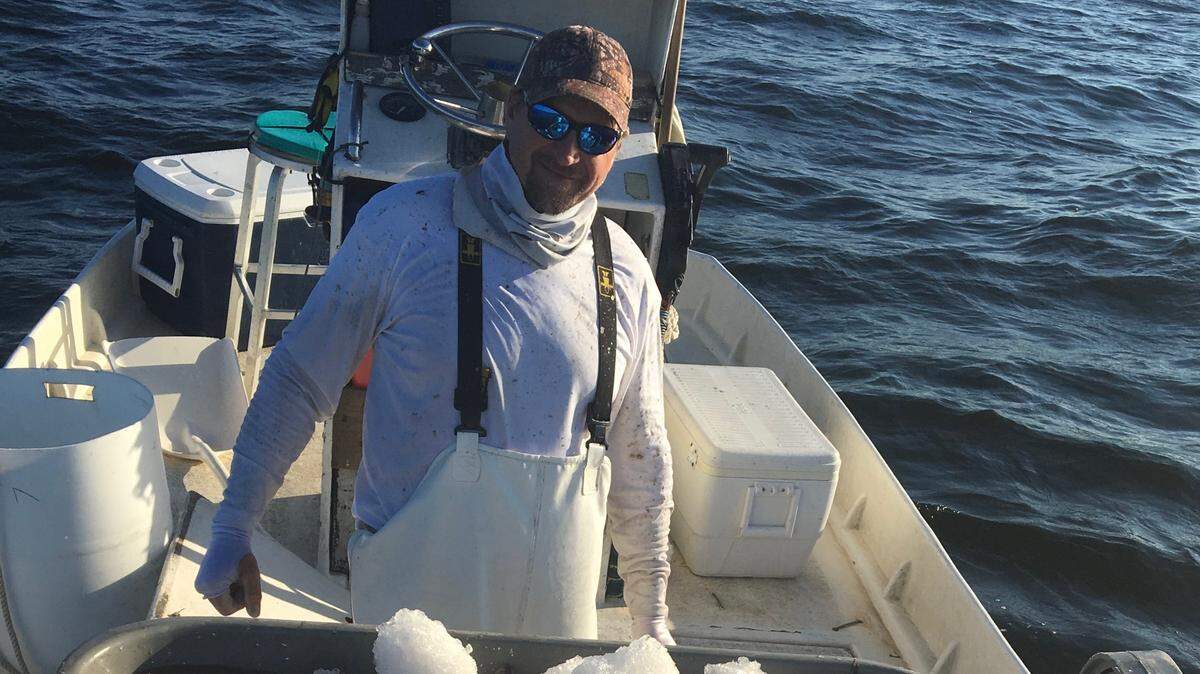
At 4:30 a.m., Tony Keehbauch is up for work to get his day started. By 5:30 a.m., he’s out the door, heading to the fish house to unload the previous day’s catch, a day that ended less than 12 hours earlier at sunset.
Keehbauch gets his Carolina Skiff reloaded with fuel and a fresh load of ice before heading off to a variety of destinations along the west coast of Florida to start another day of commercial fishing.
“I started chasing mullet in 1994 and learned how to make my own cast nets,” said Keehbauch, who moved to Florida from Michigan in 1986. “I’ve always been able to catch fish good, it’s in my blood or something. “I went full time commercial fishing about five years ago when I discovered I could make a living hook and line fishing.”
This is moneymaking season for Keehbauch. Each year around mid-October, giant schools of mackerel, ladyfish, bluefish and blue runners migrate along the shore to the west coast of Florida.
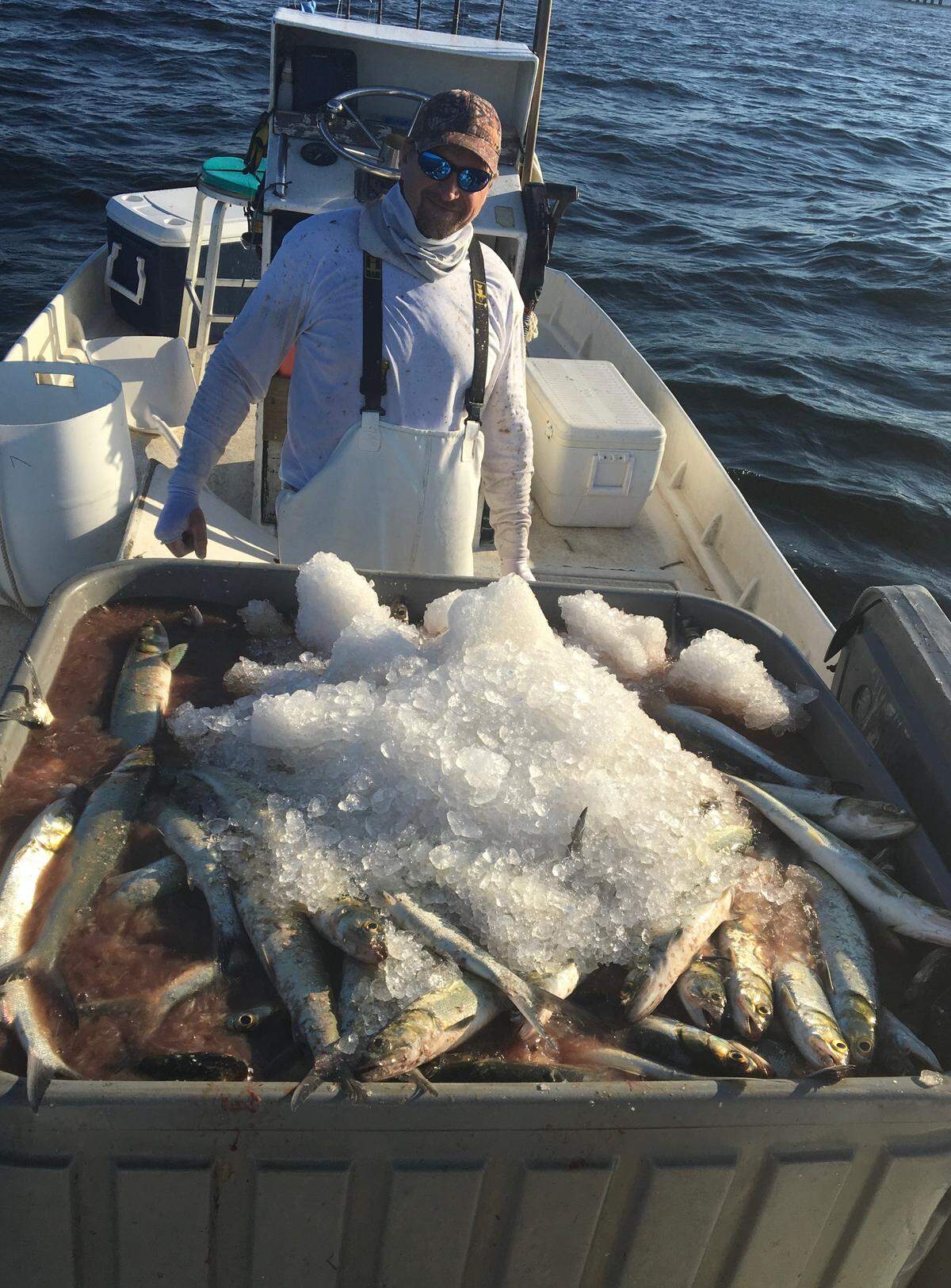
“This year has been more challenging than years past because of the red tide,” Keehbauch said. “It’s forced me to find new ground and figure some new stuff out. Most of our southern and northern spots haven’t produced like in years past. On our good days we can harvest up to 1,500 pounds, but those days have been rare this year with catches averaging around 700 to 800 pounds per day.”
Every day for Keehbauch is different. Fish move, and he moves with them. Some days he’ll travel over 40 miles on the water to find what he is looking for. When he finds the fish, his newly discovered tactics make loading the boat easier with the ability to keep fish around the boat and get them unhooked quickly.
To speed up the process, Keehbauch modified his 24-foot Carolina Skiff. He’s able to keep plenty of live chum in the water and fish interested. When feeding, he can get ladyfish and mackerel in the boat and unhooked in seconds.
Commercial hook and line fishing demands keeping baits in the water and speed from catch to cooler. Keehbauch credits his evolving methods for his success.
“I developed it about five years ago, but wish I would have started doing it 20 years ago,” he said.
Soon his target may shift to one of the most common famous commercial targets, striped black mullet. As winter approaches, mullet are prized for their roe. Keehbauch knows it’s almost time, but not close enough to get him away from catching boatloads of ladyfish and mackerel.
“It takes a lot of hard work and tenacity to be successful at commercial fishing in this new environment of yearly red tide outbreaks and the shear number of fisherman on the water,” Keehbauch said.
For a hardworking commercial fisherman like Keehbauch, at the end of the day the work isn’t easy, but the bills are paid and he’s doing what he loves.
This story was originally published November 24, 2018 at 2:31 PM.