
Bradenton's Paul Azinger discusses new golf gig, upcoming plans and improving U.S. Ryder Cup chances
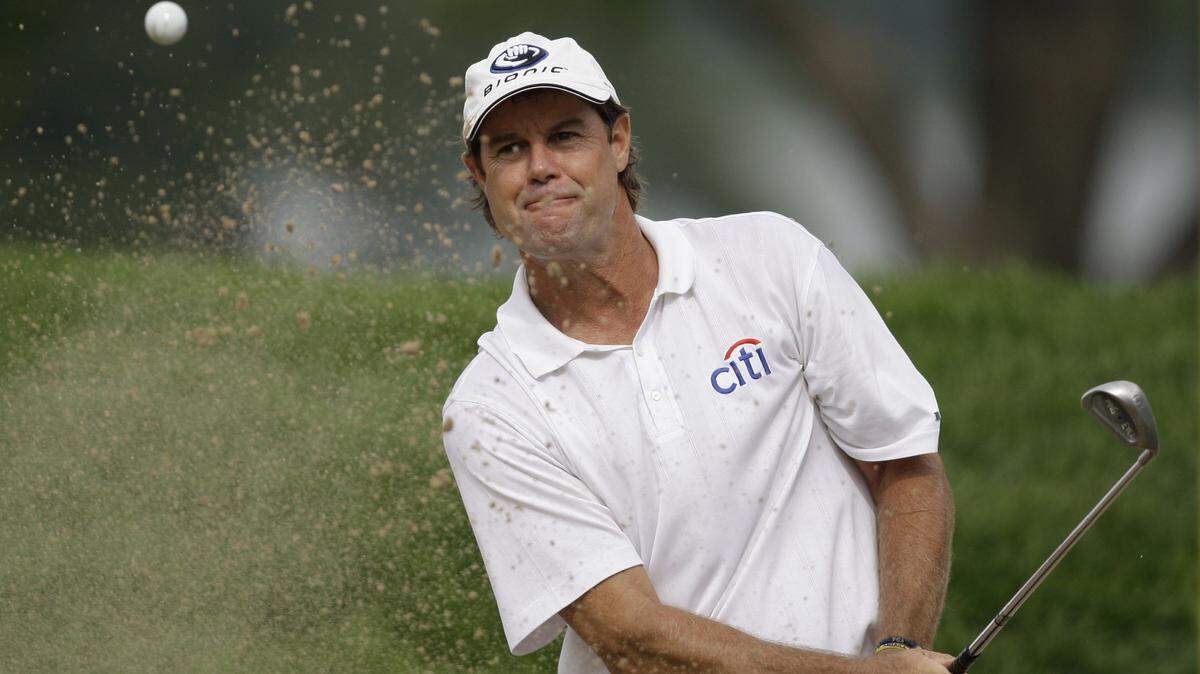
Bradenton resident Paul Azinger won 12 times on the PGA Tour, including the 1993 PGA Championship. Aside from that lone major, Zinger remains the last U.S. captain to win the Ryder Cup, accomplishing the feat in 2008.
How that was achieved is detailed in his book: "Cracking the Code: The Winning Ryder Cup Strategy: Make it Work for You."
Azinger, who beat cancer in the 1990s, entertained an audience Thursday of 175 at Bradenton Country Club, sharing stories of his career and a famous one of PGA Tour player Boo Weekley boxing an orangutan as a youth, which was reported in Golf Digest years ago.
Former two-time major champion Tony Jacklin and former World Series champions with the Pittsburgh Pirates, Steve Blass and Milt May, were among the attendees sharing in the laughs.
Afterward, Azinger, recently announced as the new lead analyst for Fox's golf coverage of U.S. Golf Association events following Greg Norman's departure, took time for a Q&A with Bradenton Herald sports reporter Jason Dill.
Q: What have you been up to, and what are your passions these days?
A: "I still do the same. I really enjoy being on the water early in the morning. I still like to ride my motorcycles. I've kind of scouted almost the whole state, all the back roads, the pre-interstate Florida. I love pre-interstate Florida. I have been teaching a little bit, and I'm in the process of writing a book with Phil Blackmar and Jaime Diaz about the real fundamentals of golf and the fingerprints that make pros great. No two swings have ever looked the same. Every swing is as unique as the fingerprint on your hand. So with Blackmar, we went on a quest to discover if there's anything everyone has done the same with Old Tom Morris to present day. And we found three things that everyone does the same, and those three things happen in a sequence."
Q: How tough was it becoming a free agent and deciding on where to land following ABC/ESPN ending its contract to broadcast the British Open?
A: "I was real patient about it. The whole thing with Fox was a little bit of a surprise. There's no place for me, really, to end up at NBC at this point, because I want to be in that chair because I've been the lead analyst since '05 at ABC and then ESPN. Our schedule just got from 20 a year to 20 a year to ABC is out of golf, no job. And ESPN, we did the first two days of the Masters, the first two days of the U.S. Open and all four days of the British. That's it. I loved that schedule. When I re-signed, it was predicated on whether or not we lost the British, because we had just lost the U.S. Open to Fox for the first two days, we weren't doing it anymore. And then the Masters, of course, they used CBS broadcast team, even though it's aired on ESPN, so I wouldn't do that. I have called the Masters for the last three years for the BBC on Saturday/Sunday, and I did the Masters for Direct TV. So I got to do that. I was going to stay at ESPN, because at least I have the option. And then all of a sudden, the whole Greg Norman thing comes to fruition. It's like, wow, I wonder what's going to happen. And then (Fox golf producer) Mark Loomis starts calling me. We were just able to work it out. I'm very excited about it. My philosophy in that booth, my wife says, 'Now remember. Nobody is tuning in to hear you.' I'm like, 'OK, that's No. 1.' And you want to try and let the picture be descriptive while you can be informative. You want to illuminate a little bit."
Q: How important is the dynamic between a play-by-play guy and the analyst to making golf coverage really sing to the viewer?
A: "It's helpful, but I really believe the key element to those broadcasts are the guys on the ground or the girls on the ground. Dottie (Pepper), Judy Ranking, Andy North, Roger Maltbie. Those guys are the key to setting up the shot and the whole deal. They're truly the analyst. They're the one. And then the actual 18th tower guy can begin to share what the guy on the ground can't see or doesn't know necessarily. I believe that the host has to have a great memory and knowledge of the game. And (Mike) Tirico was the best, all-time best to me."
Q: Fox's foray into golf broadcasting was widely criticized. How much credibility does it add to have your experience to go with Joe Buck, who isn't known for golf coverage?
A: "Joe Buck's won seven Emmys. Joe Buck knows what he's doing. But I think what Joe Buck realized, the difficulty of calling golf is that it is spread out over this massive field. And there are times, you have to fill by painting the pictures what comes naturally to a Peter Allis or Dan Hicks or Jim Nantz or Tirico. Joe Buck doesn't have to paint the picture of the scenery and conditions, because he's in the stadium, right? I think he's learned that and I think Joe Buck is going to shine. We'll help him. I'll help Joe and he'll help me. I'm leaning on Joe to help me. I still feel like a rookie. I really do and I've done it for 11 years."
Q: How would you describe your broadcast style?
A: "I just want to be candid and fair. And I want the picture to tell the story. You can watch all sports with the mute button on and know what's going on, because of the graphics. And so I feel if you can't add anything, don't say anything. I think (John) McEnroe is more my role model as an analyst more than anybody. I like McEnroe's style and delivery. I don't want to be this opinion freak. I just want to share what is in there through experience and kind of what the guy might tend to feel in this situation. I don't know what they're thinking, but I do know how they think."
Q: What has to happen for the United States get back to winning the Ryder Cup, which last happened in 2008 under your captaincy?
A: "It's this simple: create an environment where they can be the best they can be. Whatever that is, is up to the captain. You're going to create an environment and just sell them the idea that there's nothing easy about what we're about to do. We're going to have to get prepared. And when the best players get prepared, Katy bar the door. If the message is to have fun or whatever, it doesn't work. I felt it was my responsibility to know who they were so I knew how to communicate to them directly. And I think that became valuable. There's a business model in place now. Future captains or assistants, past captains are going to be around. And I hope that, that business model, will as to how they choose captains is going to create some continuity so it's not a completely unique experience based on whoever the captain's personality is. Europe does the same every time. They make minor improvements. Really, the only guy that didn't do it the same as everybody else was Nick (Faldo), who opposed me. In truth, that's where that continuity was broken. But that continuity is the key, so that a guy comes to his seventh Ryder Cup and it's not on a whim of whatever that guy's personality is."
Jason Dill, sports reporter, can be reached at 745-7017 or via email at jdill@bradenton.com. Follow him on Twitter@Jason__Dill and like his Facebook page at Jason Dill Bradenton Herald.
This story was originally published February 6, 2016 at 12:00 AM with the headline "Bradenton's Paul Azinger discusses new golf gig, upcoming plans and improving U.S. Ryder Cup chances ."