
Proof that Glazier Gates Park is historically significant
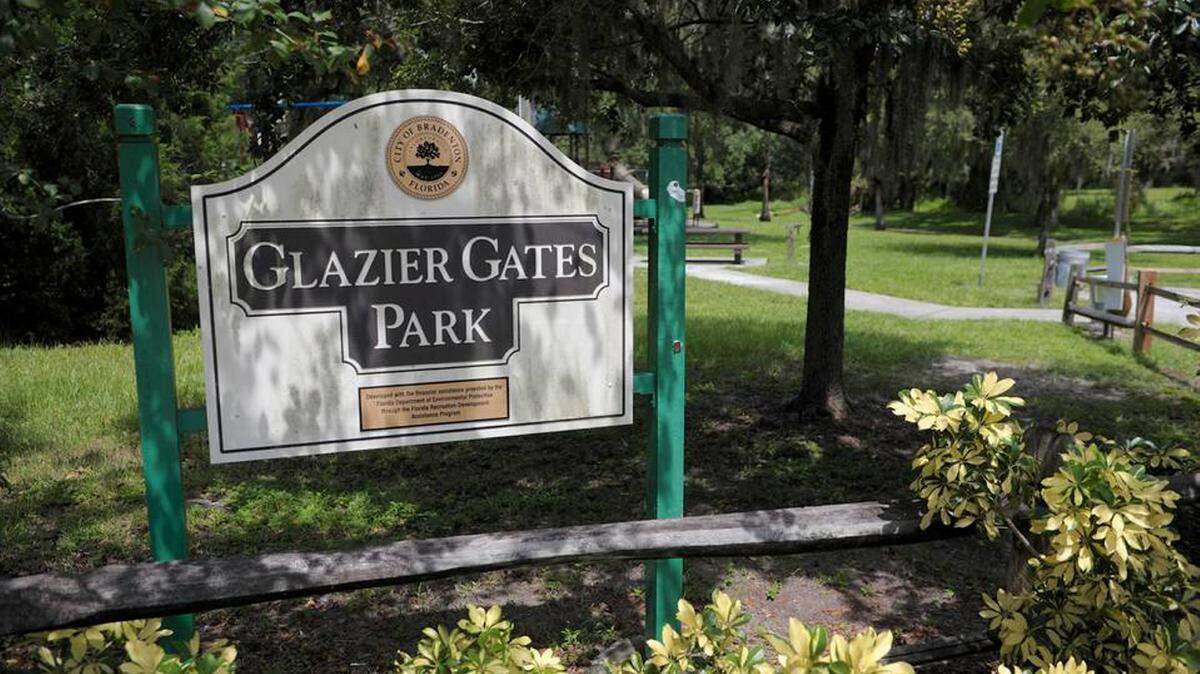
Bradenton city officials are on record saying that Glazier Gates Park is not historically significant. Hogwash!
They say the area of Mineral Springs Park (officially named Indian Springs Park when established in 1982) is the true historic area. Their basis is that Mineral Springs was the homestead of Josiah Gates, who settled there in 1842.
No argument there, but just a short two years later in 1844, Ezekiel Glazier also settled in the Village of Manatee in the vicinity of Glazier-Gates Park, and built his home near today's 10th Street East (also known as Glazier Street) and Fourth Avenue East, which is within the boundary of today's Glazier Gates Park.
This information is derived from the book "The Singing River" by Joe Warner, and is widely accepted as factually accurate by local historians.
Furthermore, the dedication plaque which stands in the park, and placed there in 1957 by then city officials, reads "In 1844 Ezekiel Glazier built his home on this land." Just two years and four city blocks separation should not be an adequate basis for declaring Glazier Gates Park not historically significant!
Josiah Gates II and Ezekiel Glazier were contemporaries, neighbors, friends, and joint businessmen. In a St. Petersburg Times article dated June 18, 1962, "Manatee Independent, Healthy, During War Between the States," recounts a narrative by Miss Eva Gates, daughter of Josiah Gates, who informed Eva of his experience during the Civil War.
Information provided in this article states that Union troops destroyed a saw mill and grist mill that stood on the Manatee River between 10th and 12th Streets East (now Glazier Gates Park), and these mills were owned by Josiah Gates, Ezekiel Glazier and another Manatee founder named Curry.
So, Glazier Gates Park isn't historically significant? Only current Bradenton Officials seem to think so.
Jackie Atwood
Bradenton
This story was originally published March 23, 2016 at 12:00 AM with the headline "Proof that Glazier Gates Park is historically significant ."