
Letters to the editor: Spanish sample ballots, the DeSoto Bridge and impolite drivers
Bennett wrong about Spanish ballots
The Manatee County Supervisor of Elections, Mr. Mike Bennett is wrong in his opinion that ballots should not be available in Spanish. I agree it would be difficult and expensive to provide ballots in every immigrant’s language, but not that knowing and speaking Spanish delays cultural integration. I think in this day and age and especially here in Florida, ballots in Spanish are completely appropriate. The thought of disenfranchising American’s because of their “first language” is very disturbing, and Spanish deserves an exception for many reasons.
Large areas of the United States were made up of territories that were at one time Spanish colonies: California, Louisiana, Utah, Arizona, New Mexico, and yes Florida and Texas, too! Spanish was the first language of the people there (exception, Native Americans). It was the language spoken at home, of those “new” American citizens and still is in some homes. And, following the Spanish-American war 1898, Puerto Rico became an American territory, whose entire population spoke Spanish and they are American citizens! In the interest of expanded American democracy, small “d”, let those American citizen’s whose first language may be Spanish have a ballot printed in Spanish! Bravo to those that can think, speak, and communicate in two languages!
Mr. Bennett please, as this Florida, a state with a historically strong “Spanish speaking” connection, and a history of Spanish speaking governors and senators, print that ballot in Spanish so all our citizens can exercise their voting rights with ease.
S.J. Gander
Bradenton
Spanish ballots are ‘nonsense’
Supervisor of Elections Mike Bennett is absolutely correct and Judge Walker totally wrong. Since the knowledge of English is still required for citizenship, and is therefore also required for voting rights, why should our government go through the nonsense and expense of printing ballots in Spanish? Yes, Puerto Ricans are citizens of the U.S. but have chosen to not consider accepting English as a required language. Why they and nobody else? Even though the U.S. doesn’t have an “official” language they should be compelled to meet the “reading, writing and speaking” requirement and English classes should be mandatory in all their grade schools.
When my parents first came to the U.S I was eight years old and could speak no English. My father had learned some of this new language while in school in Germany but my mother very little. They enrolled me in the local public school where I was placed in first grade and it took me a number of years to work through to the grade I belonged in. As soon as my mother and I could exchange a few sentences in our new language my parents followed a rule of trying to speak only English at home. This enabled them to eventually apply for and pass the requirements for citizenship that include knowing how to read, write and speakbBasic English.
This requirement still exists and it’s time for Puerto Ricons, excepting the elderly, to be made subject to the same rules the rest of our citizens follow.
Reinhold R. Klein
Bradenton
A new DeSoto Bridge
The future repair and replacement of the aging DeSoto Bridge will define it and the communities on either side for decades.
Widened at grade-level to accommodate increased traffic and bicycle and pedestrian paths, the DeSoto Bridge would be a vibrant connection between communities, attracting visitors to Palmetto and Bradenton, and becoming a destination at which to enjoy biking, strolling, being outside, and visiting local shops and restaurants.
Alternatively, this Manatee River crossing could become an ugly scar if eclipsed by an elevated expressway for through-traffic. Nearby neighborhoods and businesses would exist as a passing blur to thousands of vehicles hurtling north and south. Businesses, property values, and development will suffer, dragging down their accompanying tax base and the support of many constituents.
The final decision must comply with the National Transportation Policy Act (NEPA). Transportation officials can eliminate alternatives right now that violate NEPA, saving valuable resources and taxpayer dollars. NEPA mandates that officials consider projects in terms of context and intensity, including effects on society, affected interests, locality, and the severity of the project’s impact on public health and safety. An elevated expressway must be rejected because it harms these and drives development away from its shadow.
Additionally, a presidential Executive Order directs federal agencies to safeguard environmental justice by identifying and addressing disproportionately high and adverse effects of federal projects on the health and environment of minority and low-income populations, many of which have been torn apart by transportation projects that accommodated capacity at the expense of human beings. Prior transportation projects have already severed nearby minority communities and undermined the health and safety of their residents. They must not be further compromised.
Moreover, community vision expressed in the Comprehensive Plans of Palmetto and Bradenton must be honored in the decision, including a commitment to multimodal transportation and a small-town atmosphere. Elevated expressways have no part in this vision.
An at-grade widening of the DeSoto Bridge accommodates traffic and respects the law and the physical, social, and economic well-being of individuals and communities.
JC and Valerie Biebuyck
Palmetto
Buchanan ad is ‘deceitful’
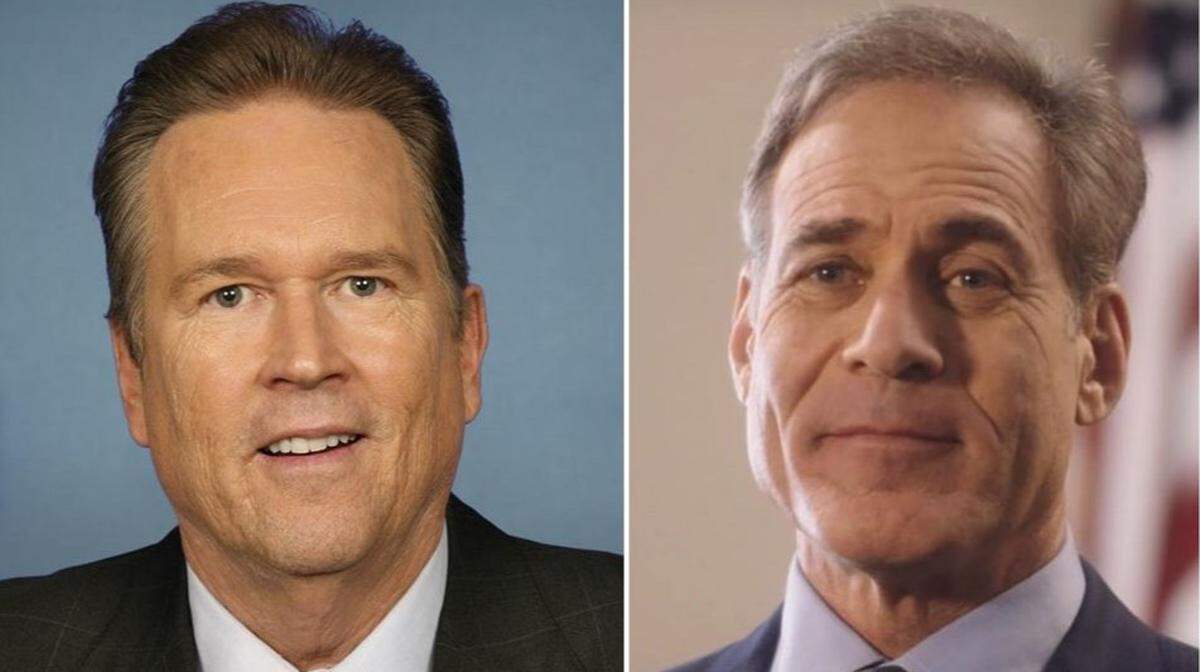
The advertisement by Vern Buchanan depicting his Congressional opponent, David Shapiro, as “Nancy Pelosi’s hand-picked puppet,” is a decitful and dishonest political statement. It concludes by saying, “A vote for Shapiro is a vote for Pelosi.”
Over two weeks ago, David Shapiro announced that he would not support Nancy Pelosi for Speaker, yet Buchanan continues to run this ad. Maybe it’s time to get Vern Buchanan out of Congress and send him off on the yacht he bought the same day he voted to cut taxes for the rich.
Gordon Mulligan
Englewood
Local cars have defects
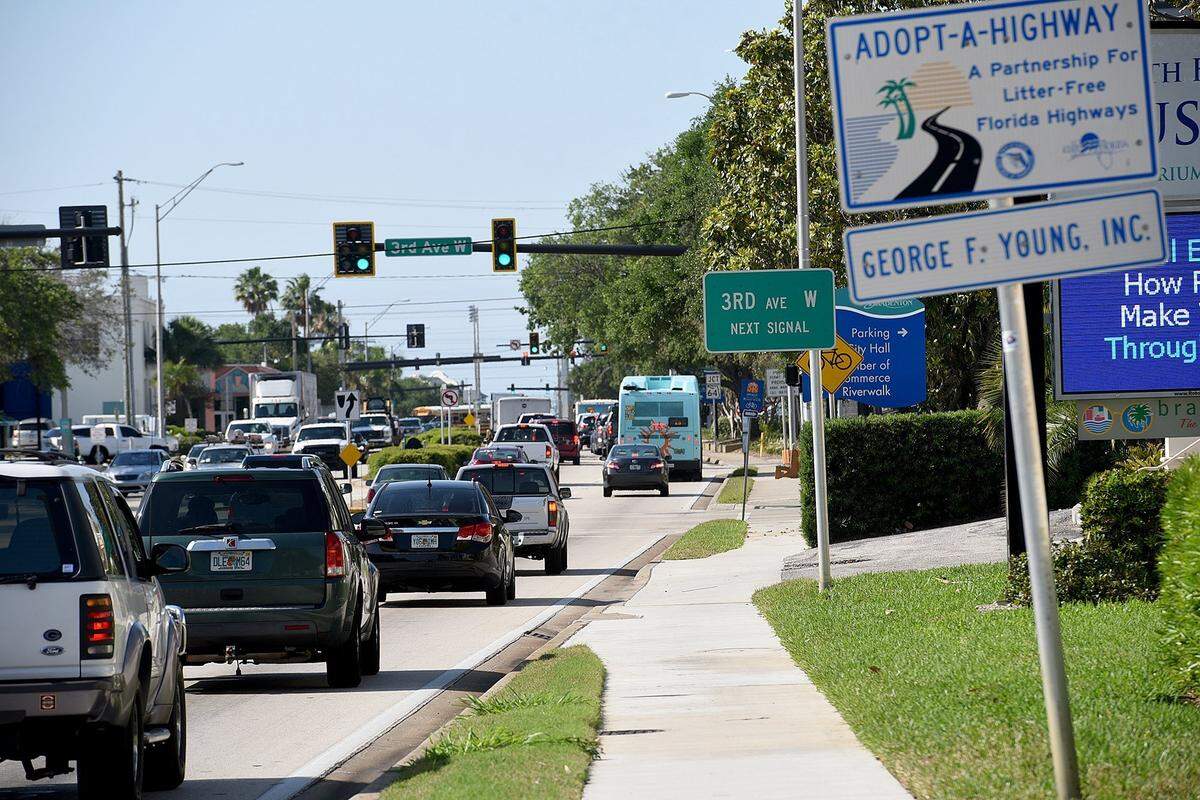
In my travels around area roadways, I’ve noticed that a lot of vehicles are apparently not equipped with turn signals for right turns, left turns and lane changes. Maybe we should go back to hand signals like we did years ago.
Also, an unwritten rule when waiting in line at a stop sign or traffic signal and you can’t see the rear wheels of the vehicle in front of you, you are too close to that vehicle. In case of an accident behind you, you might not be thrown into the rear of that vehicle. Just saying.
Wayne McIntyre
Ellenton