
Weighing sales tax initiatives
The question Manatee County voters should weigh before casting a ballot on the almost certain sales tax initiatives in November is straightforward: What kind of community do you want to emerge from this? The future course of the community hangs in the balance.
County government has indicated interest in pursuing a half-cent sales tax increase while the school district plans to seek an extension of the existing half-cent sales tax. Currently, consumers — including visitors — pay 6.5 cents on the dollar for most expenditures. Should both initiatives pass, the levy would only rise to 7 cents.
The county situation
The county, overly reliant on property taxes for revenue, is confronting a potential budget deficit in 2018 when the general portion of the budget stabilization fund will be depleted. The county has been spending down those reserves for several years in order to maintain services and programs deemed essential.
The half cent could be directed toward leveraging bond debt to gain capital and expedite improvements. The money would address transportation, public safety and park/community amenity needs. The Citizens Financial Structure Advisory Board, impaneled to find solutions to the county’s revenue shortage, recommended the half-cent sales tax.
The argument that the county should just cut “fat” to reallocate resources does not consider two essential facts: The government workforce dropped by 20 percent — 300 positions — during the Recession, and the year 2015 marked the eighth consecutive year that commissioners held the line on property taxes. Over the past few years, various county officials have stated that past spending reductions already eliminated the “low-hanging fruit.”
County Administrator Ed Hunzeker made a key point in his 2015 annual report: “Property owners should not have to pay for the bulk of the services we provide when those services are extended to visitors, renters and people who do business in Manatee County.” A sales tax would be borne by visitors in a big way. Out of the estimated $22.8 million in new sales tax revenue expected with the half penny, visitors would contribute around $7.2 million. (Manatee County lured 3 million visitors in 2015, injecting $1.1 billion into the economy and contributing $47 million in sales taxes, the Bradenton Area Convention and Visitors Bureau reported in March.)
County municipalities would receive shares of this new revenue.
Some other relevant points for consideration:
Many county roadways are in poor shape and need maintenance. Is this infrastructure deterioration acceptable? Most roads are ineligible for impact fee funds by state law, so that avenue is closed. Sidewalks missing where they are needed for public safety could also be built with this tax revenue, fulfilling a public priority.
Is our public safety system adequate? Or would additional sheriff’s deputies — as requested for years by Sheriff Brad Steube but mostly declined for budgetary reasons — be desirable? The sheriff’s department is more than 90 deputies below a national average based on population. During the 2015-2016 budget talks, Steube warned county commissioners that a growing population will worsen the ratio without additional deputies.
Will the loss of playgrounds in our parks be tolerable? Parks have long suffered from a lack of upkeep. Improvements have mostly been forsaken, but not for the absense of public requests. Other community amenities have not been forthcoming. Would enhancements to our quality of life be welcome? Such upgrades and new assets would potentially serve another purpose — as an economic development tool and job creation enticement for new employers who consider quality of life issues before deciding whether to move into a region.
Hunzeker expected to produce a list of the projects this half-cent would fund this week. That should provide detailed clarity for voters to scrutinize.
The school system concerns
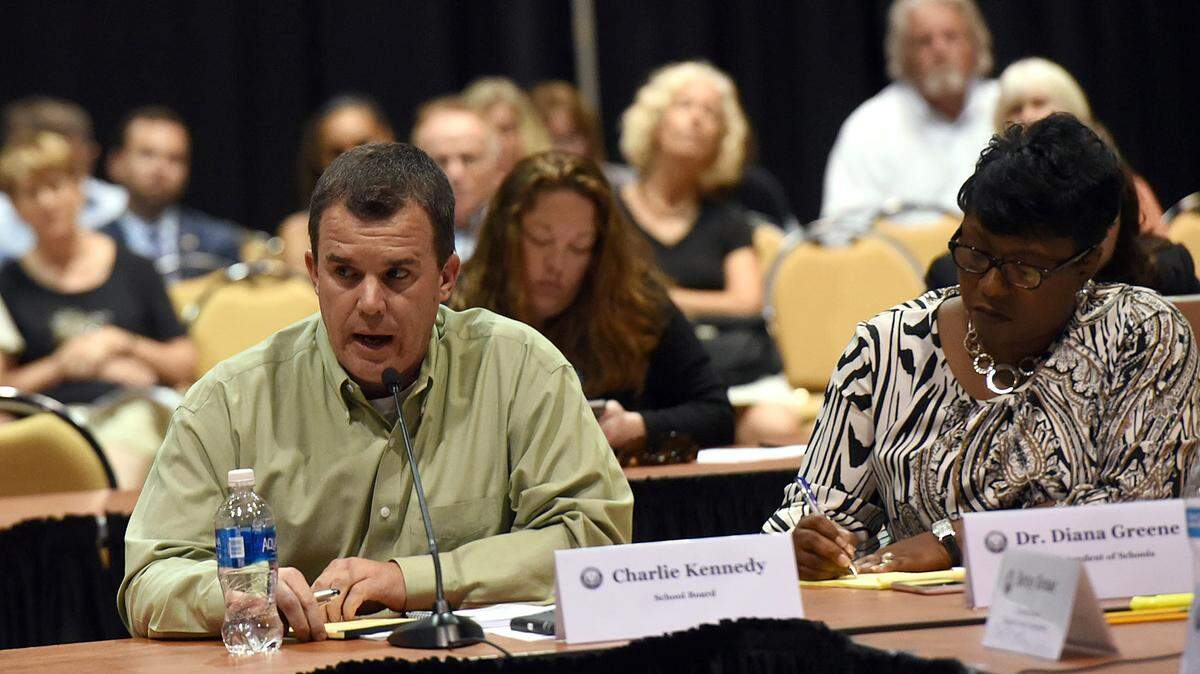
The school board and district administrators hope voters extend the half-cent tax first passed in 2002 with 61 percent of the ballots. The sales tax sunsets in December 2017, potentially creating a massive hole in the system’s budget. Superintendent Diana Greene has warned that “the school district cannot survive without a half-cent sales tax.”
Impact fees, collected from new construction, can only be spent on capital projects — new schools and buses, for example. That revenue cannot pay for operating expenses, but sales-tax funds are far more flexible and thus more desirable.
Should education and students be the top priority? Existing schools need updating, something the district has been unable to fund along with other projects and initiatives that would benefit students.
Should teachers be paid more? Salaries lag behind most neighboring school districts. That became glaringly apparent this month when a highly regarded state finalist for principal of the year for 2016 left a Manatee County elementary school and his $75,950 salary for a Sarasota elementary and a $98,125 contract.
Some residents continue to express mistrust and disagreement with the district, a conflict ignited years ago over financial mismanagement and leadership failings. But school board members and district administrators come and go, and the 15-year span of a sales-tax extension will outlive those changes.
That lingering public skepticism is now fueled by the potential linkage of the sales tax initiative and a discount in impact fees. The district is still considering keeping impact fees at 50 percent of the recommended amount should voters approve the half-cent levy. Is that misguided coupling reason enough to doom the sales tax? What would that accomplish beyond sending an angry message to the board and administration? Wouldn’t this also punish students and teachers by slashing district resources?
County commissioners and school board members continue to consider merging these two initiatives into one. That would force voters who approve of one but not the other to make a tough choice on two contentious issues. That kind of pressure should not be acceptable. Each tax vote should stand alone and win or fail on individual merits.
This brings us back to our initial query, the ultimate determination from voters: What kind of future do you want for this community? Passage of both hold the promise of a stronger tomorrow.
This story was originally published May 21, 2016 at 3:33 PM with the headline "Weighing sales tax initiatives."