
EDITORIAL: New Florida state law tilts toward charter schools once again
The monetization and privatization of public education across America by the profit-driven corporate education industry undermines traditional school districts by championing charter schools with government subsidies. This free marketplace favoritism toward private enterprise over public obligations became evident once again in Florida over the past week.
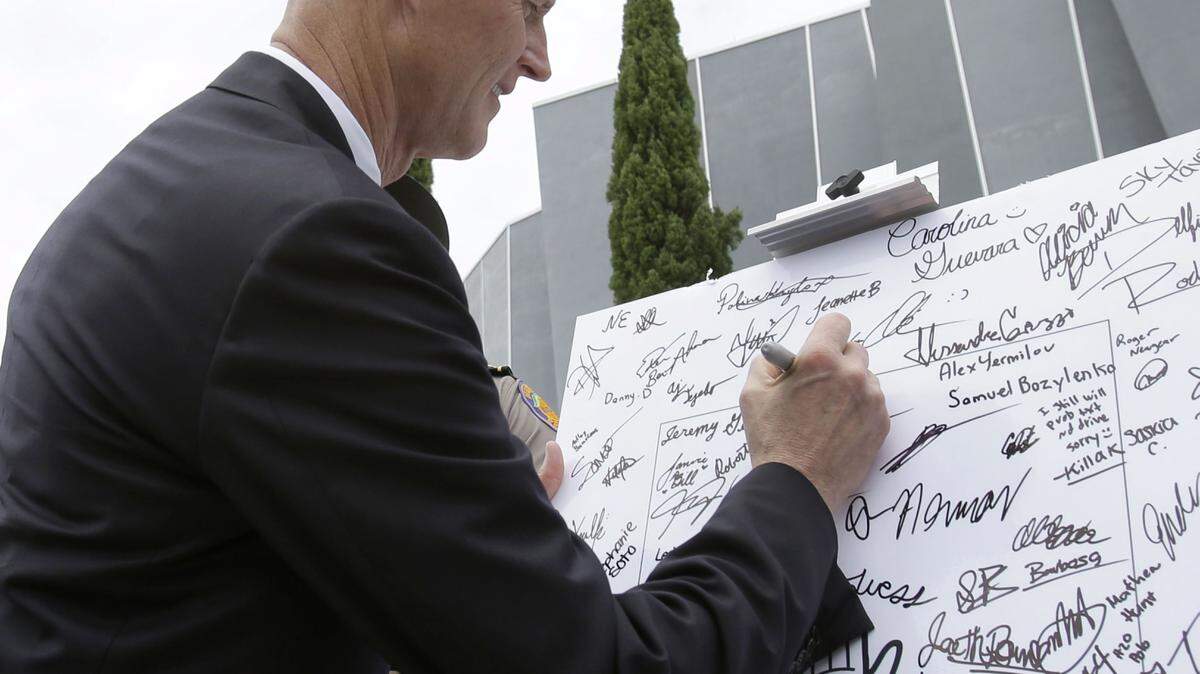
First, Gov. Rick Scott signed an enormous omnibus education bill that failed to include stronger accountability measures and standards on charters as discussed by the Legislature. One of the new standards requires "monthly or quarterly" financial statements from charter schools so financial difficulties can be detected early, possibly heading off a charters closure and the loss of the taxpayers' investment, a small step forward while stronger oversight failed.
Second, the four-week trial asserting the state's public education system failed to comply with the constitutional mandate to provide a "high quality" education for all public school students as a "paramount duty" concluded. The plaintiffs cited standardized testing, school grades and "school choice" options as the components of an inadequately funded system where accountability and choice deny children equal opportunities at obtaining the same high-quality education.
Third, last week Manatee County parents addressed the school board about the stressful and needless burden of testing on their children as part of a growing statewide Opt Out movement whereby students refuse to take the standardized test, rightfully described as civil disobedience. Parents have been complaining of bullying by district officials to compel their children to take the test, as state statute demands. Apparently, the state's "choice" focus does not include this parental option.
To be abundantly clear, the vast majority of charter schools provide a high quality education with financial stability and honorable missions. The state, however, should not favor one over the other.
Follow the money
The Legislature and governor hype choice as the crown jewel of education -- except for testing. There's a monetization angle here, too, with major taxpayer money. A testing corporation currently profits handsomely from a six-year, $220 million contract with the state.
Over the past 16 years, the state has lost $70 million in capital funding allocated to charter schools that closed later. Rare is the case that the state recoups any public money. The total state investment in that time frame was more than $760 million.
The new state budget provides charters with $75 million for construction and maintenance projects but allocates nothing to public schools, which must rely entirely on local taxes.
The law favors charters again with a relaxed standard that makes publicly funded but privately managed schools eligible for capital funding a full year earlier than the old mark of three years. Furthermore, the education package limits school-district spending on those projects, an unreasonable and unjustified attack on local control.
One crystal clear attempt to stiffen accountability measures, favored in the Senate, got blocked by the House. The upper chamber wanted to ban charter schools from "private enrichment," including individuals who indirectly or directly gain personal wealth based on charter school construction. Plus, charters that lease facilities from a private or for-profit entity or any one with a connection to the charter school would be ineligible for capital dollars.
But those prudent measures were eliminated when the Senate traded those provisions for House acceptance of favoring capital funding for charters with high enrollments of impoverished and disabled students -- which was the original intent behind the establishment of charters in the 1990s. Somewhere along the line, profitability became a strong motivation.
The circuit judge presiding over the challenge to the state's implementation of the "paramount duty" requirements set by a constitutional amendment passed by voters in 1998 isn't expected to rule for several weeks. A decision in favor of the plaintiffs, Citizens for Strong Schools, would be a monumental rejection of current state education policies and priorities. Barring that, the monetization and privatization of public education will continue.
Impassioned citizens will be left with acts of civil disobedience and lobbying efforts in the hopes of protecting children and traditional schools from objectionable state education policies.
This story was originally published April 17, 2016 at 12:00 AM with the headline "EDITORIAL: New Florida state law tilts toward charter schools once again ."