
States wrongly subverting Supreme Court ruling in clash of LGBT rights vs. morality
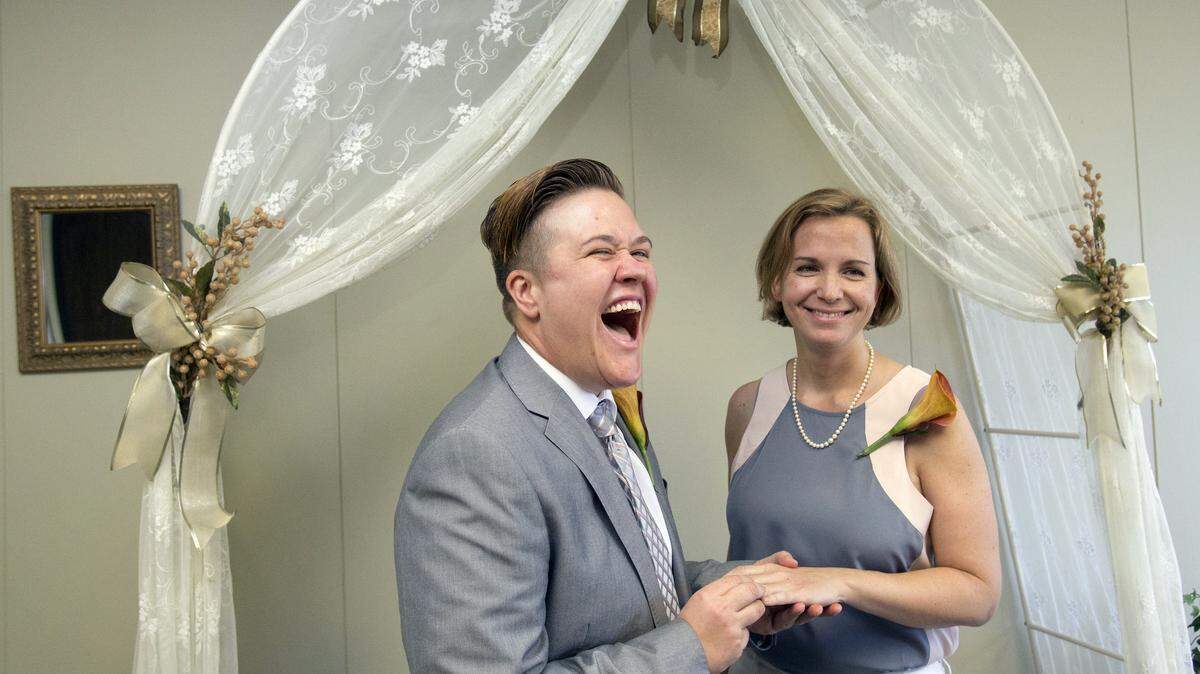
While Florida hasn't enacted egregious laws targeting the lesbian, gay, bisexual and transgender community, a federal judge found cause to issue a strongly worded ruling that found the state's ban on same-sex marriage unconstitutional. Though the U.S. Supreme Court ruled last summer that the Constitution guarantees a right to same-sex marriage, U.S. District Court Judge Robert L. Hinkle found cause to castigate Gov. Rick Scott's administration and the Legislature for failing to respect that decision and begin regarding same-sex couples as equal to heterosexual couples under all facets of law.
State officials have demonstrated a thin appetite toward accepting and complying with the high court's ruling and its implications, Hinkle wrote. Florida's reluctance involves state employee benefits, birth and death certificates and other pertinent issues.
The federal judge also rejected Florida Attorney General Pam Bondi's argument that the lawsuit challenging the constitutionality of the state's ban on gay marriage was moot given the Supreme Court ruling, saying he found it essential to explicitly state same-sex couples have a right to equal treatment under the law.
Hinkle didn't mince his words in repudiating the state's position that discriminatory legal provisions remain in place until each is invalidated. The federal judge eliminated any doubts about those policies, striking those down in one fell swoop.
Without such a indomitable ruling, Florida would no doubt continued its intolerable ways.
Last week, LGBT rights took center stage when Florida's Department of Children and Families hastily retracted extensive changes in planned policies regarding more rights for transgender children living in foster homes.
Those included a ban on bullying and discrimination, and a prohibition on conversion therapies intended to switch a child's sexual orientation or gender.
After objections by two religious organizations, the agency shamelessly retreated and watered down the plan with more general language covering these significant protections of children vulnerable to mistreatment.
Gay marriage and LGBT issues intersect over the inalienable rights set by our Founding Fathers in the Constitution. That revered document does not regulate morality. Yet socially restraining laws continue to crop up.
The national debate over LGBT rights turned red hot in several states in recent weeks. Mississippi enacted a law that forbids sanctions against public employees, social workers and businesses that deny services based on the conviction that marriage is strictly limited to a man and a woman.
That sweeping law also specifically states that gender is set at birth; government cannot stop businesses from firing transgender employees; clerks who refuse to issue a marriage license to a same-sex couple cannot be disciplined; and adoption agencies can refuse to place a child with couples merely suspected of engaging in premarital sex.
Mississippi is but one of 10 states drafting bills to undermine the Supreme Court decision.
Georgia's governor vetoed a bill similar to Mississippi's after Disney threatened to quit filming movies in the state and other businesses brought pressure to bear.
North Carolina's Legislature overturned the governor's veto of a law shielding government officials who refuse to issue marriage licenses to gay couples for religious reasons.
These laws defy the Supreme Court ruling on gay marriage and are bound to be contested in lawsuits.
In Florida, last year the Legislature took up the now very controversial issue of requiring transgender individuals to use the restrooms of their birth sex.
Another bill would have allowed adoption agencies to reject applications from same-sex couples. Neither advanced.
This year, the Legislature passed the Pastor Protection Act, which lets churches and clergy decline participation in same-sex marriage -- this being a compromise between gay-rights activists and conservative lawmakers. Whether this so-called protection is necessary is debatable, but this is Florida.
One of the key questions raised over all these clashes is this: Where do one person's rights begin and another's end? Does such a demarcation even exist?
Or is this really a conflict between strong moral values and constitutional protections? Since the Constitution doesn't legislate morality but bestows inalienable rights, the answer is obvious -- and supported by the highest arbiter in the land, the United States Supreme Court.
This story was originally published April 13, 2016 at 12:00 AM with the headline "States wrongly subverting Supreme Court ruling in clash of LGBT rights vs. morality ."