
Downgrading manatee from 'endangered' status to 'threatened' too risky
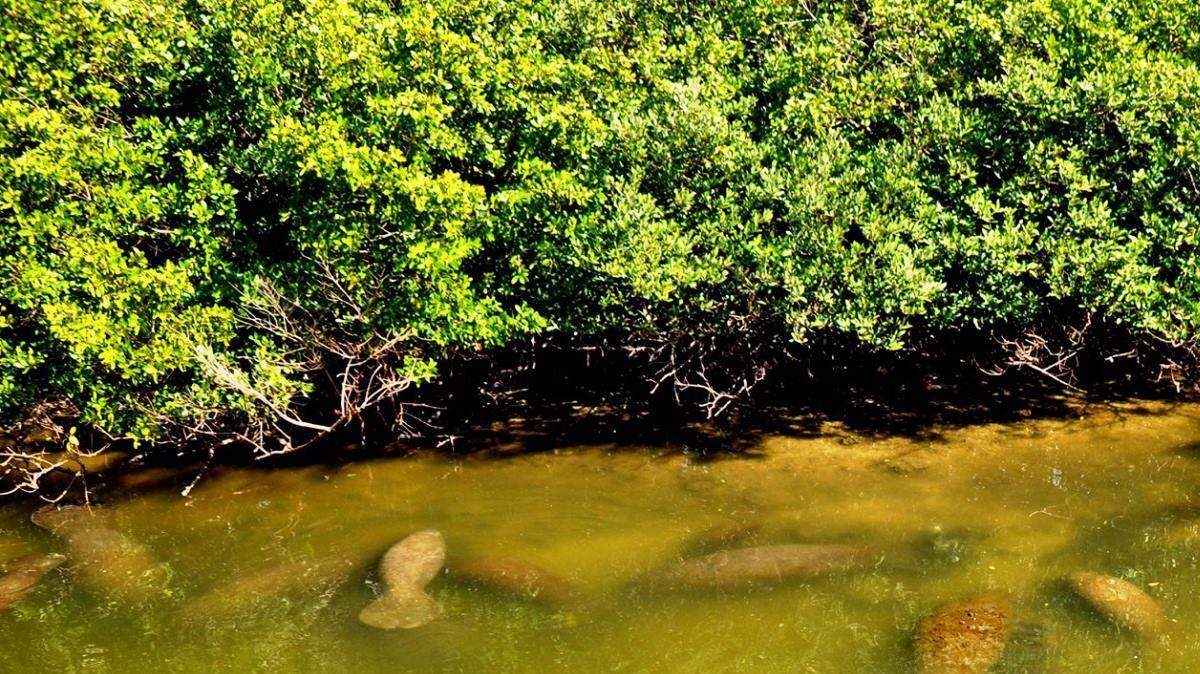
Should the federal government downlist the venerable manatee from endangered to threatened? The question has raised a storm of controversy, with environmentalists and manatee admirers battling boating enthusiasts and development interests.
Time's running out for citizens to express their position and thoughts as the public comment period ends Thursday. Rep. Vern Buchanan, R-Longboat Key, and Sen. Bill Nelson, D-Florida, raised strong objections in January when FWS formally announced its plan. Both called the proposal "misguided and premature." Buchanan reiterated his position Monday, expressing concern that weakened protections will lead to a drop in the creature's population. That angst is clearly justified.
The sea cow holds a special place in the hearts of residents here. Manatee County's iconic symbol lives in the Parker Manatee Aquarium at the South Florida Museum. Snooty, the world's oldest living sea cow as certified by the Guinness World Records organization, arrived here in 1949. Last July, Snooty and 4,000 of his adoring fans celebrated his 67th birthday.
A manatee statue can be found gracing Riverwalk in front of the Twin Dolphin Marina in downtown Bradenton. And manatees can be observed in the county's waterways.
But the U.S. Fish and Wildlife Service contends the mammal, which appeared on the first federal endangered species list almost a half century ago, is no longer jeopardized with extinction. The population increased from 1,200 in 1991 to more than 6,000 in 2015, though biologists who handled the aerial surveys have regularly expressed doubts about the accuracy of the figures.
Rational too flawed
The agency proposes downlisting the manatee to "threatened" status, but that decision is chiefly based on a computer model lacking in critical information. Plus, FWS admits the analysis incorporates outdated data. The agency's decision is partially based on adult survival rates only through the winter of 2008-2009, and the analysis also cites reports dating back to 2011-2012, Buchanan notes in his latest letter to FWS.
The computer modeling expert responsible for the project's conclusions did not include a pair of extensive die-offs, the Tampa Bay Times reported in January. In 2010, 766 manatees perished, mostly during two cold snaps. That total broke the previous record set only a year earlier, at 429. In 2013 the record soared to 829 deaths. These figures cannot be ignored in the FWS's decision-making process.
The creatures are also susceptible to mass die-offs from toxic red tide algae blooms, figures not included in the computer model. In addition, the computer model does not account for manatee habitat lost to waterfront development. All these flaws punch numerous holes in the study being wrongly cited as justification for the manatee's downgrading.
Boaters killed more sea cows in 2015 -- 87 -- than in 2014. That's even with speed zones and no-entry zones to protect the mammals.
Florida's increases in both human population and tourism further endanger manatees, and the downlisting could bring relaxed restrictions on waterfront development and higher boat speed limits. In this week's letter to the FWS director, Buchanan noted that Brevard County commissioners approved a resolution requesting a legislative review of slow-speed zones for boats to ascertain their effectiveness -- this coming only five days after the federal agency proposed the downlisting. The state and other county governments also want a change in speed zones, or their total elimination.
Boaters and developers have been seeking a manatee downlisting since 1999 in order to gain friendlier regulations. Those rules helped revive the manatee population, and reversing course would foolishly diminish those gains.
A lawsuit filed by the Pacific Legal Foundation in 2014 forced the FWS to act on the organization's 2012 petitions for a downgrade. Thus, the federal agency forged ahead with a manatee status change. Final action is expected to take place in 2017.
Floridians can voice their objections online via http://www.regulations.gov. Let's spare the manatee from the return of past manmade threats.
This story was originally published April 6, 2016 at 12:00 AM with the headline "Downgrading manatee from 'endangered' status to 'threatened' too risky ."