
'Homeless' is our community's issue in Manatee County, not a personal one
The numbers tell a tough story: Turning Points served almost 5,000 clients so far this year that the nonprofit center classified as "literally homeless." Like communities across the country, Manatee County continues to grapple with this intractable issue.
Turning Points, housed in the Bill Galvano One Stop Center and formerly known as the Community Coalition on Homelessness, stands at the forefront of this societal problem -- alongside the Salvation Army of Manatee County, which provides temporary shelter to mostly homeless men.
Like communities across the country, Manatee County continues to grapple with this intractable societal issue.
How do we as a community solve this? Is there a solution? Or are we trapped in a perpetual state of something that cannot be ended? Public perception of the homeless population often doesn't match the reality on the street. Mothers with children, some with students who struggle in school due to hunger and insecurity, are just as much of the homeless population as men sleeping on the streets due to substance abuse and mental health issues.
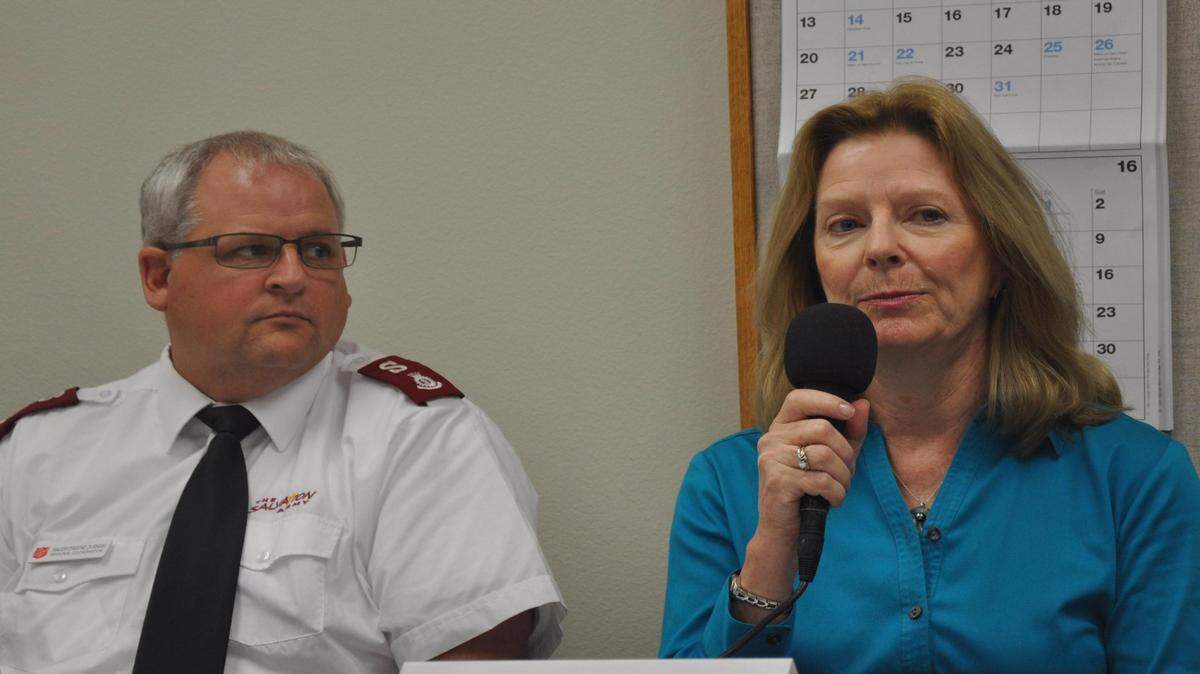
As we learned during the Herald's roundtable last week on homelessness with top community leaders on this issue -- among them the key players, Turning Points Executive Director Adell Erozer and the Salvation Army's Major Dwayne Durham and Program Director Julia Showers -- the challenges are great.
State Sen. Bill Galvano, Bradenton Mayor Wayne Poston, Manatee County Commissioner Betsy Benac, Palmetto Vice Mayor Brian Willaims, Bradenton Police Chief Michael Radzilowski and Palmetto Police Chief Scott Tyler also participated in this enlightening round table discussion.
As did downtown business owner Mike Carter, who addressed an issue often overlooked in the somewhat civic discussion of the homeless problem.
His customers have to deal with the ugly side of the homeless, from aggressiveness and panhandling to worse. Business interests should be a major part of this discussion.
Manatee County government issued a "10 Year Plan to End Homelessness" in August 2006, but that has not been accomplished. We as a community need to renew efforts to build collaboration and coordination to reduce homelessness. Sarasota County has been debating this issue for several years, and still cannot find a solution. Manatee County should be at a leader on this. Tell us you ideas.
Homelessness is not going away. We've opined on this before, and Erozer cited this study at our homeless forum:
In commissioning a statistical examination of the financial hardships Floridians face, the United Way of Florida uncovered startling details on the plight of a sizeable population. The title of the ALICE Report is an acronym that describes the study's findings: Asset Limited, Income Constrained, Employed.
In Manatee County, 30 percent of the population risks falling into poverty, possibly joining the 13 percent already languishing in those ranks. That places Manatee only marginally better than the state as a whole, 43 percent versus 45.
We should be driving toward solutions that help our neighbors, friends, family -- struggling workers holding jobs in retail, tourism, education, health care and many other fields. Two-thirds of the jobs in Florida pay less than $20 an hour with most less than that, between $10 and $15 per hour. Some workers hold down two jobs and still barely survive.
Homelessness is not that far away from too many people. Let's all be part of the solution. Give us your thoughts.
This story was originally published November 17, 2015 at 1:24 PM with the headline "'Homeless' is our community's issue in Manatee County, not a personal one ."